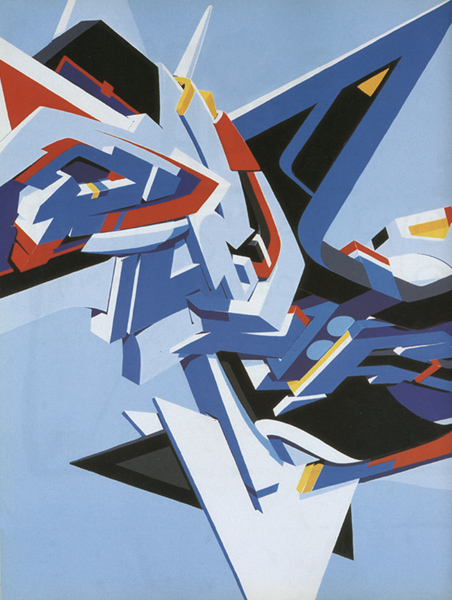
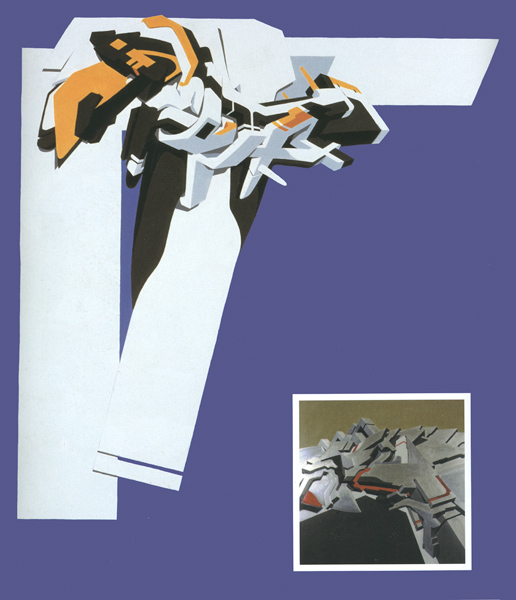
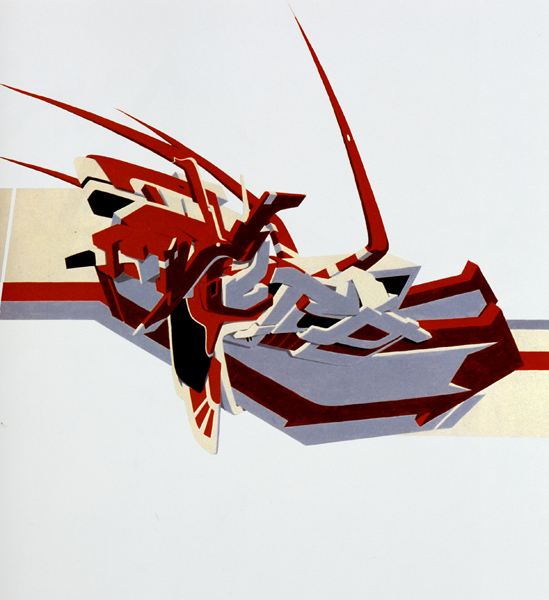
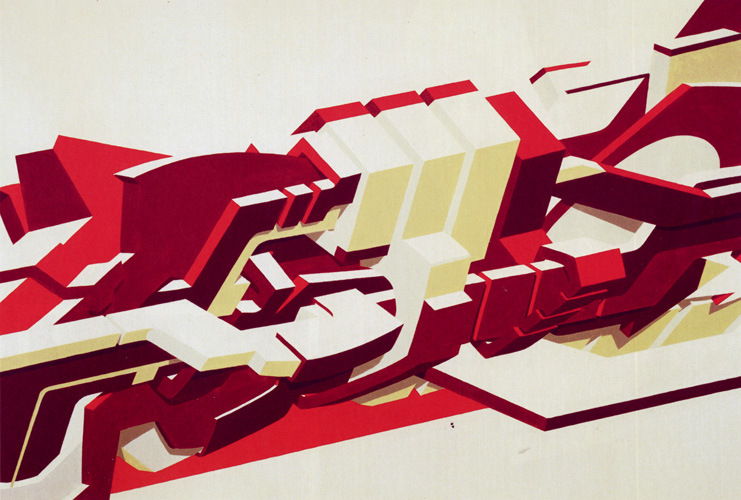
• SuperFormula is a generic geometric transformation equation that encompasses a wide range forms found in nature. Dataisnature points us to some beatiful 3d renderings of the equations including the newest destrukt set in which the Supershapes are broken apart. My primitive 2d thinking brain was instantly reminded of the dynamyte late-nineties work of graffiti phenom Boris Tellegen, a.k.a. Delta. Here are some perfect examples scanned from the book Scrawl, dirty graphics & strange characters: 1 2 3 4.
• PZ Meyers and Chris Clarke sound off on Stephen Hawking’s recent prophesy of humanity’s doom and his accompanying plea for off-world colonies.
• BLDGBLOG on Urban Sound Walks in which specially built headphones receive electromagnetic signals from the environment and transform them into sound, creating an mp3 map of a city’s electromagnetic hot-spots. Listen to them yourself at Cabinet.
• The Style of Numbers Behind a Number of Styles in which stylometry, the mathematical analysis of litterature, is looked at in terms of its application to the visual arts.
• The Daily Growler offers a nice, in-depth piece on Erik Satie. Via.
• Reaserchers are surprised to find that women’s brains react so fast to erotic images, the common wisdom being that men respond more strongly to sexual imagery. (Sure the women’s brain reacted strongly but what the researchers failed to recognize was the particulars of the reaction involved: namely the activation of the highly developed “must obsessively compare that bitch’s body to my own” region of the female brain.)

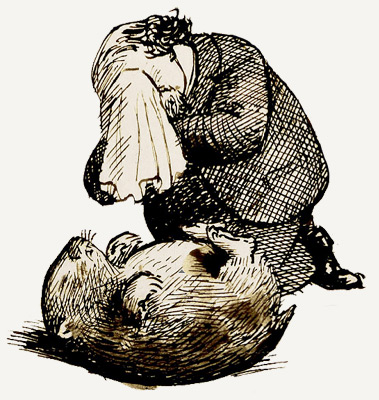
I never reared a young Wombat to glad me with his pin-hole eye, but when he was most sweet & fat and tail-less; he was sure to die!
• The Rossetti Archive which facilitates the scholarly study of Dante Gabriel Rossetti, the painter, designer, writer, and translator. Contains a slew of his artworks. Above: a detail from Death of a Wombat, 1869.
• Enjoy the The C. Warren Irvin, Jr., Collection of Charles Darwin and Darwiniana.
• What is more deserving of tribute in the form of a Tom Waits song or a Wallace Stevens poem than two Circus trains colliding? Great Circus Train Wrecks and the resultant symbolism of elephants with down-turned trunks.
• He who destroyes a good Booke, kills reason it selfe an exhibition of books which have survived Fire, the Sword, and the Censors. (Scroll down for navigation.)
• Joseph Leidy Father of American Vertebrate Paleontology and The Bone Wars.
• Decameron Web: A growing hypermedia archive of materials dedicated to Boccaccio’s masterpiece, presented by the of the Department of Italian Studies at Brown University. Impressive.
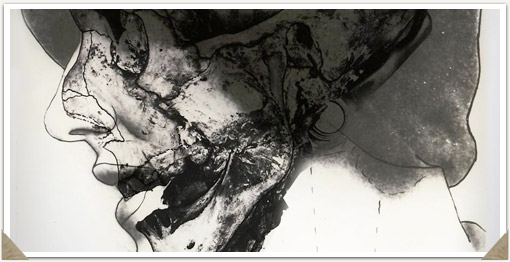
• Forensic: 1581, adjective, from the Latin forensis, related to the noun forum; the space in ancient Rome where public discussion and disputation was held. Used in sense of “pertaining to legal trials,” as in forensic medicine… Visible Proofs a forensic view of the body.
• Surnateum or: the Museum of Supernatural History.
• 623 poems and 72 letters straight from Bukowski’s “machine” are among the offerings at Bukowski.net. Via.
• So what exactly is a planet anyway? We’ll finally get a definition in september.
• Some theories on the origins of applause: The Help of Your Good Hands: Reports on Clapping.
• 64 examples from Collin de Plancy’s 1818 book on demonology Dictionnaire Infernal. Some better images here.
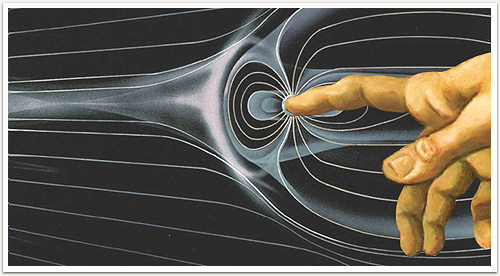
• Surely one of the coolest stories making the rounds right now is the body mod piece from Wired about magnetic fingertip implants which alow one to “sense” electromagnetic fields: A Sixth Sense for a Wired World. (Thanks for the heads-up Rich.) Also check out The Gift of Magnetic Vision.
• Continuing in a similar vein Slate offers: Among the Transhumanists Cyborgs, self-mutilators, and the future of our race. Via.
• Scientists have recovered DNA from a Neanderthal that lived 100,000 years ago - the oldest human-type DNA so far. More here and here (well, that last is not exactly related but I do so love it.)
• Mesmerized! a nice exhibit on Franz Anton Mesmer and mesmerizm at The Bakken Library and Museum.
• Am I allowed to write that I would like to hunt down George W. Bush, the president of the United States, and kill him with my bare hands? On Simple Human Decency. Via.
• Happy average Tuesday you wonderful heathen bastids. Happy 6.6.6 For the rest of you. Why not enjoy Man and his Gods by Homer W. Smith ( with a foreword by Albert Einstein) and Stripping the Gurus?
• 100 examples from The Big Book Of Beastly Mispronunciations: The Complete Opinionated Guide For The Careful Speaker.
• The IUCN Red List of Threatened Species 2000 - 2006 picture gallery.
• Tom Robbins. The Northwest’s master of Zen-punk prose spends his time exploring mythospace. And with a new novel hitting stores this week, he speaks out about what he sees, how he works, who he loves, and what really, really matters.
• Washington, Washington, 6 foot 8, weighs a fucking ton. Opponents beware.
• Exploring Victorian London via the wonderful Victorian dictionary.
• Oskar Fischinger’s animated films that were partly influenced by the poetic abstraction of Kandinsky’s paintings were among the first to mix high art and mass culture. Where Abstraction and Comics Collide.
• The 2006 edition of Princeton’s The Art of Science is live.
• Tracing the transition from the “city of men” to the “city of stone” in the urban imagery of George Orwell. Via.
• Artlies presents the Sincerity Issue. Including Three Moments from the History of Sincerity, and The Many Guises of Sincerity.
• The Philosophy of Punctuation by Paul Robinson. Via.
• One man’s decades-long mathematical quest of mapping the starmaze. Via.
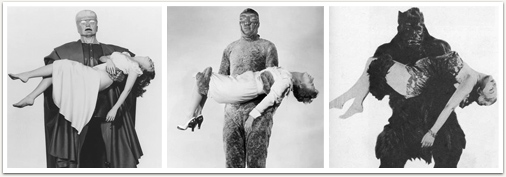
• Giants and Girls: Dedicated to all those prehistoric giants, pinhead mutants, bug-eyed aliens, and other monsters always chasing (and sometimes catching) beautiful girls. How do you ask “where the white women at?” in martian?
• Rolling Stone piece asks: Is a frog’s ass water-tight? Or might as well.
• Is it possible to prove that all humans see the same colors? Or is color subjective?
• Our galaxy, bent like a vinyl record in the sun, is a much wilder looking tentacled beast than suspected.
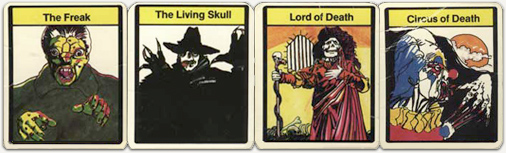
• Small gallery of vintage horror and spacecraft Top Trump cards.
• 9 Theories of Extraterrestrial Contact an inventory of the “leading paradigms.”
• Beyond the grandfather paradox: Heinlein’s paradox from All You zombies.
• An airforce captain’s concept for parasitic space weapons and here’s another airforce officer’s argument for “orbital strike constellations.”
• Assistive Media offers audio versions of magazine content from Wired, The New Yorker, The Atlantic Monthy, Sci-Am, and many more.
In Search Of: Bread.
Continuing in my series of searches. Tonight I search for bread and what do I find?
Consider bread. Even a cursory survey yields an enormous range of meanings. Bread is the stuff of life. Failing that, it is at least a starch staple for the western world. It is the minimum daily requirement for which Christians praise the Lord and to which prisoners are reduced for punishment. Bread is the hip term for money and the symbol both of Christ’s Body and the Jew’s escape from Egypt.
Bread is filler, like the lighter part of the seven o’clock news. It is stuffing both for turkeys and for us. Although both the Old Testament and the New are replete with grainy allusions, contemporary bread serves as the universal symbol of spiritual impoverishment. My father liked to take a piece of American white factory-sliced bread, roll it in the palm of his hands and hurl it at the wall. It would bounce listlessly back like a dead tennis ball. Sometimes, instead of throwing it he simply pressed it against the wall, where it would stick like rubber cement. While that seems, out of context, like wildly aberrant behavior, my father was really just expressing his amusement and amazement at finding himself in a culture that ate this stuff.
Bread itself is a designer of possibilities. Freed of responsibility for nutrition or flavor, it is not only filler but format, lending coherence to sandwiches and dictating the size of bologna, the shape of toasters, the dimensions of picnic boxes.
-Ralph Caplan.
The Story Behind a Loaf of Bread. A Short History of Bread. A Treatise on Bread and Bread-Making. Breaducation: A Brief History of Bread. Museum of Bread Culture in Ulm Germany. The Museum Of Bread in St. Petersburg. Wiki Bread. The History of bread Yeast. How did early man first come-up with the idea of bread? Breads and Other Cultures.
The idea of harvesting grain and sowing seeds for cereal crops seems to have first occurred to an early race of people called the Natufians, who lived in the Middle East about 8,500 years ago. They hacked at the arid soil with digging sticks, broadcast their seed—and waited.. .They threshed the grain by driving animals over it, by pounding it with their feet, or with sticks. They winnowed it by throwing handfuls in the air, so the chaff would be blown away by the wind…. Most prehistoric breads were made of simple crushed grains, mixed to a crude dough with water and cooked on a hot stone… The first leavened bread is usually credited to the Egyptians, and the most popular theory is that fermented bread was the spontaneous discovery of an Egyptian housewife, who left her ball of dough too long in the sun, and wild yeast spores started the bread working… The bread of the Egyptians was pretty awful… .the grain contained parlicles of sand from the desert, and flecks of mica and limestone from the grinding stones and sickles. Recent examination of ancient Egyptian skulls reveals considerable wear on the teeth…. They greatly enjoyed their bread nevertheless… The Greeks called them artophagoitlie bread eaters.
-The Blessings of Bread, Adrian Bailey.
History of White Bread. The History of a Mouthful of Bread by Jean Macé. The Science of Bread. Ingredients. The cyber toaster museum. Not by bread alone. The greatest thing since sliced bread. “It’s the best thing since sliced bread!” Okay, then, when was that? Sliced bread illegal? What was the best thing before sliced bread? The Symbolism of Bread. Liturgical use of bread. Bread from heaven. Miracle of the Bread and Fish.
What makes bread? An elastic material (the gluten in wheat flour) expanded to a spongy mass. What makes the holes in the spongy mass? Gas expanding inside it. And what makes the gas? Yeast, a microscopic plant, Saccharomyces cerivisae, about 1/4000 as long as its name which takes apart sugars and starches to make carbon dioxide gas. The gas makes bubbles in the dough, which expand during baking to make the holes.
You could get a good loaf of bread in Rome. Around 2,000 years ago Romans had bread of every kind (the city itself used 14,000,000 bushels of wheat every year): light bread, dark bread, sweet bread, salty bread, rolls, flatbreads, square breads, all kinds. Bakers ground wheat shipped from Egypt and North Africa, baked it, and sold the loaves to be eaten dry or dipped in water, wine or goat’s milk.
In the Middle Ages bread was most of the meal, and it was the dish too: folks ate on pieces of stalish, unleavened bread called trenchers, about six inches by four inches, which sopped up the juices. After the meal the trenchers were given to the servants or the poor.
Millers and bakers -and later engineers and chemists- pursued whiteness in bread, assuming that whiter bread was purer. Without the wheat germ and its bit of oil, the flour would not spoil and could be kept for a long time, an advantage for the miller only. They milled their flour, sieved it, bleached it with harsh and dangerous chemicals, and added ridiculous white powders to make it bright—ash, alum, chalk, yech! The whiter it got, the less nutritious it became.
-The Bakers, Jan Adkins.
The Conquest of Bread by P. Krapotkin. Labor is Bread -Who doesn’t work doesn’t eat. A bread line. Crankshafts or bread. The bread and roses strike of 1912. Song Sheet: A Loaf of Bread. Song sheet: Bread and cheese and kisses. Song sheet: Will friendship buy us bread? Bread and circuses. Wiki bread and circuses. Prosphora. Bread stamps. More bread stamps. Anthroporphic bread. Bread Sculpture. The story of bread with Ms. Sunbeam. The dangers of bread. Signing: bread.
hide full text
• Gratuitously illustrated short history of early 20th century Russian theater from symbolism to The Bedbug.
• Justin Smith @ 3 Quarks Daily: Why We Do Not Eat Our Dead. Bonus link: Cannibalism and Human Sacrifice By: Dr. Sam Vaknin.
• Deep in the Amazon jungle, writer Kira Salak tests ayahuasca, a shamanistic medicinal ritual, and finds a terrifying—but enlightening—world within. Peru: Hell and Back.
• Serving the guest: food for remembrance. A cookbook with essays and anecdotes on the historic and contemporary role of food, meals and hospitality in Sufism. Also features a gallery of Islamic art.
• Responsible metal detecting in England and Whales. Features some history on archaeology from both England and Scotland and a gallery of over 7,000 related images.
• Nonhuman work. A Forbes piece written by none other than the lovable old coot PZ myers on the subject of whether animals do “work.”
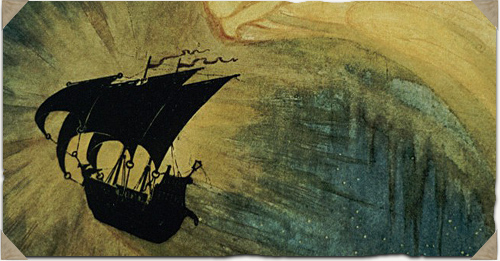
• Enjoy the online version of William Timlin’s The Ship That Sailed to Mars originally published in 1923. Via. Related bonus link: George Meiles’ 1902 classic Le voyage dans la lune in full
.
• In 1822 De Quincey published The Confessions of an English Opium Eater. The nature of addiction to opiates has been misunderstood ever since.
• How vinyl records are made: Part 1 and Part 2. Groovy (pun intended). Via.
• An old octopus with a tree on his back? Yes. Enjoy The black heart gang’s beautifully done Tale of How. Via.
• What Mind–Body Problem? Could understanding consciousness turn out to be easier than we thought? Via. I doubt it.