Mention historical Japanese painting to a westerner and certain images involuntarily leap to mind- Hokusai’s great wave, an idyllic nature scene, an elegant Geisha, a sparrow perched on an inky branch… even Tales of the Genji or an explicit bit of Shunga perhaps. I imagine one thing which does not readily spring to mind is H-E-Double-Hockey-Sticks, with its demons and leaping flames and pestilence and writhing souls. After all, that’s our thing! Isn’t it?

There is Yet Another Hell



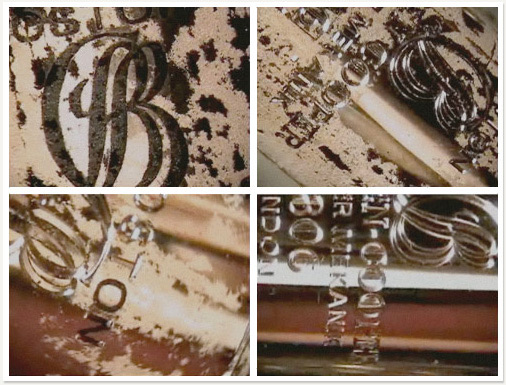
Zengraving
Came across this hypnotic video of master hand engraver Steve Lindsay completing an engraving from start to finish. It’s pretty amazing. As a designer (with the prerequisite appreciation of typography) watching someone carve perfect, beautiful letter forms from metal, and so handily, is both humbling and fun. As a (lapsed) painter I can certainly appreciate the brute hand-skill involved. Beyond that there is a definite Zen quality inherent, I’d say, to any work which denies the luxury of an eraser or undo button. Pour yourself a glass of something (the vid is accompanied by an urbane soundtrack of classical and jazz) and enjoy.
For more videos, images, and information on hand engraving see the following:
Engraving School.com, Lindsay Engraving.com, and Master Engraver.com.
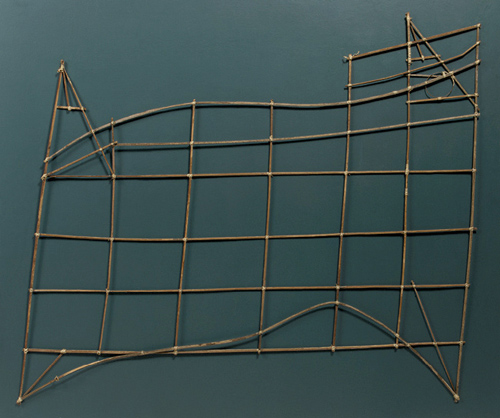
Polynesian Stick Charts
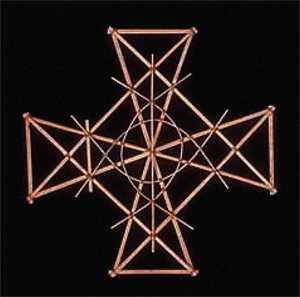
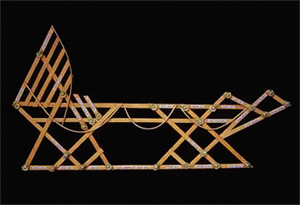
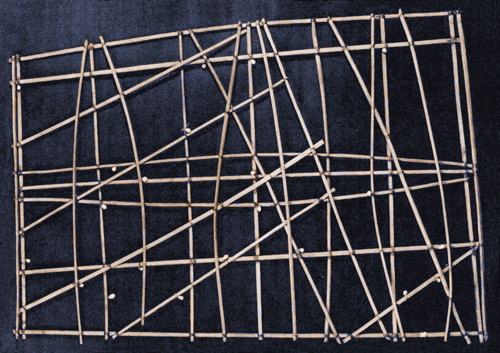
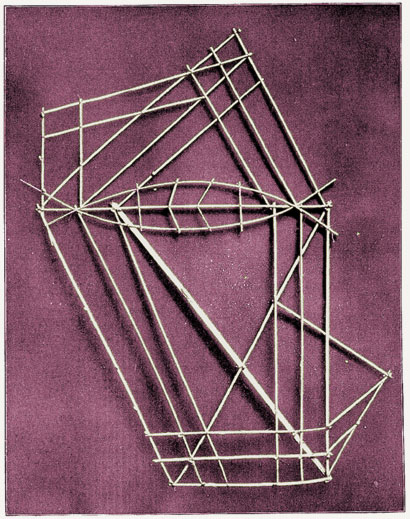
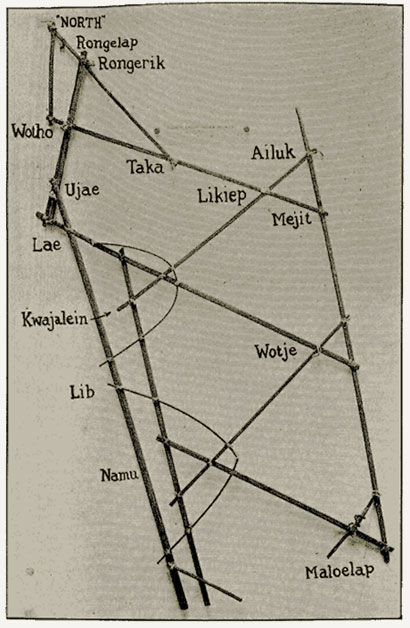
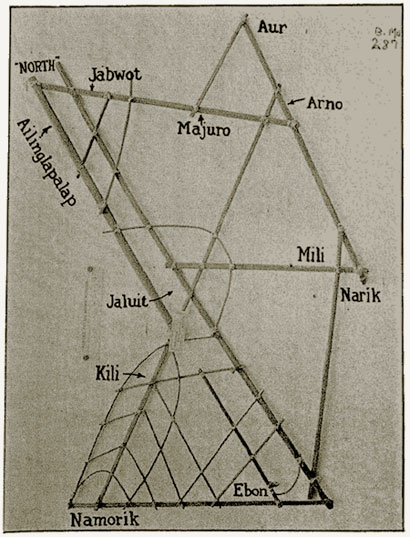
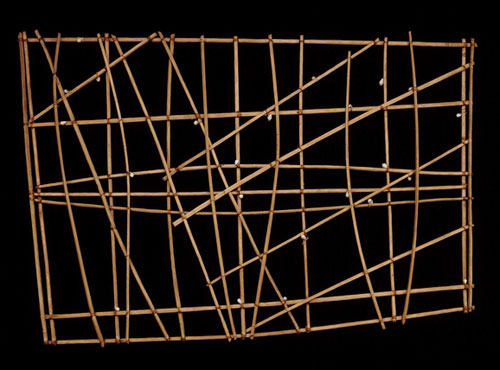
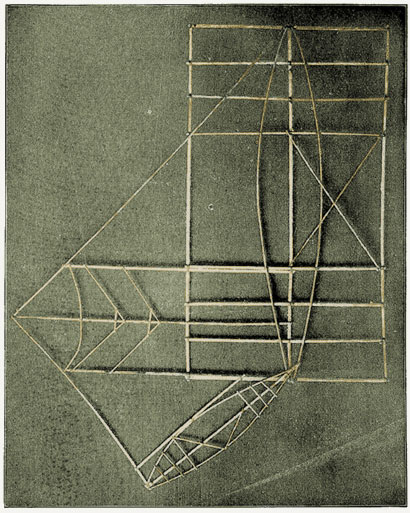
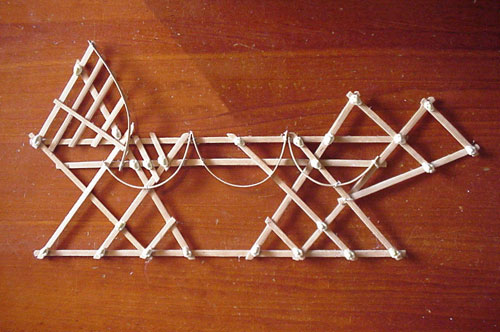
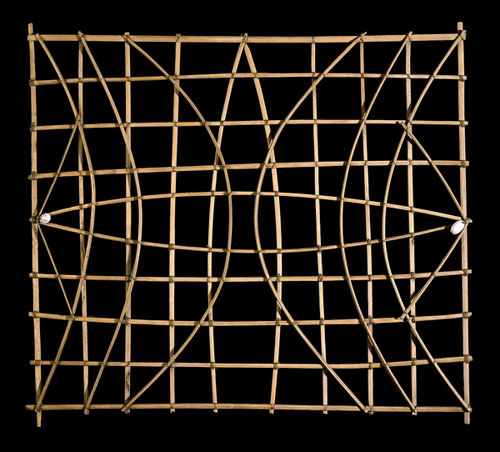
The Polynesians, scattered as they were over 1,000 islands across the central and southern Pacific Ocean, were master navigators who tracked their way over a huge expanses of ocean without any of the complex mechanical aids we associate with sea fairing. They didn’t have the astrolabe or the sextant, the compass or the chronometer. They did however have aids of a sort, which though seemingly humble, were in fact the repositories of an extremely complex kind of knowledge. Called Rebbelibs, Medos. and Mattangs, today we call them simply “Stick Charts.”



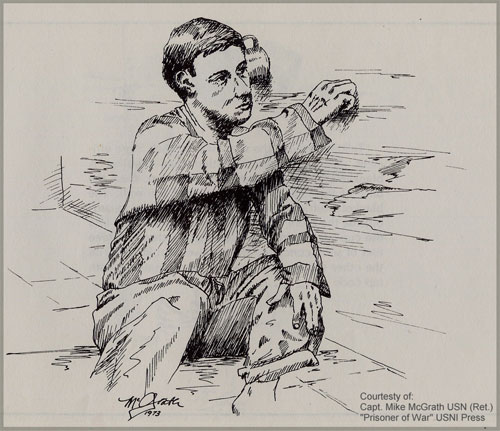
“There were only occasional cigarette wrappers or paper towel like toilet paper with no pencils or ink available for communication. You could manufacture ink out of brick dust and sundry such elements and use bamboo slivers for pens. The only sure way of communicating thusly was to drop a note in an emptied toilet bucket, float a note out on your manure, hide a note at a wash trough, or scratch a message on the bottom of a rice bowl. But you had to contact the guy first to tell him all this. The preferred, most secure and most reliable method was to tap on the walls or floor pad in a rhythmic code known to us as the Tap Code.”

Juice of Cursed Hebenon
History of Poison. Poisoning in Ancient Times. Poisoning in the Middle Ages. Poisons in the Renaisance. Poisoning in the 16th, 17th and 18th Century. Poisoning in the Victorian Times. Poisoning in the 20th Century. Don’t Chew the Wallpaper: A History of Poison. A Brief History of Poison. Folklore Poisons. List of Poisonings. A Brief History of Poisoning. The Elements of Murder. The Fine Art of Poisoning.
The one conclusive argument that has at all times discouraged people from drinking a poison is not that it kills but rather that it tastes bad. -Nietzsche.
What is the Most Deadly Poison in the World? A Poison Tree. Illustrated Index of Poisionous Plants. Poisonous Plants Database. Poison Apple. Wild Inedible and Poisonous Mushrooms. Mushroom Poisoning. Poisonous Plants, Animals, and Arthropods. Poison Harpooned Cone Snail. Poison in a Cone. Poison Frogs. Poison Dart Frogs. Poison Powder. Poison Cups. Drink Me. Poison Jewelry. Poison Arrow. Arnesic in the Eye. Antique Poison Bottles. Collecting Poison Bottles. Antique Poison labels. Mr. Yuk. About Mr. Yuk. And Finally…

Quote: “In one of history’s more absurd acts of totalitarianism, China has banned Buddhist monks in Tibet from reincarnating without government permission. According to a statement issued by the State Administration for Religious Affairs, the law, which goes into effect next month and strictly stipulates the procedures by which one is to reincarnate, is “an important move to institutionalize management of reincarnation.” And you thought the wheel of samsara was complicated now! Ha. Wait and see what some good ‘ol fashioned bureaucracy can do… A lifetime of karmic actions in triplicate anyone? The Pope may have to rethink his stance on purgatory… The real punchline though is less amazingly and perfectly hilarious. Ah well.
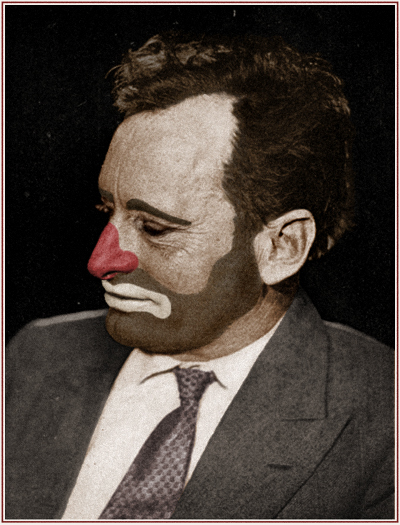
...He advised me not to worry about lice. “You’ll soon get used to ‘em, not feel ‘em biting at all. All you have to do is ‘boil up’ once in a while”—that is, take off your clothes and boil them, a piece at a time, to kill the vermin. These and other personal chores the well-groomed tramp more or less regularly performs, were usually attended to during stop-overs in camps and jungles. It was here I learned to shave with the aid of a broken bit of whiskey glass. The toughest method of shaving I ever saw, though, was when one old veteran of the road rubbed another’s face with the rough side of half a brick!
-Harry Kemp (footnote to history, tramp poet, author, dune shack dweller, village bohemian, home wrecker⊕, hanger on to giants⊕, and purportedly a “lecherous and lazy man who committed as many wrongful acts as a man can safely commit”) from the the Federal Writers’ Project American Life Histories.

Beautiful Specimens
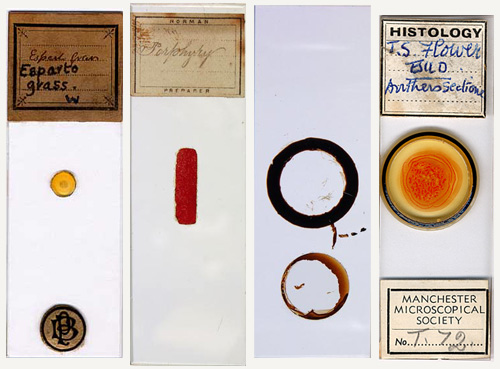
Wikipedia tells us: “A microscope slide was originally a ‘slider’ made of ivory or bone, containing specimens held between disks of transparent mica. These were popular in Victorian England until the Royal Microscopical Society introduced the standardized microscope slide in the form of a thin sheet of glass used to hold objects for examination under a microscope.”
I’d like to add the following: Antique microscope slides, looked at from a strictly aesthetic standpoint (egged on by a design obsessed brain obviously) are some of the most elegant and perfectly beautiful human artifacts on planet earth. You can quote me on that. See below for irrefutable
aesthetic evidence.




Nature Vs. Art
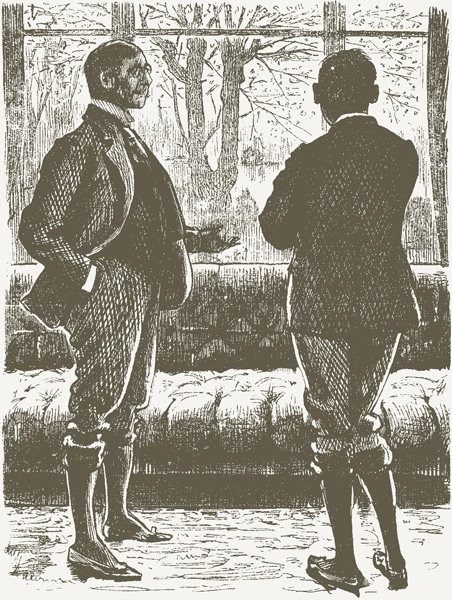
Æsthetic Friend: “Yes, This room is rather nice, All but the window, with these large blank panes of plate glass! I should like to see some sort of pattern on them—Little squares or lozenges or arabesques…”
Philistine: “Well, but those lovely cherry blossoms, and the lake, and the distant mountains, and the beautiful sunsets, and the purple clouds—isn’t that pattern enough?”
(Taken from Punch, or the London Charivari, Vol. 102. June 4, 1892. which, along with many other volumes, can be found on Gutenberg, listed for your ease here.)

The work of master goldsmith Giovanni Corvaja is a fascinating mixture of the ancient and the cutting edge. His pieces are strikingly modern in form, clean geometries encasing staggering complexities, but the techniques employed to create these works are in fact the re-imagining of 3000 year old Etruscan methods (filigree and granulation) largely forgotten⊕ until very recently.