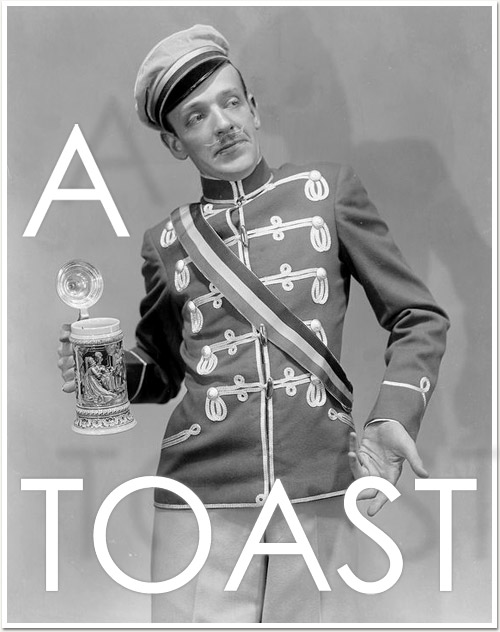
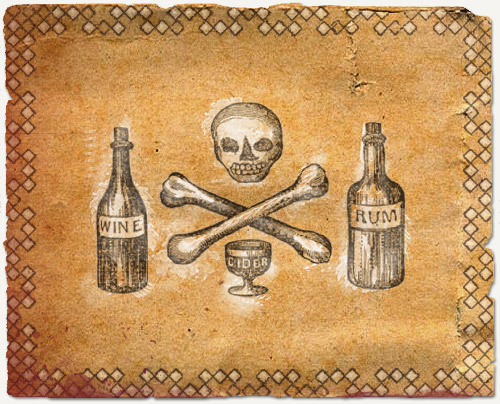
The new year approaches and as it draws nearer arms will begin to raise, and in each hand will be a glass, and in each glass a libation. As the midnight hour approaches more and more glasses will raise until, were the millions of libations allowed to flow into one another, and were gravity to join in the festivities and relax a little, a veritable river of spirits would form there just above our heads, flowing from hand to hand and from time-zone to time-zone, chasing the sun as it endlessly sets over the world.
And what sound will accompany this river of spirits as it’s bailed, glass by glass, into the air? Why the same sound that accompanies us everywhere, in all of our endeavors, great and small– the gush and tumble of words. Yes, my friends the toasting hour approaches, so before it catches us and our mouths inexorably up in its ebullient current let’s have a slightly closer look at this toasting business shall we? Glasses at the ready.
First, a few words on origins–
Drink as “offering” has been a documented aspect of prayer ceremony from the dawn of history in both Pagan and Judeo-Christian traditions.
Quote: “An early Greek custom called for a pledge of three cups-one to Mercury, one to the Graces, and one to Zeus. In Rome, drinking to another’s health became so important, the Senate decreed that all diners must drink to Augustus at every meal. Fabius Maximus declared that no man should eat or drink before he had prayed for him and drank to his health.” -Paul Dickson.
The transition from “toasting” the Gods to toasting the Emperor (who was himself at various times considered a god) was a convenient bridge that eventually lead to the toasting of any socially important person, and finally to the toasting of any privately important person, living or dead.
The physical action we are familiar with of standing amongst friends and lifting a glass, devoid of religious significance, evidently also dates back to ancient Greece. It seems that the poisoning of drinks was a wide-spread enough practice that a host would make a great show of standing, pouring out wine from a common pitcher, and drinking the first glass himself, as means of saying, “look at what a swell host I am, I am not poisoning any of you!” or to put it slightly more poetically- “to friendship!” At which point he’d raise his glass high as an invitation for his guests to do likewise.
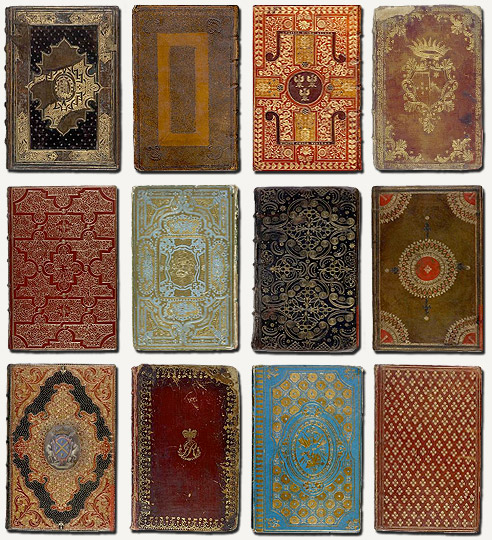
Prosit: A Book of Toasts Published by Paul Elder and Co., 1904.
The term “toast” itself is thought to have come from the Romans, who evidently found themselves drinking a lot of sub-par wine. They’d drop a piece of burnt bread into wine, the charcoal of which would reduce the drinks acidity, making it more palatable. This toast may have also been included with the wine as a token bit of nourishment. The term stuck even after the practice of including the burnt bread died out. It mutated even further when, in the golden age of toasting, the act of drinking a toast to women admired but not present spawned the phrase “toast of the town.”
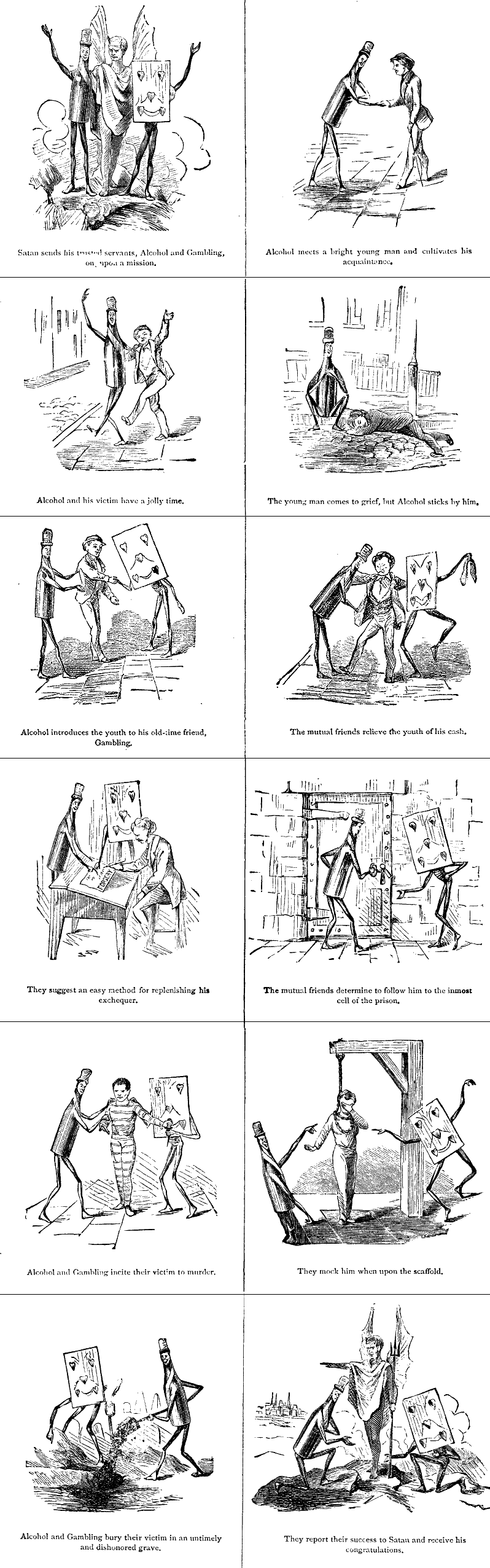
Meanwhile there is a connected custom, the clinking of glasses, to consider. There are three theories as to its origin. The first is attributed again to the Greeks’ proclivity for poison. It’s thought that the hearty thud of wine vessels against one another might facilitate an exchange of liquid from one vessel to another, thus ensuring any poison would be imbibed by all. A second theory attributes the clinking of glasses to the Christian era. It was thought that the bell-like clink of glasses would banish the Devil, who was thought to literally inhabit liquor (and be the cause of the ill behavior of the drunken), and who was repelled by the sound of bells. The third theory, which sounds entirely more modern to me, is that all five senses had to come into play to get the greatest pleasure from drink, the sight, the smell, the touch, the taste, and with the clink… the sound.

In truth the species of speach which we moderns refer to as “a toast,” meaning the one word salutations, often in a phonetically-sounded foreign tongue, the literal meaning of which we rarely know, is only the dimmest shadow of a once grand and formal tradition of dinner speaking. Today, for the average person not serving as an ambassador on distant soil, that tradition is relegated almost exclusively to the dreaded wedding toast, in which a bitter and terrified “best man” stumbles his way through those few words which represent the final hurdle in his race to the open bar.
In the heyday of toasting the whole affair was elaborate enough that scores of books were published to help people navigate the treacherous rules of etiquette involved for both toast-giver and audience, and no drink could be drunk without “a few words” of praise to someone. To drink without offering a toast was simply an affront to everyone in the room, and this imperative evidently protracted even casual occasions into 8 or 10 hour binges.
Today it would just be impossible. Imagine heading over to your local Tex-Mex place for a few 6 dollar Coronas after a crappy day in your shabby cubicle, only to realize you were a “best man,” in a room full of nothing but other “best men,” obliged to speak and listen before every… single… round; for 10 hours. Didn’t Sartre write a play about that?
In any case, as I said at the beginning, the “hour of the toast” is fast approaching, and though I don’t expect many of you will want to wax eloquent, at length, in iambic pentameter, about how much you love your mother, or country, or best mates, you may still wish to surprise everyone with something a bit more imaginative than the expected, “May you rock out with yer cock out and jam out with yer clam out! Down the hatch!”

With that in mind I am including below a small sampling of toasts (mostly culled from the 1927 volume, The Big Toast-Book, by Carleton B. Case, pictured above) so antiquated sounding that they might be just the thing to… oh, I don’t know… persuade your mightily disappointed and old-fashioned father that he ought not disown you just yet, or convince your significant other’s parents that you’re more than the coarse, dead-eyed, lout you appear to be, or induce premature nostril-vomiting in your rivals, or embarrass the hell out of your sweetheart. Who knows? Maybe they’ll just inspire you to come up with a decent toast yourself and revive in some small way the time honored tradition.
For the Romantics:
Here’s to the one and only one,
And may that one be she
Who loves but one and only one,
And may that one be me.
-
Here’s to love, The only fire against which there is no insurance.
-
God made women both beautiful and foolish–
Beautiful, that man might love her;
Foolish, that she might love him.
-
Here’s to everything old! Old friends, old times, old books, and old wine.
-
Flow wine, smile woman, and the universe is consoled. -Beranger
For the Bachelors:
Love is the wine of life
And marriage is the morning after.
-
I would advise a young man to pause
Before he takes a wife;
In fact I see no earthly cause
Why he should not pause for life.
-
Here’s to the woman! –ah that we could fall into her arms
Without falling into her hands! -Bierce
-
A pipe, a book, a fire, a friend,
A stein that’s always full,
Here’s to the joys of a bachelor’s life,
A life that’s never dull.
For the Married:
To Home! The place where you are treated best and grumble most.
-
He is not worthy of the honeycomb
That shuns the hive because the bees have stings. -Shakespeare
-
Let the man who does not wish to be idle, fall in love. -Ovid
-
Laugh and the world laughs with you; snore, and you sleep alone.
For the Naughty:
Here’s head first, to a foaming glass!
Here’s head first, to a lively lass!
Here’s head first, for a bit of kissing,
For the good don’t know the fun they are missing!
-
Here’s to the ships of our navy,
Here’s to the ladies of our land,
May the former be well rigged,
And the latter be well manned.
-
Here’s to the lasses we’ve loved, my lad,
Here’s to the lips we’ve pressed.
For of kisses and lasses,
Like liquor in glasses,
The last is always the best.
For the Bitter:
Here’s to the woman with face so fair,
Framed in a wreath of beautiful hair;
Pretty red lips as soft as a rose–
How many have kissed them God only Knows.
-
Here’s to the love that lies in a woman’s eyes,
And lies, and lies, and lies.
For the Old Sots:
Which is the properest day to drink–
Saturday, Sunday, Monday?
Each is the properest day I think,
Why should I name but one day?
-
Here’s to the heart that fills as the bottle empties.
-
Man being reasonable must get drunk;
The best of life is but intoxication;
Glory, the grape, love, gold– in these are sunk
The hopes of all men and of every nation. -Byron
-
God made man frail as a bubble;
God made love, love made trouble;
God made the vine– was it a sin
That man made wine to drown trouble in?
-
Grasp the bowl; in nectar sinking
Man of sorrow, drown thy thinking!
For the Ladies:
If kissing were the only joy of bed,
One woman would another woman wed.
(followed by winking and giggling)
-
The more one sees of men the more one likes dogs.
For the Men:
You shall and you shan’t,
You will and you wont,
You’re condemned if you do,
And you’re damned if you don’t
For Parents:
Go back to bed!
I know it’s loud it’s grown-up time.
No you can’t have any of my grape juice,
Just go back to bed please.
Honey, you have to go back to bed
Because the monster is on his way
And he likes to eat children.
Yes he eats them
And chews up their bones.
He ate one of the neighbor kids last night.
Yes, he’s on his way here right now…
Wait, I think I hear him on the steps!
You better get to bed quick. RUN!
For All:
Yesterday’s yesterday while today’s here,
Today is today till tomorrow appear,
Tomorrow’s tomorrow until today’s past,
And kisses are kisses as long as they last.
-
May you live all the days of your life. -Swift
-
Weep and you are called a baby,
Laugh and you are called a fool,
Yield and you’re called a coward,
Stand and your called a mule,
Smile and they’ll call you silly,
Frown and they’ll call you gruff,
Put on a front like a millionaire,
And somebody calls your bluff.
-
May bad luck follow you all the days of your life,
And never overtake you.
-
At ten, a child; at twenty, wild;
At thirty tame, if ever;
At forty wise; at fifty, rich;
At sixty, good or never!
-
While we live, let’s live in clover,
For when we’re dead, we’re dead all over.
And finally, here’s one especially for me to make:

May the people who dance on your grave get cramps in their legs!
Lastly I would just like to mention how strikingly perfect the symbolism of holding up a full glass, especially on New Years Eve, seems to me. We hold it there, brimming, shining and untouched. So much optimism for everything which is to come, for the fun yet to be had, for the possibilities which await! We take that first delicious and refreshing sip with bright eyes. But of course, by the end of the night it’s a different story though isn’t it? The glass lays toppled, used-up, cracked, empty and we… we are nauseous, disheveled, most likely embarrassed and full of some vague regret, having yet again failed to learn anything from the previous time we held up a glass, confidently swearing that things would be different.
For more on the history and art of toasting see the following:
The History & Ritual of the Toast
Toastbook by Paul Dickson
Drinkingsongs.net which offers many toasts as well as a terrific bibliography
Wine, Women, and Song published 1884
In Praise of Ale published 1888
Toasts published 1895
The Banquet Book Published 1902
400 Laughs, or Fun without Vulgarity published 1902
Rare Bits of Humor published 1906
Irish Toasts published 1908
A Tankard of Ale, an Anthology of Drinking Songs published 1920
More Toasts published 1922
Hope you enjoyed.
Happy New Year all and sundry! 2008 will be different! I swear!
hide full text