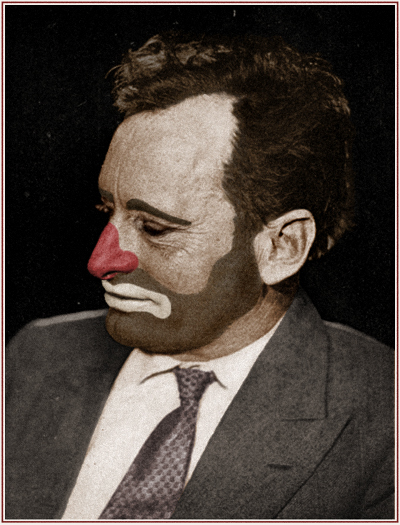
...He advised me not to worry about lice. “You’ll soon get used to ‘em, not feel ‘em biting at all. All you have to do is ‘boil up’ once in a while”—that is, take off your clothes and boil them, a piece at a time, to kill the vermin. These and other personal chores the well-groomed tramp more or less regularly performs, were usually attended to during stop-overs in camps and jungles. It was here I learned to shave with the aid of a broken bit of whiskey glass. The toughest method of shaving I ever saw, though, was when one old veteran of the road rubbed another’s face with the rough side of half a brick!
-Harry Kemp (footnote to history, tramp poet, author, dune shack dweller, village bohemian, home wrecker, hanger on to giants, and purportedly a “lecherous and lazy man who committed as many wrongful acts as a man can safely commit”) from the the Federal Writers’ Project American Life Histories.


The work of master goldsmith Giovanni Corvaja is a fascinating mixture of the ancient and the cutting edge. His pieces are strikingly modern in form, clean geometries encasing staggering complexities, but the techniques employed to create these works are in fact the re-imagining of 3000 year old Etruscan methods (filigree and granulation) largely forgotten until very recently.
In trying to rediscover these ancient processes (specifically granulation) Corvaja has become an interesting mixture of ancient and cutting edge artisan himself. Though he alloys all his own metal for example and manufactures his own ingots, the studio equipment he uses is decidedly modern including a microscope, a super-charged water torch, and a host of self-designed items like a graphite crucible and a sapphire hammer and anvil. This combination of modern technology and ancient technique has allowed him to create work which in many ways outdoes his Etruscan predecessors and evidently pushed his materials to their limit. I’m fond of it in any case. For more images and info see: Galerie-Slavik, V&A collection, V&A audio, Abovo Gallery, and The Scottish Gallery.
hide full text
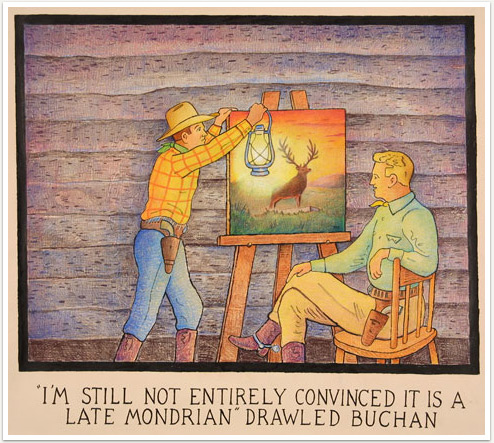
Quote, “Rockets, canoes, bagpipes, fish, good old chaps with patches on their elbows and jokes about Derrida: Glen Baxter’s world is always instantly recognizable. Blunt, innocent-looking lines tether its extravagant surrealism to the page like guy ropes, the economy of those pen strokes undermined by the accompanying text, blocked out in hand-written capitals, which sheds often surprising light on the dummy-blank expressions of the characters.” from an old Guardian article called King of the surreal. Anyone whose work contains multiple Giacometti jokes, or indeed a constant stream of art gags, gets the nod in my book. So let me ask you, are you, like myself, an admirer of this Glen Baxter by any chance? Well, you are about to become one.
Links: Glen’s homepage, Thorogood, Modernism Inc, The Tate, Flowers East, Int. Herald Tribune piece, and a short audio interview.
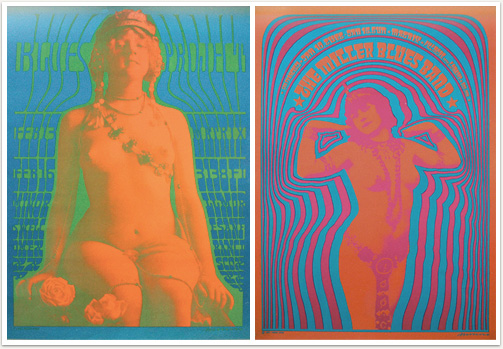
Chances are when you conjure in your mind’s eye an image of a “psychedelic” 60’s rock poster (whether for fun or because you’re an ex-hippie flashing back involuntarily to your blocked-out youth from within the soft leather comfort of your Mercedes) you are likely, without even realizing it, envisioning a Victor Moscoso. It’s been said that Moscoso “was the first of the rock poster artists with academic training and experience.” He studied at the Cooper Union and at Yale (under Josef Albers) and it shows. Moscoso’s own style is, at this late date, damn near synonymous with the form in the same way that you think “band-aid” when you envision of a little adhesive-backed bandage. Likewise though Robert Crumb went on to be the most famous underground artist of the era I guarantee when you think of Zap Comix you think of Moscoso’s dancing mr. peanut / mr. penis cover. I don’t think it’s overstating it to say Moscoso’s style was aped and absorbed by the culture to a such degree that it just seems to be a force of history in retrospect rather than the inspired work of a really talented designer.
To see and read more try: Fine Arts Museum SF, the Neon Rose series & Victor Moscoso at Wolfgang’s Vault, the Victor Moscoso poster gallery, more Neon Rose, the music machine, an interview at the Comic’s Journal, Liberatore: A portrait of the artist as a counterculture connoisseur, and 1960s Psychedelic Rock Concert Posters and the Broadening of American Spirituality.
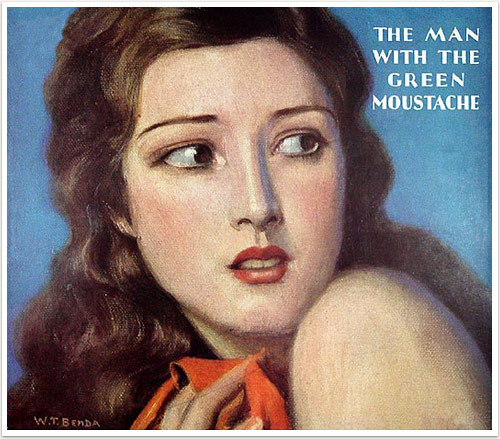
Yes ladies, by all means, draw your shawl near to yourself and beware The Man With the Green Moustache! There is no telling where it, or he, has been! This image was taken from an extensive and beautiful collection of magazine covers stretching, mainly, from the 1890’s through the 1940’s. (Via / If you scroll down you’ll see the full menu.) It is presented by a site dedicated to Ellis Parker Butler, with each of the magazine covers representing an issue which contained his work. Unfortunately the story of the dreaded “green moustache” was penned by someone else, so we’ll most likely never know its wonders. The site offers a few Ellis-penned surrogates though in the form of some similarly mysterious sounding men like- The Man Who Did Not Go to Heaven on Tuesday, The Man Who Murdered a Fairy, The Man Who Was Someone Else, and The Man With the Glass Front in their reading room.