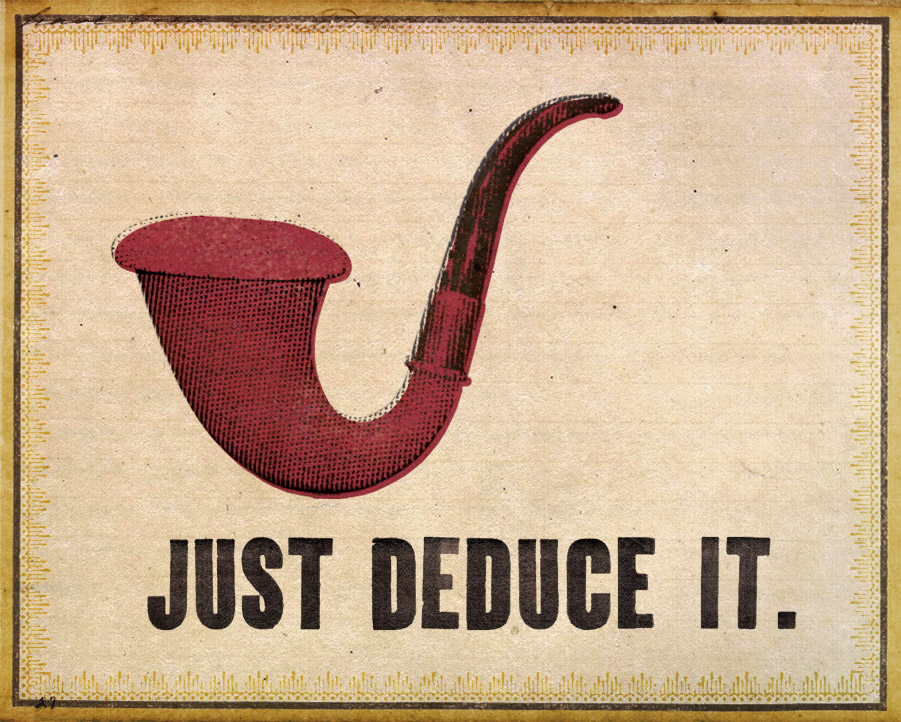
It’s perhaps not well known that for a short period after Sherlock Holmes’ death in 1915, amidst the confusion and grief, a ne’re-do-well calling himself Jonathan Holmes, and claiming to be Sherlock’s estranged brother, sought and was granted legal control of the Holmes estate, and (more to the point) the Holmes name. It seems that for the 8 short months Jonathan Holmes held the rights to the famous name, before being discovered, he attempted most vigilantly to cash in on its renown. At some time in early 1916 receipts reveal that he employed the services of an American printer by the name of Stanley Wieden to create a group of broadsides in the hopes of enticing the public to part with some coin to learn for themselves the “recondite practices” of the beloved master detective. Above we see the only surviving example of Weiden’s efforts. (click here for larger version) How effective this vague (yet vaguely familiar) tack proved remains unknown.




Shadow Play
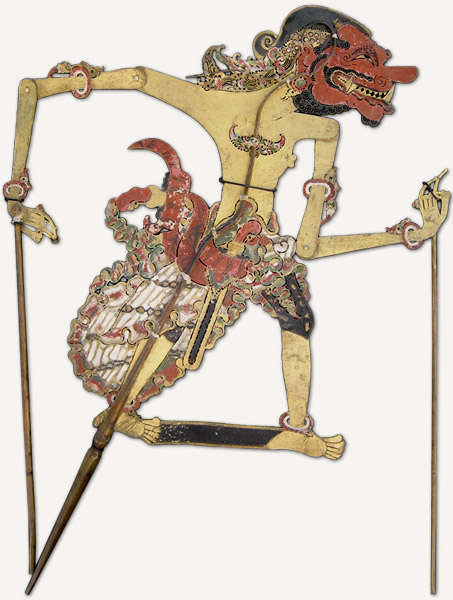
Though the term “shadow play” might bring to mind some sort of salacious fetish practiced by overzealous goths and pre-teen wickans, it is, of course, no such thing. Shadow play refers instead to one of the more ancient forms of theater, one whose roots are so old as to be, beyond a certain point, seemingly untraceable, whose practice can be found, in varying incarnations and distinct traditions, all across the world, and whose contrivances account for some of the most gorgeous puppets to ever to cavort, skulk, vault, or swoon across a stage.




Little Wars
Or: a brief appreciation of carousels
Quote: “The earliest carousel is known from a Byzantine Empire bas-relief dating to around 500 A.D., which depicts riders in baskets suspended from a central pole. The word carousel originates from the Italian garosello and Spanish carosella (“little war”), used by crusaders to describe a combat preparation exercise and game played by Turkish and Arabian horsemen in the 1100s. In a sense this early device could be considered a cavalry training mechanism; it prepared and strengthened the riders for actual combat as they wielded their swords at the mock enemies. European Crusaders discovered this contraption and brought the idea back to own their lands, primarily the ruling lords and kings. There the carousel was kept secret within the castle walls, to be used for training by horsemen; no carousel was allowed out in the public.”



Above is an update of a piece created by Black Panther Minister of Culture Emory Douglas over 30 years ago. In the original it’s Gerald Ford being tugged into life by those puppet strings, and the companies are different, smaller really, with fewer banks and investment firms and conglomerates and LLC’s in evidence. On the whole though, the times… they aren’t a changin’. Check out Emory Douglas’ work at It’s About Time and at the MOCA who are exhibiting his work through January 08. For a bit more check out The Revolution Will Be Visualized. Previously: The Black Panther Coloring Boook.

Archinect has an interesting piece up titled Delirious Moscow, In Search of Lost Vanguards, drawing connections between Soviet architectural modernism, avant-garde constructivism, utopianism, and that societies fluctuating ideas concerning space exploration. Quote: “One could look at the remnants of the avant-garde projects that litter the former USSR as the detritus left by the Martians: the incomprehensible, incommensurable ruins of a strictly temporary visitation by creatures not like ourselves.” It touches on the 1972 novel Roadside Picnic which inspired the Tarkovsky film Stalker, Tatlin’s Third International Tower, and Shukhov Tower among many other things. Great stuff (via enthusiasm).