Juggling, it’s history and greatest performers. Research in juggling history. History of juggling. Christian Rohlfs, Death as Juggler. Juggling and the subjective records of physical skills. On keeping things up in the air. Lord Frederic Leighton, The Antique Juggling Girl. Notes toward a history of juggling. Sir Lawrence Alma-Tadema, An Egyptian Juggler The science of juggling. Information theory and juggling. Bosh, The Juggler. Memorable tricks and a numbers formula. On neatly arranged cascades. Picasso, Juggler with Still-Life. The moral and aesthetic implications of the mastery of falling objects. The physics of juggling. Animations: great jugglers of the past. Chagall, The Juggler. The juggling hall of fame. The museum of juggling. Jugglewiki. Juggler’s World Magazine archive. Passing: juggling videos. Video: juggling in a cone. Belloc Lowndes, The Juggler. A survey of robotic juggling and dynamic manipulation. On Claude Shannon’s juggling machines and a vid of them in action. The juggling robot. Video: humanoid robot juggler. Adriaen de Vries, Juggling Man.
In Search of: Juggling



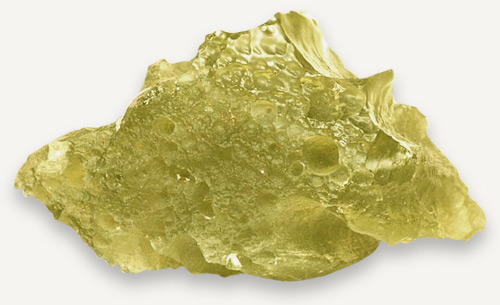
• Sensationalistic title of the day: King Tut’s glass beetle came from outer space! Since 1922 when Tutankhamun’s tomb was excavated experts have puzzled over the origin of a yellow stone, at the center of a necklace, which was carved into the shape of a scarab. Scientists now say it is desert sand melted into into glass by the heat of a meteorite. Took 84 years to figure that out?!
• Pickle Phobia: proving once again that, a) people are fucking retarded, and b) even setting aside the ridiculousness of it all, people are sadistic as hell. Via.
• Very cool idea: Unofficial audio guides for museum exhibits, in this case for works being shown at the moma.
• Not to be missed: the starlings. Wow. Via everywhere.
• Modern update of The Boy Who Cried Wolf: The Scientist Who Cried Fusion. “After years as a purely experimental science, a decade-long international effort will make nuclear fusion a reality.” Yeah, best of luck to the 7 nation’s worth of scientists who’ll give it a go, but I’ll believe it when I have a fusion-powered toaster and not before.

• Espionage: The history and evolution of spy and investigative photography, Via. The evolution of spy tools. Spies that fly, including spy photos that made history. Top secret: myth and reality in espionage. The international spy museum. The top 10 strangest (modern) spy gadgets.
• If you’re a foreign dignitary what kind of gift do you get for Bush and his cadre?
• George Dvorsky of Sentient Developments mulls over the question “When did intelligence first emerge in the universe?” and its implications.
• On this day in 1842 Ambrose Bierce was born. Why not celebrate with a browse through his Devil’s Dictionary? Alternately: Forked Tongue, the language of serpent in the enlarged Devil’s Dictionary and The Ambrose Bierce Project.
• In order to run experiments testing theories of extra dimensions, a pair of physicists think the best strategy is to start from scratch and build a whole new solar system in miniature and launch it into the L2 Lagrange Point.
• Check out BumpTop, a desktop U.I. with all the messiness and complexity of your actual pile-strewn desktop. Interesting.
• A breakdown of the ways in which different religious groups are pitching in to hurry along the arrival of the apocalypse. Via.
• Jim Emerson’s Opening Shots Project looks at some memorable opening shots from movies and asks you to submit your favorite. Via.
• If a dozen shrinks each interview the same patient, will they arrive at the same diagnosis? Or: Can a psychiatrist really tell what’s wrong with you?
• Deviant Desires offers a road map to sexual fetishes of all kinds.
• We New Yorker’s offer a courteous suck on this! to the residents of other cities, especially those dicks in Bucharest and Mumbai.
• Even the aliens have world cup fever, evidently wanting to get in on the soccer action, considering this footage out of Mexico.
• It was always thought the concept of infinity was too “messy” for the ancients, but they continue to humble us from beyond the grave. Archimedes dealt with infinitely large sets in a mathematical proof only recently discovered in his Palimpsest.

• One of the long-running challenges faced by proponents of space exploration has been finding compelling reasons to sell such efforts—particularly big-ticket government programs—to the general public. This is a challenge because in the United States there are few coherent attitudes about space. The prevailing attitude might best be classified as apathy. Jeff Foust of The Space Review talks a bit about a recent forum held on Capitol Hill: What’s the value of space? This is one of those questions that literally boggles the mind. For those of us who view space the way others might view… well… God, it’s hard to even frame a response. So what is the value of space? I’d love to hear how all of you would answer that question. If you’re not too shy or apathetic why not answer in comments?
Further space linkage for today:
• NASA offers Planet Quest, the search for another earth (flash presentation) which rounds up information on 8 separate up-coming missions. Here is the homepage.
• NASA’s Constellation Program is “getting to work on the new spacecraft that will return humans to the moon and blaze a trail to Mars and beyond.” Here is a nifty flash presentation.
• After a decade’s work, physicists are flying an antimatter observatory. PAMELA.
• They all see it. It comes and goes. Could it be that it’s alive? From clues to hypotheses, the forensic investigation of the dark dune spots of Mars. Via.
• Lastly, a nice alphabetical way to browse the major space artifacts on display in the National Air and Space Museum.