Mention historical Japanese painting to a westerner and certain images involuntarily leap to mind- Hokusai’s great wave, an idyllic nature scene, an elegant Geisha, a sparrow perched on an inky branch… even Tales of the Genji or an explicit bit of Shunga perhaps. I imagine one thing which does not readily spring to mind is H-E-Double-Hockey-Sticks, with its demons and leaping flames and pestilence and writhing souls. After all, that’s our thing! Isn’t it?

There is Yet Another Hell



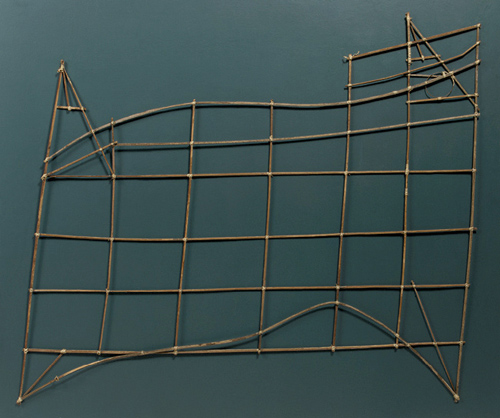
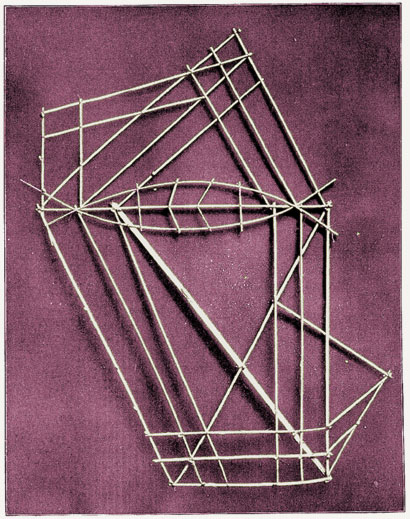
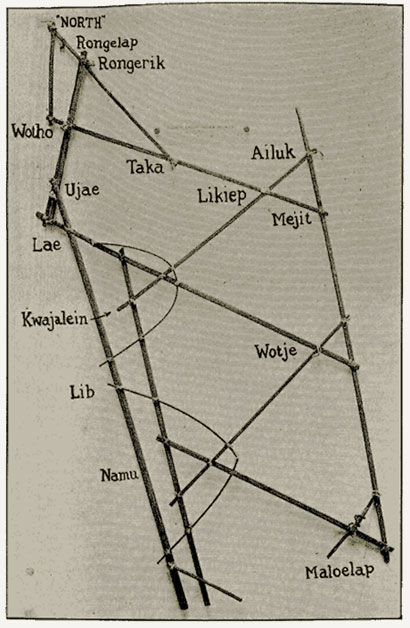
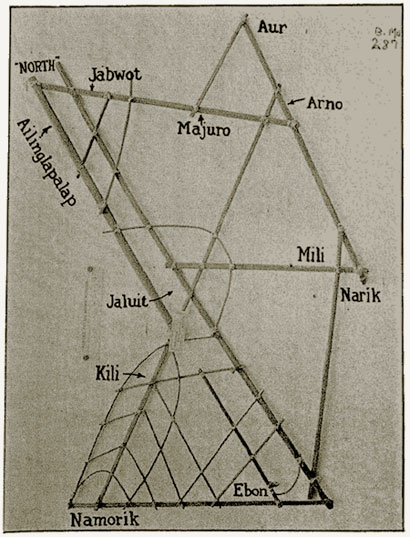
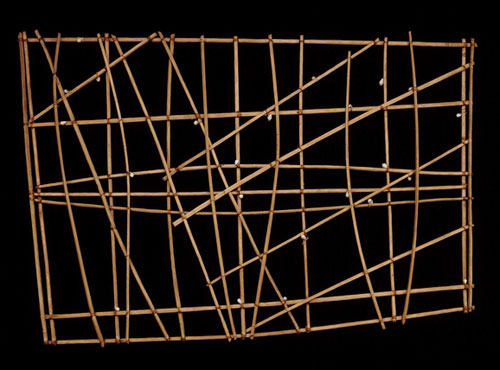
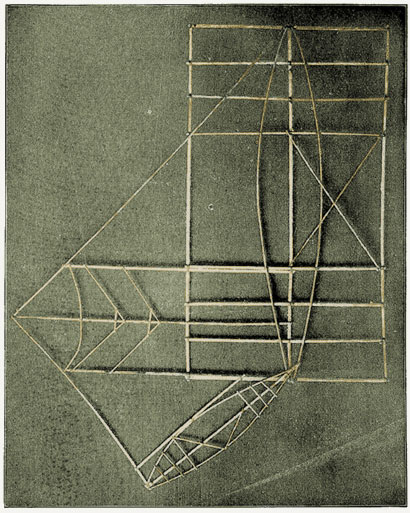
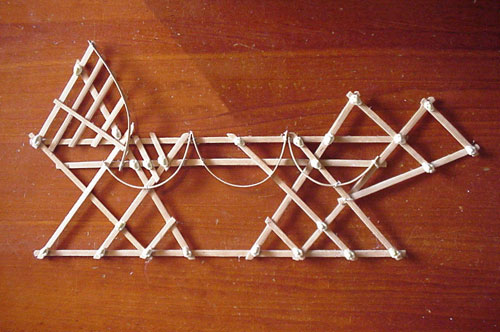
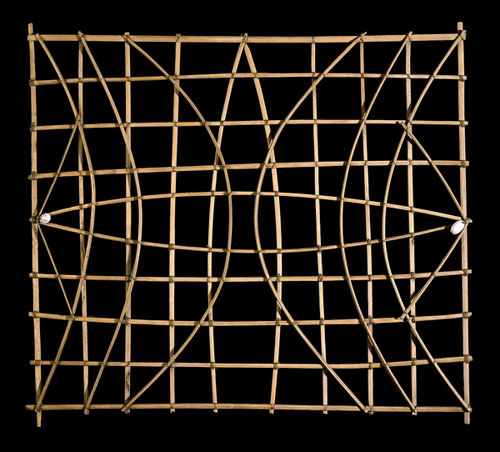
Polynesian Stick Charts
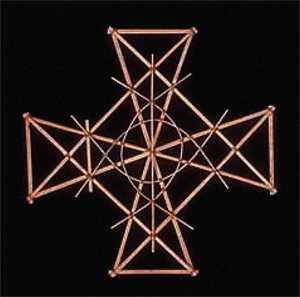
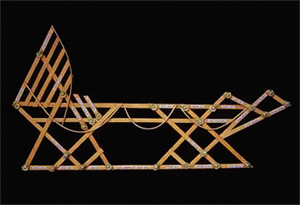
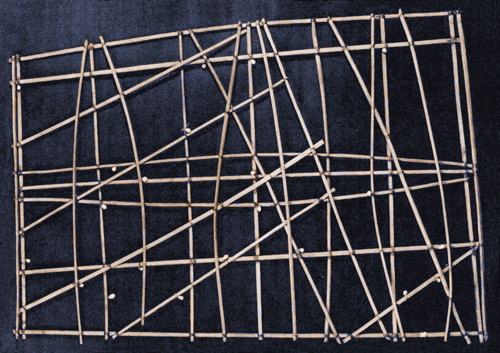
The Polynesians, scattered as they were over 1,000 islands across the central and southern Pacific Ocean, were master navigators who tracked their way over a huge expanses of ocean without any of the complex mechanical aids we associate with sea fairing. They didn’t have the astrolabe or the sextant, the compass or the chronometer. They did however have aids of a sort, which though seemingly humble, were in fact the repositories of an extremely complex kind of knowledge. Called Rebbelibs, Medos. and Mattangs, today we call them simply “Stick Charts.”



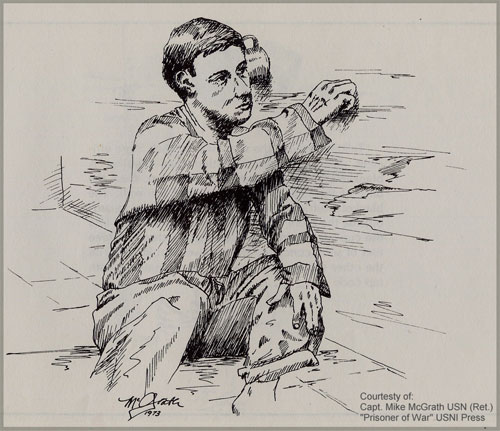
“There were only occasional cigarette wrappers or paper towel like toilet paper with no pencils or ink available for communication. You could manufacture ink out of brick dust and sundry such elements and use bamboo slivers for pens. The only sure way of communicating thusly was to drop a note in an emptied toilet bucket, float a note out on your manure, hide a note at a wash trough, or scratch a message on the bottom of a rice bowl. But you had to contact the guy first to tell him all this. The preferred, most secure and most reliable method was to tap on the walls or floor pad in a rhythmic code known to us as the Tap Code.”

Juice of Cursed Hebenon
History of Poison. Poisoning in Ancient Times. Poisoning in the Middle Ages. Poisons in the Renaisance. Poisoning in the 16th, 17th and 18th Century. Poisoning in the Victorian Times. Poisoning in the 20th Century. Don’t Chew the Wallpaper: A History of Poison. A Brief History of Poison. Folklore Poisons. List of Poisonings. A Brief History of Poisoning. The Elements of Murder. The Fine Art of Poisoning.
The one conclusive argument that has at all times discouraged people from drinking a poison is not that it kills but rather that it tastes bad. -Nietzsche.
What is the Most Deadly Poison in the World? A Poison Tree. Illustrated Index of Poisionous Plants. Poisonous Plants Database. Poison Apple. Wild Inedible and Poisonous Mushrooms. Mushroom Poisoning. Poisonous Plants, Animals, and Arthropods. Poison Harpooned Cone Snail. Poison in a Cone. Poison Frogs. Poison Dart Frogs. Poison Powder. Poison Cups. Drink Me. Poison Jewelry. Poison Arrow. Arnesic in the Eye. Antique Poison Bottles. Collecting Poison Bottles. Antique Poison labels. Mr. Yuk. About Mr. Yuk. And Finally…
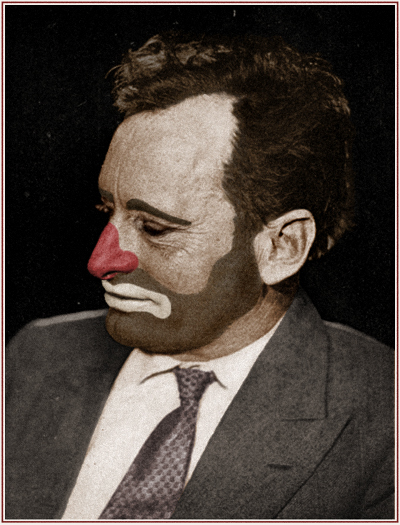
...He advised me not to worry about lice. “You’ll soon get used to ‘em, not feel ‘em biting at all. All you have to do is ‘boil up’ once in a while”—that is, take off your clothes and boil them, a piece at a time, to kill the vermin. These and other personal chores the well-groomed tramp more or less regularly performs, were usually attended to during stop-overs in camps and jungles. It was here I learned to shave with the aid of a broken bit of whiskey glass. The toughest method of shaving I ever saw, though, was when one old veteran of the road rubbed another’s face with the rough side of half a brick!
-Harry Kemp (footnote to history, tramp poet, author, dune shack dweller, village bohemian, home wrecker⊕, hanger on to giants⊕, and purportedly a “lecherous and lazy man who committed as many wrongful acts as a man can safely commit”) from the the Federal Writers’ Project American Life Histories.
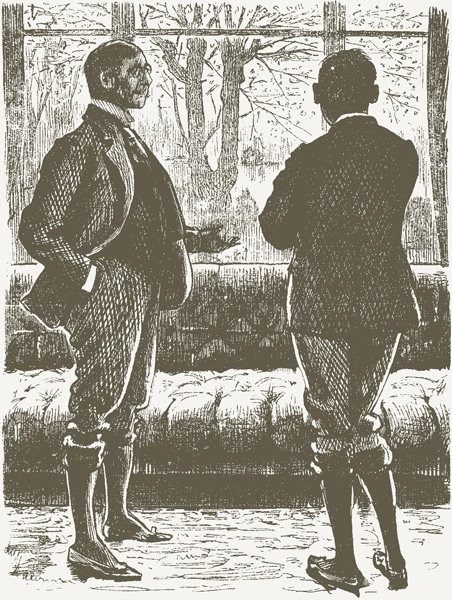
Nature Vs. Art
Æsthetic Friend: “Yes, This room is rather nice, All but the window, with these large blank panes of plate glass! I should like to see some sort of pattern on them—Little squares or lozenges or arabesques…”
Philistine: “Well, but those lovely cherry blossoms, and the lake, and the distant mountains, and the beautiful sunsets, and the purple clouds—isn’t that pattern enough?”
(Taken from Punch, or the London Charivari, Vol. 102. June 4, 1892. which, along with many other volumes, can be found on Gutenberg, listed for your ease here.)

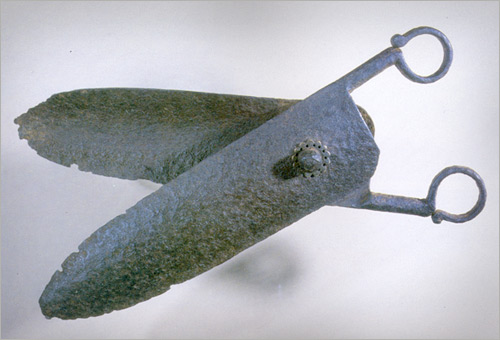
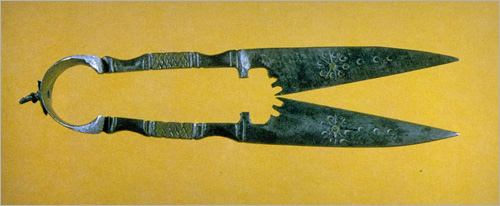
Some bits from the history of scissors
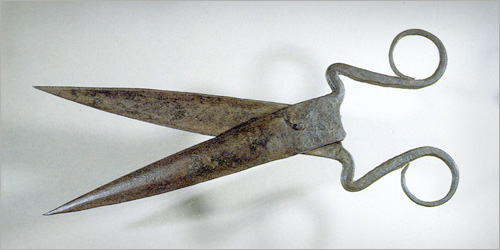
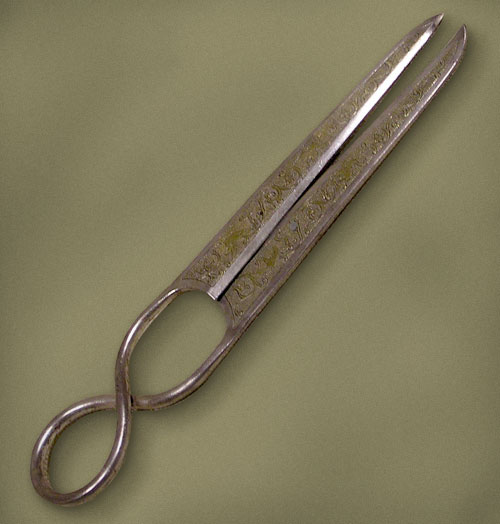
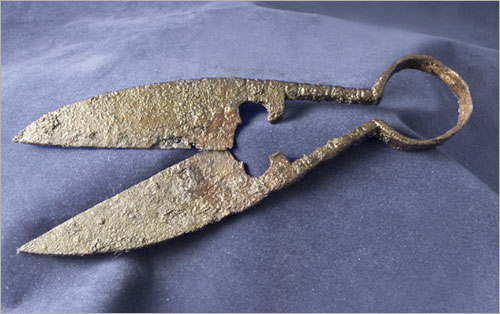
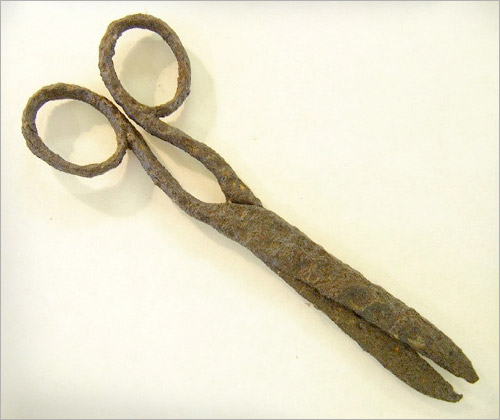
Quote, “The obvious is so commonplace that when waved in front of our noses we often don’t give it a moment’s thought or even realize it’s there. We take certain objects so for granted that we probably never stop to ask ourselves how they first figured in the life of man. This is the case with scissors: do they date back one century, two centuries or twenty? Our stainless steel kitchen scissors were probably bought from a market stall around the corner, but when did the first scissors come into the world? Attempting to track down the name of a crackpot inventor would certainly be of no avail; as in many similar cases, scissors were not invented in a flash of creative genius, but rather evolved, step by step, alongside many other tools destined to cut, separate and pierce, undergoing modifications of design, material and decoration from the first, primitive examples — or at least from the first examples revealed by archeology and literature — to the scissors of today.” - From Scissors by Massimiliano Mandel.






Quote, “Some books are ahead of their time. Some books convey a message which threatens prevailing notions, and are therefore brushed away. Some books are mixtures of profound insights and garbled speculations. Hamlet’s Mill, An Essay on Myth and the Frame of Time (1969) partakes to varying degrees in all of the above. Hamlet’s Mill began a revolution in understanding the profound sources of ancient mythology. Although it tottered on the edge of oblivion for years, it has reemerged as the fundamental inspiration for many progressive researchers who find the precession of the equinoxes lurking within ancient creation myths around the world.” - From an intro to the complete online text of Hamlet’s Mill by Giorgio de Santillana and Hertha von Dechend. (Via.)

Chances are when you conjure in your mind’s eye an image of a “psychedelic” 60’s rock poster (whether for fun or because you’re an ex-hippie flashing back involuntarily to your blocked-out youth from within the soft leather comfort of your Mercedes) you are likely, without even realizing it, envisioning a Victor Moscoso. It’s been said that Moscoso “was the first of the rock poster artists with academic training and experience.” He studied at the Cooper Union and at Yale (under Josef Albers) and it shows. Moscoso’s own style is, at this late date, damn near synonymous with the form in the same way that you think “band-aid” when you envision of a little adhesive-backed bandage. Likewise though Robert Crumb went on to be the most famous underground artist of the era I guarantee when you think of Zap Comix you think of Moscoso’s dancing mr. peanut / mr. penis cover. I don’t think it’s overstating it to say Moscoso’s style was aped and absorbed by the culture to a such degree that it just seems to be a force of history in retrospect rather than the inspired work of a really talented designer.
To see and read more try: Fine Arts Museum SF, the Neon Rose series & Victor Moscoso at Wolfgang’s Vault, the Victor Moscoso poster gallery, more Neon Rose, the music machine, an interview at the Comic’s Journal, Liberatore: A portrait of the artist as a counterculture connoisseur, and 1960s Psychedelic Rock Concert Posters and the Broadening of American Spirituality.
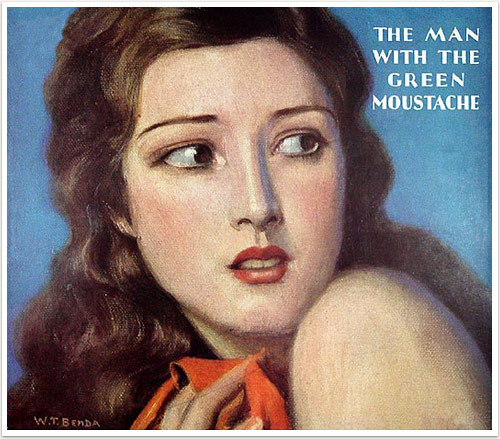
Yes ladies, by all means, draw your shawl near to yourself and beware The Man With the Green Moustache! There is no telling where it, or he, has been! This image was taken from an extensive and beautiful collection of magazine covers stretching, mainly, from the 1890’s through the 1940’s. (Via / If you scroll down you’ll see the full menu.) It is presented by a site dedicated to Ellis Parker Butler, with each of the magazine covers representing an issue which contained his work. Unfortunately the story of the dreaded “green moustache” was penned by someone else, so we’ll most likely never know its wonders. The site offers a few Ellis-penned surrogates though in the form of some similarly mysterious sounding men like- The Man Who Did Not Go to Heaven on Tuesday, The Man Who Murdered a Fairy, The Man Who Was Someone Else, and The Man With the Glass Front in their reading room.