For God was as large as a sunlamp and laughed his heat at us and therefore we did not cringe at the death hole. -Anne Sexton
Or
If you saw a heat wave, would you wave back? -Stephen Wright.
For God was as large as a sunlamp and laughed his heat at us and therefore we did not cringe at the death hole. -Anne Sexton
Or
If you saw a heat wave, would you wave back? -Stephen Wright.

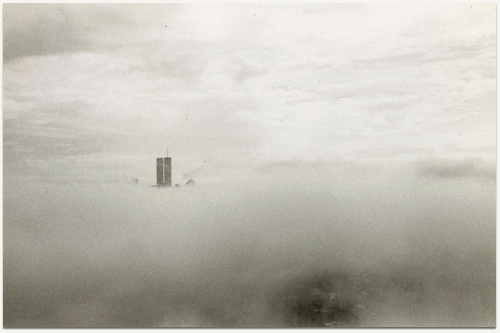
What shall we use to fill the empty spaces?
I took this picture what seems a thousand years ago, when I was still a lad and my father was working on the 72nd floor of the Empire State Building. (You could actually just walk over and open the widows like they were the little sliver of a bathroom window in your apartment.) At the time it was just a bad photograph. Not quite perfectly exposed, not quite perfectly framed. A couple of buildings and a shroud of thick fog. Fwap! Onto the pile. But now? Well, with that whole “buildings in heaven” look it got going on perhaps it’s found a new relevance?
Recently something dawned on me. I came out of my office and turned south toward the N/R station. I happened to look up and saw the emptiness which terminated the pinpoint of a horizon, where, as it so happens, the towers used to be. It struck me, looking up casually and unthinking, that what I really wanted to see were those towers. It wasn’t a sad moment, I didn’t crash knee-down on the pavement and (damn them!) launch into a Heston-worthy soliloquy. I simply looked up and realized for the first time, that long after all the sadness and shock and directionless anger, after the promises and grand plans and presentations that what I would most fondly like to see were those two towers again. My opinion suddenly formed solidly on what should be built on that ground.
A few months ago I had to go down to the court building to throw my name into the jury-duty hat, and afterward walking by the site of “ground zero” I was dismayed to see what, after nearly 5 years, all the glitzy competitions, heated debate, and ponderously heavy rhetoric had wrought… exactly nothing. “Ground zero,” suddenly a doubly fitting name, was ground that contained zero. It was a huge fucking hole in the ground; that’s it. I don’t know whether those of you living outside of the Tri-State area realize that. With all that has been said and all that has been done in the reverent name of 9/11, the actual site, the “holy ground” which evidently just radiates with meaning and power, is still, 5 years later, a dirt hole. It seems that in “this post 9/11 world” symbolism and rhetoric are all that can be built-up, with passionate gusto, tall and strong.
When I say what I really want to see when looking south are those towers I mean it literally. You know what I don’t really want to see? A hideous fucking monstrosity, covered in prisms, couched in forgettable hackneyed concept, birthed from the piteous wombs of politics, greed, and compromise.
Message to George Pataki- You and your “Legacy” can suck cock. I can only take heart that your utter failure will impede your using our tragedy to bolster a presidential bid (like a certain Mayor, who everyone seems to forget was widely despised by those he governed before events allowed him to don the hero-mask… oh wait… it’s 2006… that’s a Presidential pedigree today isn’t it?)
Message to Larry A. Silverstein- Kill yourself. Seriously. You are a Scumbag. I’d rather tongue-kiss a lipless leper crack-addict than even look at you.
Message to the Lower Manhattan Development Corporation- Fire yourselves.
Message to George W. Bush, his cabinet members, and the sycophantic House and Senate- Get the term “9/11” out of your filthy fucking mouths. I don’t want to hear another tangential argument given weight by your use of September 11th as ballast until the “ground zero” of those events is afforded the same weight, in physical reality, as it is in your “stirring” words.
You know that primary construction on the original Twin Towers only took about 5 years? That means that if our leaders were not so full-of-shit, if our business-men were not so totally devoid of social conscience, and our citizens were not so listless, that we New Yorkers could look south and see, if not this September then one very soon, two reassuringly familiar (albeit structurally improved) towers rising to fill the empty spaces? How “right” would that feel? As things stand symbolism is threatening to usurp reality completely. If the incompetence continues much longer the symbol itself might be threatened with transformation. Anyone who says “Think of 9-11” will be saying “Think of how utterly full-of-shit we are.”

This is another photograph I took years ago. For some reason this image of a classic (Milton Glaser designed) “I heart N Y” coffee cup substituted with the word “V O I D” had a vitality and meaning to me. I made the cup and shot a whole role of it. I think I even had a t-shirt. Today, if I’m being honest, I have no idea what it meant to me exactly, or why it resonated. But again, as with the “towers in heaven” image, it seems to have found a new relevance, resonating for more obvious reasons. It’s an accidental protest image I suppose and I would like to offer it to you.
If anyone out there finds themselves similarly dismayed and upset by the void which still occupies what is ostensibly one of our countries most important sites, one which seems to symbolically initial all manner of political blank-check, then take it and use it.
Here is another:

Fuck it. What else is there for me to say? I’m tired.
hide full text
Trickle-down affections
Or: do celebrity archetypes inform our snap-judgments?
No matter how hard we humans play at ideas like open-mindedness, reservation of judgement, and rationality we can’t help ourselves but to make instantaneous snap-judgments about things. That’s no damnation, it’s just the way our brains work. We see something new and our industrious little minds seek connections and corollaries. If our minds find acceptably concrete evidence lacking, they simply move down a tier, from direct experience to indirect, and make whatever connections seem most likely. Our minds have no qualms about simply guesstimate and making the closest match they can manage. It’s how we categorize the world around us and make sense of reality.
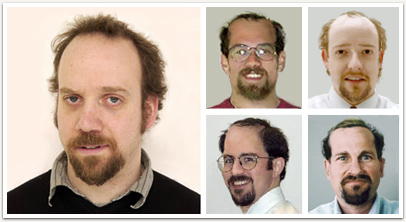
In that celebrities are a wide-spread and shared point of associative reference I wonder how much they color our perception of the strangers all around us? Take the example pictured in the thumbnail above: Paul Giamatti.
During the period when the movie Sideways was moving through our culture like wildfire did the common perception of him physically combine with attributes of his character intellectually and emotionally, to form a kind of reference point for short, balding, goateed men everywhere? Which is to say during that period did our minds involuntarily find that strangers around us, of similar physical proportion, were a bit more endearing? Perhaps even a bit more amusing or likable? Did short, balding, goateed strangers everywhere, unfounded though it might be, grow slightly more well rounded and “fleshed-out” in in the eyes of we judges?
An obvious example might be Michael Jackson impersonators. I have to assume that since his trial on charges of pedophilia, and the resulting shift of public opinion, their interactions with strangers must have become more complex and their business less lucrative. Agreed? So why shouldn’t it be the same for more subtle variations?
For example:
Did horse-faced women walking the streets suddenly become a bit more attractive during sarah Jessica Parker’s ballyhooed stint on Sex and the City?
Did obese tackily-dressed grease-balls in the office-place become somewhat less laughable and simultaneously more imposing after the cast of The Soprano’s became popular?
Did severe-looking suited shrews seem even more hideous and shrew-like after Ann Coulter’s ascendance?
Did poindexters with glasses and bowl-cuts seem suddenly more attractive to the devious among the opposite sex after Bill Gates became the single richest man on the planet?
Did vacuous, squinty-eyed, good-ol-boys and bald, permanently scowling, humorless suits suddenly seem even less affective and trustworthy after Bush and Cheney’s second term began?
I’m not sure, that’s why I ask. But it does seem likely, even leaving aside my poor examples here, that celebrities which occupy easily recognizable physical archetypes must inform our judgement when it comes to the strangers around us, and let’s face it, really, everyone is a stranger.
What say ye?
hide full text
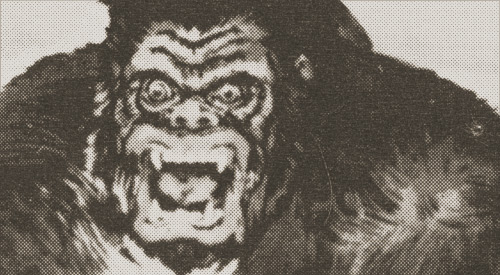
Gargantua the Great
Or: Buddy, the gorilla who was scared of lightning.
I came across a few photos of a lowland gorilla in a book about the history of the circus which piqued my interest. I’m a big fan of the primate you see (some being dearer to my heart than others) and I went searching the web to find out more. The Ringling Brothers Barnum & Bailey Circus billed him as “Gargantua The Great, the world’s most terrifying creature” but as it turns out a previous owner had dubbed him Buddy, short for Buddha, and he had a very sad past. Not only that but he was scared of lighting. What follows are a few brief notes on Buddy’s story and some related images.
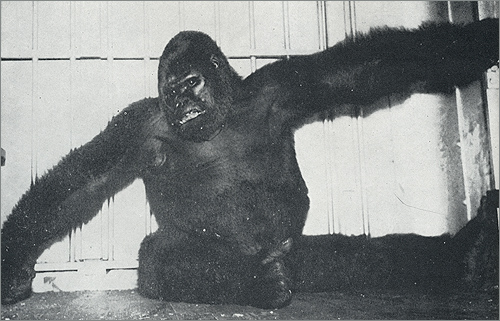
Essentially the story of Buddy goes like this: In the Mid-30’s a baby gorilla was offered to a freighter captain as a gift from some friends who were African missionaries. The Captain accepted and brought the gorilla aboard his ship, naming him Buddy. He was adopted by the crew and became the darling of the ship being given specially prepared foods, taught to preform seaman duties, and otherwise adored.
A sailor aboard the ship took exception to the discipline doled out by the Captain and knowing how fond the captain was of the baby gorilla threw nitric acid in Buddy’s face as a means of vengeance. Buddy was nearly blinded and forever disfigured. Buddy hid himself refusing food, shrieking, and attacking anyone who came near. The sailors, at a loss for what to do, urged the captain the euthanize Buddy, but the captain knew a wealthy woman in Brooklyn who cared for sick animals and decided instead to bring Buddy to her.
Her name was Mrs. Gertrude Lintz and she was a bit of an eccentric.
Under Mrs. Lintz care Buddy grew to a huge 600 lbs. A plastic surgeon attempted to repair his disfigured face but left him with a permanent terrifying sneer otherwise out of character with his gentle nature.
Evidently one night it was stormy out. Buddy was frightened by the thunder and lighting and broke out of his cage. He crawled like a frightened child into bed with Mrs. Lintz. She decided then and there to give the 600 lb. eight year old lowland gorilla to the circus. She contacted John Ringling in 1937 who came to Brooklyn to see Buddy. He was later quoted as saying:
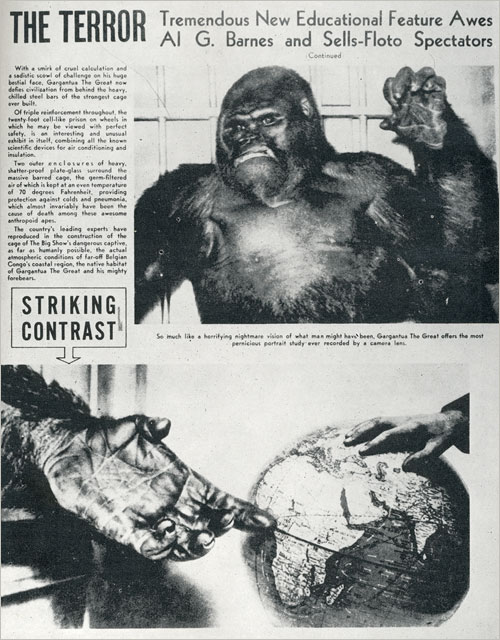
Ringling bought Buddy on the spot, and renaming him (at his wife’s suggestion) Gargantua, after Rabelais’ giant king of Gargantua and Pantagruel, launched an advertising campaign centered around the gorilla which hailed him as “the largest gorilla ever exhibited” and “the most terrifying living creature.” Millions flocked to see Gargantua. He was a huge success as an attraction which single handedly helped rebound Ringling Brothers & Barnum and Bailey from the ruinous period of the Great depression.
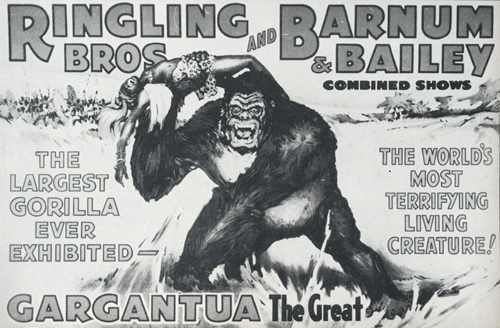
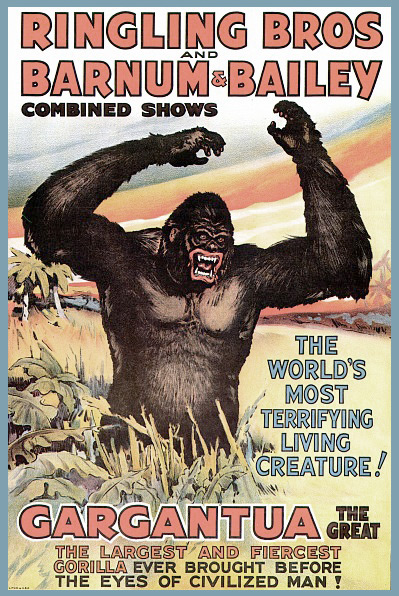
The circus built Gargantua his own special air-conditioned cage on wheels and toured him successfully for years.
From Time magazine, 1938-

June of 1938 saw one of the few comical aspects of the gargantua story when former heavyweight boxing champion Gene Tunny revived the age old Ape vs. Man argument with an article in the Connecticut Nutmeg in which he wrote the following:
In 1941 as a publicity stunt a “marriage ceremony” took place as Gargantua took a female gorilla named Mitoto as his wife. Called “Toto” for short. (Toto had also been property of an affluent woman who during tea with the gorilla had her both her wrists snapped.) Mitoto, Swahili for “Little One,” became known as simply “Mrs. Gargantua.” Ringling had hoped to mate the gorillas. Their first meeting was romanticized in a time Magazine article in March of 41-

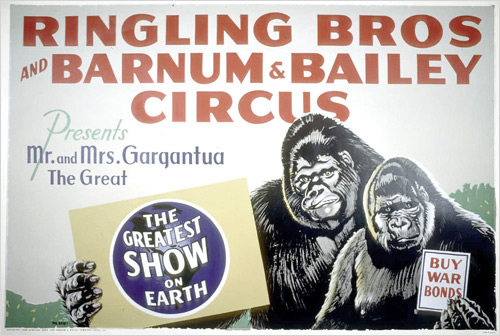
In point of fact all that really happened was Gargantua threw some rotten vegetables at his intended mate. Though they toured together for many years they never mated or had offspring.

When in 1949 it became obvious that he was not well, no one dared approach him to find out what the trouble was. He died that November of double pneumonia. Gorillas in captivity often live for 40 years or more, Gargantua, however, was only 20. Newspapers announced his passing with prominent headlines and in 1950 Gargantua’s skeleton was donated to the Peabody Museum where it is still on display.

A sad story if you ask me, one which was later desecrated further in the 1997 flick Buddy. Poor ol’ Buddy.
hide full text

Apologies to all for the spotty posting and general crapulessence on display here of late. Hate to make excuses but work’s been kicking my ass lately. Hope to return to previous glory soon… O.k. now stop trying to look up my chiton and move along, you sickos.
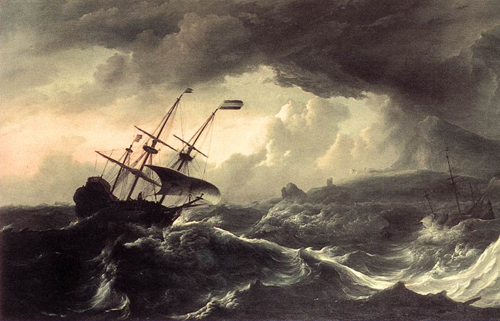
The sea was angry that day my friends. The sky was cloudy as our president’s judgement, dark as his rule. The rain, like a million tiny silver hammers of Maxwell, came down upon my head. Life, as it has a nasty habit of doing, had intervened on behalf of misery, and served me a summons. There was nothing to be done, this trip on choppy seas had to be made.
For my safety, landlubber that I am, the captain brought me down into the hold of the ship amid a payload of instruments and devices, the purposes of which I dared not ponder. He sat me down saying, “just relax, lay back, you shouldn’t feel a thing. It will all be over before you know it.” His first mate placed a cup of water at my side and the they went about their duties, not paying me any heed.
What followed was… well unpleasant. I closed my eyes, feeling nothing so much as numb. I opened my mouth as if to yawn but no sound issued. Outside thunder did what it does best and rumbled ominously. Other noises sounded above me and my closed eyes which were less familiar and is as much perhaps even more ominous.
I heard machinery revving and spinning and a wet spluttering as though the boats motor were meeting resistance and throwing water against rocks. I heard the scraping and clinking of unknown devices being put to use, and the voices of the crew, calling out in the lingo of their kind, the meanings impenetrable to such as I. I’d swear I could feel the heat of these unknown machines on me as though they were a millimeter from my face. I found it hard to swallow. The burning smell of motors and hot friction was inescapable. I promised myself I’d take whatever precautions needed to avoid trips like this in the future.
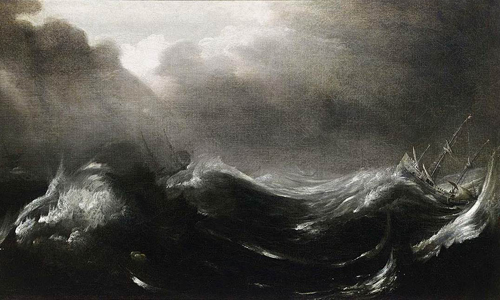
Suddenly everything seemed to stop. No more sounds; no more fury. I opened my eyes. As if on cue the captain reappeared, saying, “Pick up that cup of water and use it son! Then get up out of that chair and come with me. It’s all over.” And indeed it was.
As it turns out while I was down in the hold the storm had blown over. I walked out onto the upper decks to find bright clear skies. We’d docked and my leg of this blasted trip was at an end. The captain handed me my writs of passage, informed me the price of the voyage had been taken care of (miracle of miracles!), and simply bid me farewell, as though it were just another day at the office for him, which I guess it was. I disembarked from the ship and headed out into a gloriously warm and sunny day, my trial at sea over.
All of which is to simply to say:
It was pouring this afternoon here in New York, and I had the misfortune of being obliged to head down to my local dentist, in the pissing rain, to have two, counte em’, two root canals. Not a fun scenario. But as it turns out when it was all over and I left the office the rain had stopped, giving way to a gorgeous sunny day. I had a scrip for some heavy pain-killers in hand and a stroll through a glistening Central Park in front of me. So it ain’t all bad!
Oh wait, I spoke too soon. It’s pouring again, worse than before. And the Novocain is wearing off… I think I’m about to have a flashback…

yeesh. For more on the trials and tribulations of dentistry see this previous post pulling teeth.
hide full text
City Skies
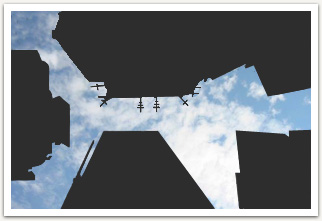
At some time in 1880’s urbanites in a few cities across the world each made real estate deals with the sky. Essentially the terms of the deals went something like this: “You let us build massive and towering buildings deep into your side of the horizon-line and we, in turn, will give up all rights to a decent view of you.” The sky, being a generally aloof sort, didn’t deign to protest.
By the 1930’s many more cities followed, striking similar bargains with the sky.
“We’ll give up all sense of natural scale if you allow us to build.”
“We’ll sacrifice our conception of a horizon-line.”
“We’ll part with our view of the sun-set and sun-rise.”
“We’ll depend on others, with a better vantage point, to tell us where the
clouds are, what they’re up to, and where they’re going.”
“We’ll eschew use of the stars and depend on technology to tell us where
we are and where we’re going.”
“We’ll stop gawking and staring at you all the time.”
Etc.
New York, being the shrewd merchant city that its always been, gobbled up more sky real-estate, quicker, and with more gusto, than just about anyone else. The sky had plenty of space after all, more than the pigeons and house sparrows need to stretch their wings, and we needed somewhere to put our chandeliers and ceiling fans, so it was a sort of “infest-destiny” that we colonize the sky.
Over time we developed so much of that once empty air that today you can hardly stand anywhere, on any street, and see more than a small, jagged, puzzle-piece of sky. The electric lights wash out the stars and the sun is something sensed or seen in reflection. Truth is most of us don’t even bother to look up. “We live and work in the sky, we don’t gape at it. Snort!”
For those of you who live in areas where atmospheric zoning-laws are more strict, and who look out your windows everyday to see vast horizons and giant skies, let me walk you through a day of our metropolitan skies:


I’ve blacked-out the buildings to accentuate the actual sky quotient of each scene. Admittedly there is something cool about these odd “bolts” of sky in this context, (they remind me of Clyfford Still paintings, which “me likey” very much indeed) but I can’t help but wonder what does this sky deprivation do to the human brain? What is the effect of having no horizon? (other than, in the lack of sunset to ride off into, discouraging a heavy cowboy population.) What effects do the tightly packed high walls and lack of spacial depth do to our outlook?
I love my city and applaud our audacious sky-conquering forbearers. The stacking of people has allowed for the mind-expansion part and parcel to a melting pot. It wouldn’t have been possible any other way. Never the less, setting the questionable psychological effects aside, I feel I need to point out one bit of possible shortsightedness in the upward expansion model-
Namely the totally crappy view we’ll have of possibly momentous events in human history! If anything of importance happens in the sky, we shlubs on the ground won’t be able to see jack-shit! I’m not talking about events as piddling as Forth of July fireworks, which, in the city are inevitably best viewed like:

I’m talking about potentially earth-shattering stuff here! For instance? Well:


I could also mention how crappy a view we urbanites would have of the great big beautiful sun after it went Red Giant, turning into human char-broil without even getting any decent photo-ops for our trouble, but I’m confident we won’t be around long enough to bitch about that one.
I suspect the city officials have intuited this shortcoming for a long time, they were no dummies after all.
An example: Seems that way back in ‘37 there was talk of launching the Hindenburg out of Manhattan. ⊕ Mysteriously, at the last minute, the Mayor and his inner circle scrapped the plan and the flight was switched to taking off from the Frankfurt airfield. I suppose they knew that a view like this:

just wouldn’t have made as cool an album cover.
Point is as great as the city is, as clever as our upward expansion has been, as majestic as our buildings are, our relationship to the sky and it’s goings on are forever compromised. How this ultimately effects us as humans I have no idea but as a New Yorker I can only hope nothing worth seeing ever happens up there.
hide full text
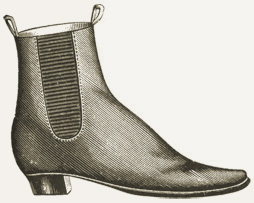
Taking the turtle for a walk and letting him set the pace.
It happens all the time. My own ignorance is revealed to me in the same way. In the course of reading I accidentally discover that for some vague feeling or embryonic notion, which I’ve never taken the time to organize in my mind, or scrutinize, there is already a word. And where there is a word there are bound to be others. When the trouble is taken to name something it’s a safe bet there is a lineage of thought trailing behind it into history.
In this case the vague feeling is the pleasure of walking aimlessly through the streets of New York; the seemingly causeless delight in strolling about with no destination and no hurry, just looking at things, letting myself wander, getting ideas. In the increasingly rare instances I find myself actually doing it I invariably think, “I wish I could just do this all the time, every day.” In truth, and I’ve never really known why, It just makes me happy. Wandering the streets, facelessly weaving through the throngs, feels so natural and comfortable that I’d never even wondered whether there was a word for it.
Well, reinforcing the awareness of my own ignorance, I just discovered yesterday there is a word for this perfect activity: flanerie. Had I only known as a child I might have answered all the insistent adult inquiries of “what do you want to be when you grow up?” quite differently and said “I will be a Flâneur!”
The precise definition isn’t exactly kind:
Flâneur
n.\flä-‘n&r\ An idle man-about-town; One who strolls about aimlessly; A lounger; A loafer, an Idler.
Wikipedia puts it thusly: “A flâneur is a detached pedestrian observer of a metropolis, a gentleman stroller of city streets.” beyond this he has been analyzed as a literary figure, a narrative device, an attitude towards knowledge and its social context, and the figure who gives voice to the shock and intoxication of modernity.
As I’m sure you’ve guessed the term is French, and there is no exact equivalent in English. It was originally identified by Charles Baudelaire and as such I may as well let him do the explaining. Of the Flâneur he says the following:

The crowd is his element, as the air is that of birds and water of fishes. His passion and his profession are to become one flesh with the crowd. For the perfect flaneur, for the passionate spectator, it is an immense joy to set up house in the heart of the multitude, amid the ebb and flow of movement, in the midst of the fugitive and the infinite.
To be away from home and yet to feel oneself everywhere at home; to see the world, to be at the centre of the world, and yet to remain hidden from the world - impartial natures which the tongue can but clumsily define. The spectator is a prince who everywhere rejoices in his incognito. The lover of life makes the whole world his family, just like the lover of the fair sex who builds up his family from all the beautiful women that he has ever found, or that are or are not - to be found; or the lover of pictures who lives in a magical society of dreams painted on canvas.
Thus the lover of universal life enters into the crowd as though it were an immense reservoir of electrical energy. Or we might liken him to a mirror as vast as the crowd itself; or to a kaleidoscope gifted with consciousness, responding to each one of its movements and reproducing the multiplicity of life and the flickering grace of all the elements of life…any man who can yet be bored in the heart of the multitude is a blockhead! a blockhead! and I despise him!
Ha ha. A bit of the Romantic wasn’t he? Anyhow, as stated earlier, whenever something has been named there is likely a decent word-count surrounding it. With flanerie and the flâneur it is just so. If you are ignorant of the idea, as I was, and want to know more, I offer you the following for your further internet wanderings…

From a piece called The Flâneur at the Other Voices section dedicated to Benjamin’s Arcade Project.

From an essay at The Arcades Project Project; The Rhetoric of Hypertext.
Your getting the idea, but enough blockquotes eh? For more in-depth readings on the idea of flanerie, as well as many different takes on its significance, see the following:
• Flaneurs, an enjoyable essay brought to us by the fine folks over at The idler, where else?
• The Flâneur U.K. official website of La Société des Flâneurs Sans Frontières (Liverpool chapter). Especially enjoyed their Useful Advices and Informations to the Tourists and Other Welcomed Visitations bit.
• Modernity and the Flaneur from the Fu Jen University english language pages, which asks “How do we characterize the postmodern flaneur?”
• Google cache of a piece called Eye-swiping London: Iain Sinclair, photography and the flâneur.
• Rethinking Flanerie from the site Urban spaces | Urban Places which compares the Modernist archetypes of the the flâneur and “the stranger.”
• Visual Culture and the Contemporary City. Which is part of an online Sociology course from the University of Salford.
• American Flaneur: The Cosmic Physiognomy of Edgar Allan Poe. Which is a review of James V. Werner’s book of that title, and focuses, obviously on Poe.
• Then there is Flaneur.org which labels itself under the heading “Urban Enthusiasms.” I suppose it’s a place for other loungers, loafers, and men-about-town to share their thoughts.
• Lastly I offer Passage of the Flanuer which makes the almost impossible to miss connection between the rarified, idle, urban wandering of the flâneur and the similar experience, now so common, in wandering through cyberspace.
So there you have it. I (and perhaps by extension you as well) learn something new every day. In that I am neither wealthy nor in possession of endless amounts of leisure time I doubt it is my destiny to become the great New York flâneur I might dream of being, the closest I’m likely to come is the raggedy, penniless version, better known as the hobo.
By the way if you have no intention of reading through those links but were never-the-less wondering what the title of this post meant, it came from the following:

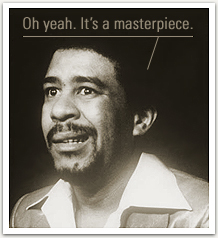
On the unspoken value of Art
as revealed in Richard Pryor’s film Bustin’ Loose
A few weeks ago while sleepily watching a late night broadcast of Richard Pryor’s less-than-brilliant 1981 flick Bustin’ Loose I was surprised to be presented with a truth about Art. It struck me that Art is of tremendous, nay immeasurable, value to our society for a totally unintuitive reason.
Now when I say I was “presented” with this truth, I mean it quite literally. It was not the totality of the film, which despite its craptacularness, allowed me to somehow glean a deeper, hidden, message. No. Nothing so romantic. It was laid-out bare in a specific scene.
In it Pryor is approached by a young asian girl who up until recently had been a child prostitute. She shows him a drawing she’s done, which is completely without artistic merit of any kind, and then proceeds to proposition him. Pryor is appalled and tells her so. He then, and this is the important part, explains that rather than shopping her ass around she ought to focus on her Art, saying something to the effect of, “you’ve got real talent!”
It struck me while watching this scene just how valuable the subjectiveness of Art can be to those of us who are without any kind of useful skill, without talent, without passion, without goals, and ultimately without anything tangible to offer society.
With only a few words of encouragement the confused and aimless among us can grab hold of a pencil and set off into the murky, subjective land of Art. No matter how untalented, unskilled, and unimaginative even the most dispassionate belief in our own artistic merits can keep us afloat.
Art school can safely shuttle us through the college years. The half decade or so after can be fueled on the resultant fumes until we begin, finally, mercifully, to disperse and settle into our menial jobs as barristas, book store employees, museum security guards, bartenders, and graphic designers. Positions in which, though completely untalented in any way, we can never the less contribute, however slightly, to our society.
The world of Art can forever after serve as a buoy for our self-image. When asked, over Irish car bombs at the local dive-bar, “What do you do?” we can spare ourselves the pain of saying, “I sweep the floor at a hair salon” and say instead with a tortured, far-off look, “I’m an artist.”
So you see the great uncommented upon value of Art is as a haven for the vast amount of aimless among us who might otherwise clog the rivers with their corpses.
A brass plaque should be placed over the entrance of every art school in the country which reads something to the effect of:
Give us your tiresome, your passionless, your huddled and talentless masses and we will usher them safely to the far shore of their crushing mid-life crisis.
I like to imagine another scene, perhaps on the cutting room floor, in which a virginal little asian girl approaches Pryor with a heart-wrenchingly beautiful picture, and he looks at it and says: “Girl, you’ve got real talent, now get out there and sell that ass!” But I guess that’s a different blog post all together.
hide full text