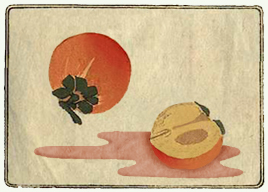
There is an old story in Japanese folklore which is told to teach the following lesson: “If a man thinks only of his own profit, and tries to benefit himself at the expense of others, he will incur the hatred of Heaven.” The story is called Battle of the Monkey and the Crab and there are many versions, which though different in their particulars, share that same nugget of implied wisdom. Just recently I came upon a version of the story which deviates from the norm enough to be not only a broad lesson in human nature but strangely applicable to modern events as well. Creepily applicable you might say. I’ve transcribed it below…
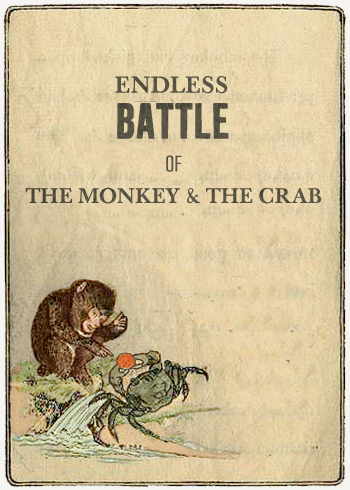
The monkeys and the crabs have never liked one another much. They worshipped different Gods and had little patience for what they saw as the other’s shortcomings. Yet each possessed something the other wanted and so uneasy interaction was inevitable. The monkeys were poor and power hungry and so needed money which the crabs had plenty of. The crabs had a mighty thirst which could only be quenched with persimmon juice, and the monkeys owned most of the worlds persimmon trees.
Once upon a time in the “wretched” land of the monkeys the crabs, being rich and powerful and full of that mighty thirst, installed a monkey of their choosing in a big persimmon tree. They figured having a “puppet-monkey” of their very own, ruling over a tree, would yield all kinds of benefits in that unfriendly land, not the least of which would be access to the sweet sweet persimmons they so desperately craved. An ugly little crab shook hands with the ugly power-hungry “puppet-monkey” and all seemed just fine.
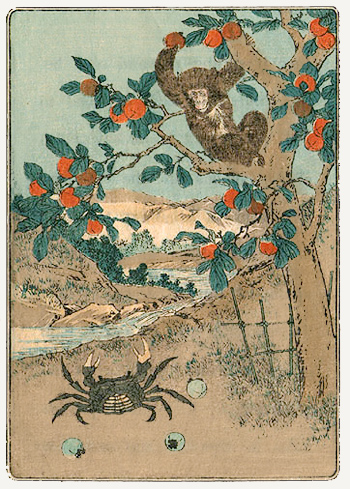
Over time the power hungry “puppet-monkey” began overstepping the bounds which his crab overlords had set for him. His land acquired a little wealth from persimmon sales and he became even more power-mad and viscous. He hurled poison persimmons at any monkey who challenged him and began taunting the very crabs who had put him in power. This went on and on and on, the monkey becoming ever more bold, the crabs becoming ever more angry. The crabs soon realized they’d picked a bad monkey to be their puppet and yearned to remove him from the persimmon tree.
Across the ocean in the rich and fertile land of the crabs a catastrophe befell the citizens which left them fearful and angry. Seeing their chance the king crabs blamed the catastrophe on their “puppet-monkey” and confused the none too smart citizens, creating a perfect excuse to shake him violently from his persimmon tree! The council of crabs, being almost wholly without chitin, agreed to the plan of the king-crabs.
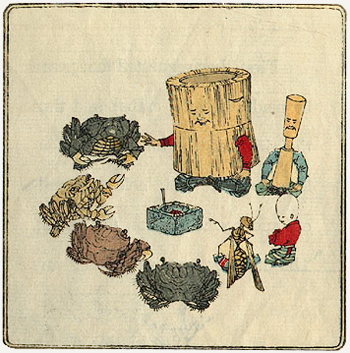
Not wanting to seem as viscous as the monkey to the rest of the animal world, and fearful of having their true motivations become obvious to all, the king crabs gathered together a coalition of others with something to gain from the destruction of the “puppet-monkey.” They made promises of favor and showed all of the animal world it was not the crabs alone who wanted to be free of the “evil” monkey.
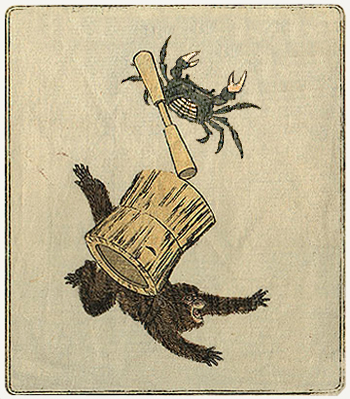
With their coalition in place the crabs travelled to the land of the monkeys and came down upon the “puppet-monkey” with all the considerable power their wealth could provide. There was shock and awe at the spectacle of flames leaping about the persimmon trees. The “puppet-monkey” proved easily defeated and the crabs exulted in accomplishing their mission.
But rich and powerful though they might have been the crabs and their coalition were not very smart! In their verve to shake the “puppet-monkey” from his tree they’d forgotten just how unfriendly the land of monkeys was, and just how much they’d always been despised. They somehow thought that mere words could erase thousands of years of distrust and animosity between monkeys and crabs. But of course they were wrong. Monkeys from all across the land came to fight the crabs and explosion after explosion would thereafter sound for years on end.
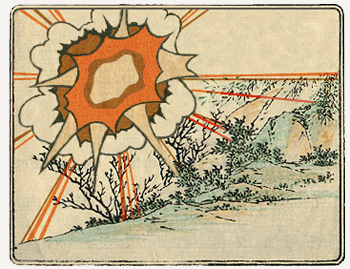
The crabs tried everything they could think of to thwart the monkeys, but as we’ve seen the crabs were not very smart, so for a long while all they could think of were sending in more crabs. Old crabs and young crabs and untrained crabs. Crabs of every kind. But no matter how many crabs they sent the explosions in the land of the persimmon trees just kept on coming. Both crabs and monkeys were blown to bits every single day.
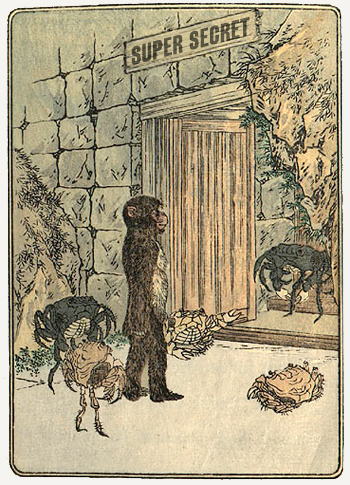
The crabs decided to set up super-secret prisons where they could send the problematic monkeys and torture them at will. They could beat the monkeys and demean them and piss on the books of their Gods without anyone ever knowing of their brutality. But the prisons didn’t help. Not being very smart the secret didn’t stay a secret for long and the persimmon fields exploded with a renewed vigor.
In the land of the crabs persimmons became even more expensive than they were to begin with and the citizens, after years of explosions, became tired of all the death. In truth they didn’t want to even hear anymore about the monkeys and their unfriendly land. The violence, though it occurred far away in the land of monkeys, had just as surely come to rule their lives at home as well. They couldn’t remember anymore why they’d allowed the king crabs to shake the “puppet-monkey” from his tree in the first place. Was he really worth it they wondered? Most of the crabs just wanted it all to be over.
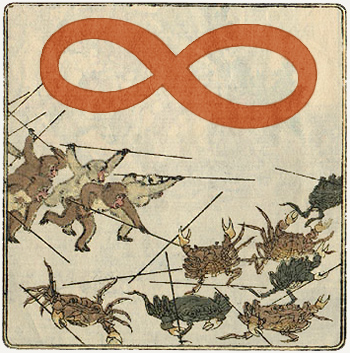
But it was too late. The battle of the monkeys and the crabs had become an endless battle and no one could even imagine a way to stop it. It seemed no longer to be about persimmons and “puppet-monkeys.” The monkeys would fight forever to dispel the crabs they hated, and bewildered crabs would continue to die forever as well, because the king crabs, worried of being shaken from their own tree, would keep sending them. It was a sad time in the animal world, and still is, because the endless battle continues to this day.
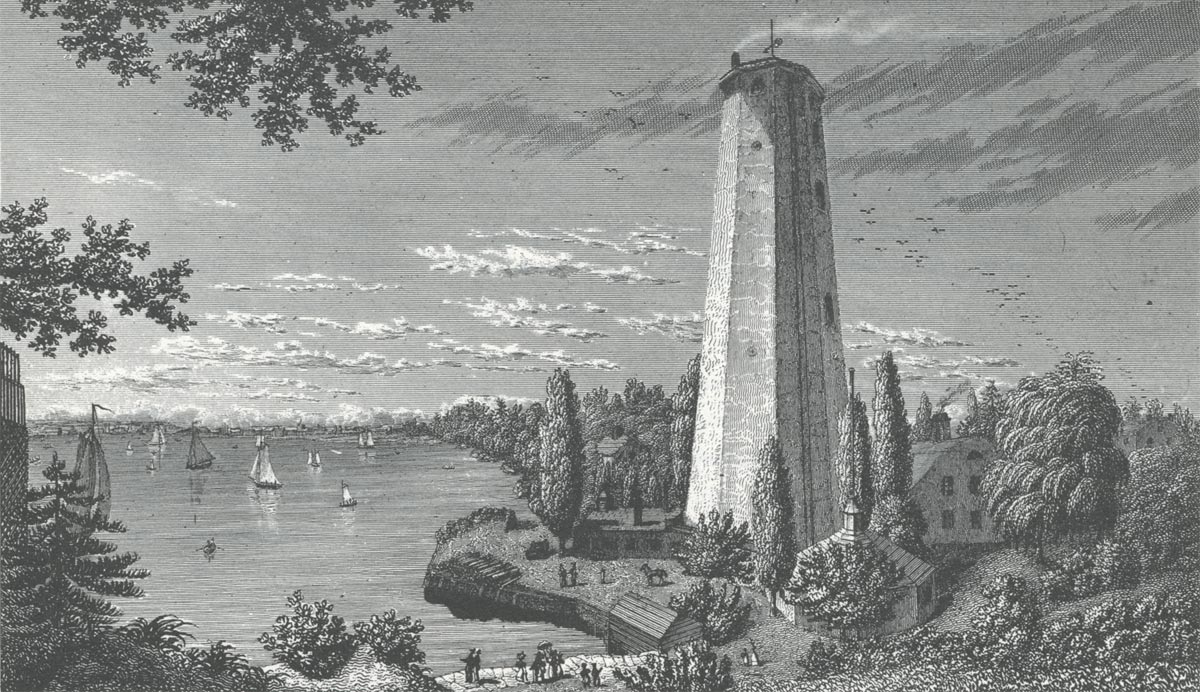
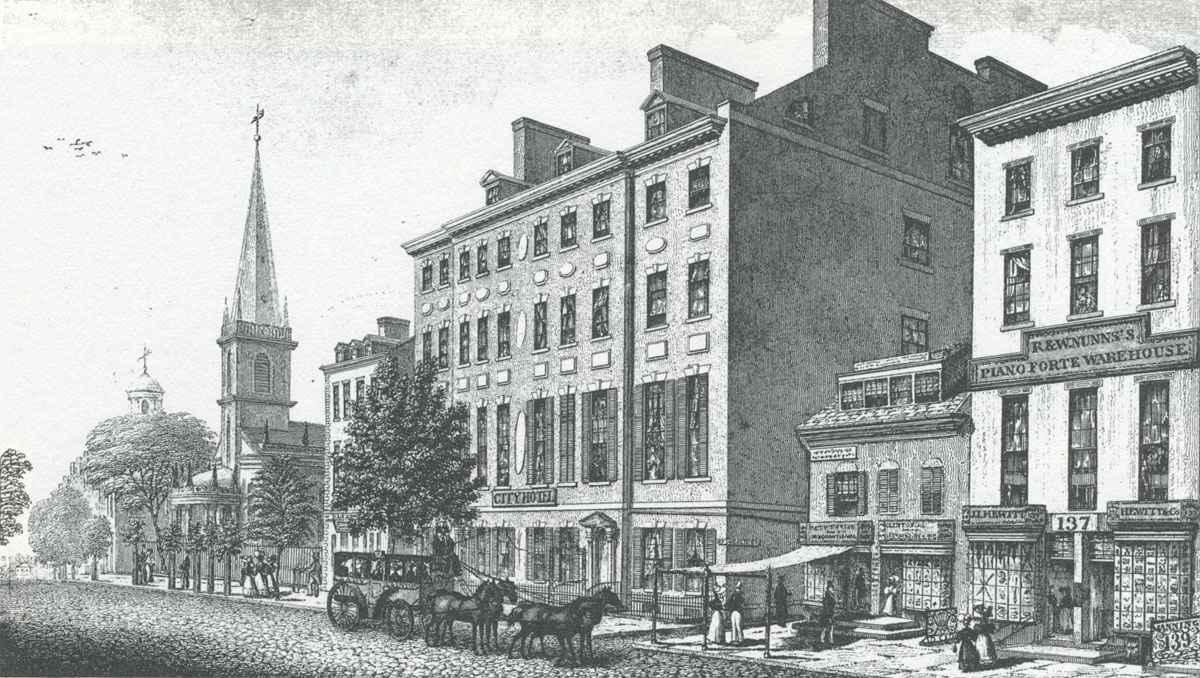
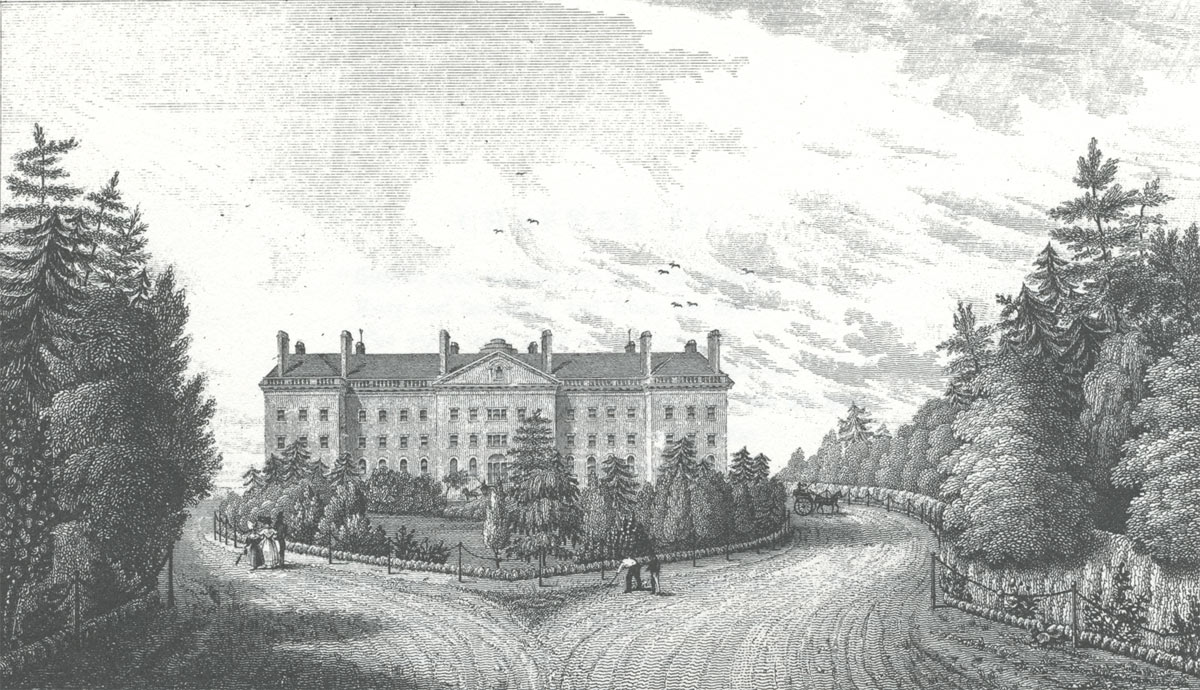
The illustrations above were adapted from this version of the story.
hide full text