A bit of delicious art news: Damien Hirst’s iconic piece The physical impossibility of death in the mind of someone living (1991), which consists of a shark suspended in a tank of greenish formaldehyde, is rotten. Well, not exactly, quote: “The animal suspended in formaldehyde has deteriorated dramatically to the naked eye since it was first unveiled at the Saatchi Gallery in 1992 because of the way it was preserved by the artist. The solution which surrounds it is murky, the skin of the animal is showing considerable signs of wear and tear, and the shark itself has changed shape.” So essentially the shark is rotting. Perfect irony considering the title of the piece don’tcha think? The piece sold in late 2004 for £6.5m, one of the highest prices ever paid for a work by “someone living.” Hirst is evidently in talks with the buyer to replace the shark. The dealer Larry Gagosian said: “The shark is a conceptual piece and to substitute a shark of equal size and appearance, in my opinion, does not alter the piece.” I agree with him, though what the truth of such a statement really portends for the value of a piece of art…
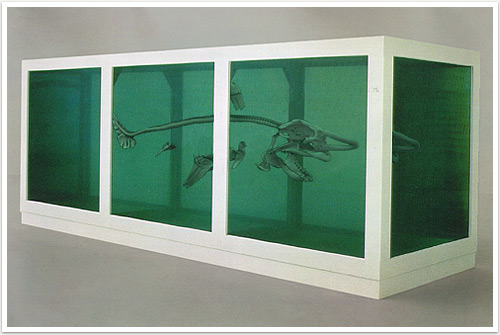
The physical inevitability of death in the mind of someone living



The world according to Chin-san Long
Picked up a slim exhibition catalogue at the Strand bookshop yesterday, put out by Taipei Gallery in 1993, for a show they mounted of Chinese photographer Chin-san Long’s work. He was born Zhejiang Province in 1892. In 1927 he became one of China’s first photo-journalists when the Shanghai Eastern Times, where he was employed, brought in the country’s first color printing machine. In 1939 he perfected a compositing method which allowed him to combine multiple images in the dark room. The results were photographs which incorporated the methodology of traditional Chinese ink-painting, creating a synthesis of Chinese aesthetic and western photographic technique. With a career spanning nine decades Long helped to popularize photography in China. As it turns out his work is not at all well represented on the net so I’m happy to be able to offer you the following 16 examples of his beautiful, pre-digital-age, photo compositing work. See below.


Il Bestario Barocco: The Feather Book
Came across an interesting oddity yesterday, The Feather Book. Made in 1618 by Dionisio Minaggio, Chief Gardener of the State of Milan, it is a book depicting 112 birds and 44 human figures, each composed entirely of natural, undyed birds’ feathers. It is separated into 4 sections themed: birds, hunters, tradesmen, musicians and Commedia del’Arte figures. This book contains some of the earliest efforts to depict behavior rather than simply showing birds sitting in profile, and the feathers used are among the oldest preserved samples in existence. Neat. The images themselves strike me as having what we might today call an “outsider art” kind of feeling, whether due to the difficulty inherent in the materials, the meticulous obsessiveness certainly required to complete them, or the apparent lunacy of some of the subjects, I’m not sure. They’re pretty amazing. See below for a sampling.


The Laughing Head
Or: all you need to know about the art world
David Hensel, 64, from East Grinstead, West Sussex, was told his sculpture of a laughing head (title: One Day Closer To Paradise) would be part of the Royal Academy of Arts summer exhibition. But at a preview he found that just the piece of wood which was intended to support the head was on display. Mr Hensel assumed staff had accidentally left the sculpture in the basement where it was being stored. The Academy said the judging panel assumed the two pieces (the sculpture and its supporting base) were separate and decided the support was better. Link. Fucking hilarious.
Men, Monsters, and Maidens
Recent work by Brett Farkas.
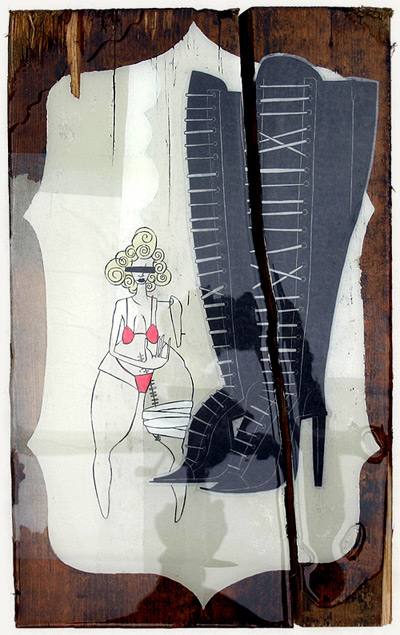
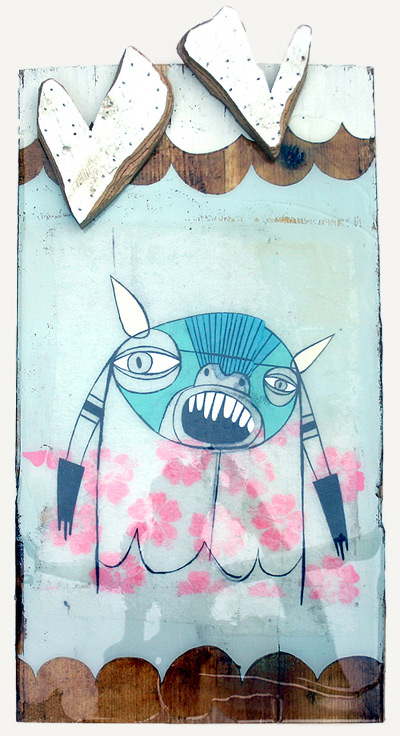
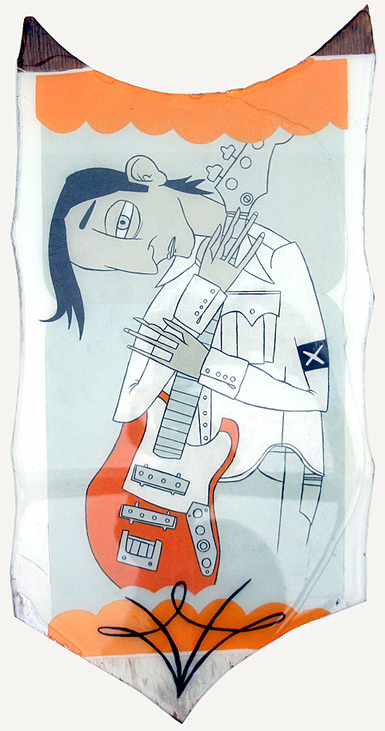
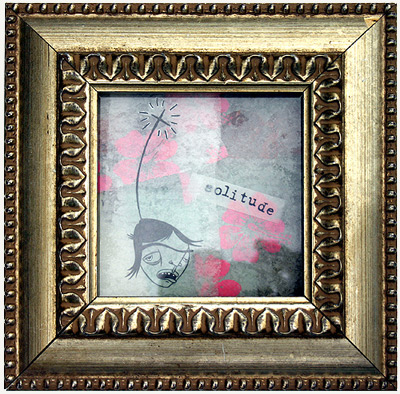
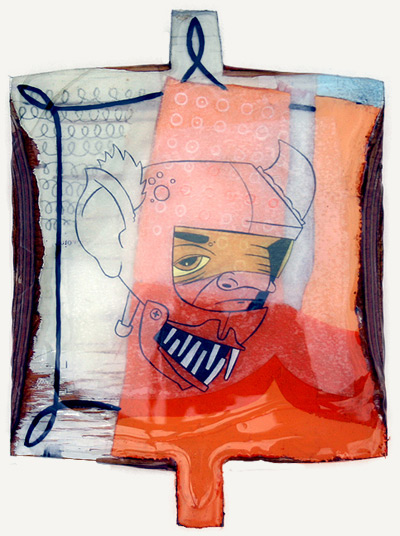
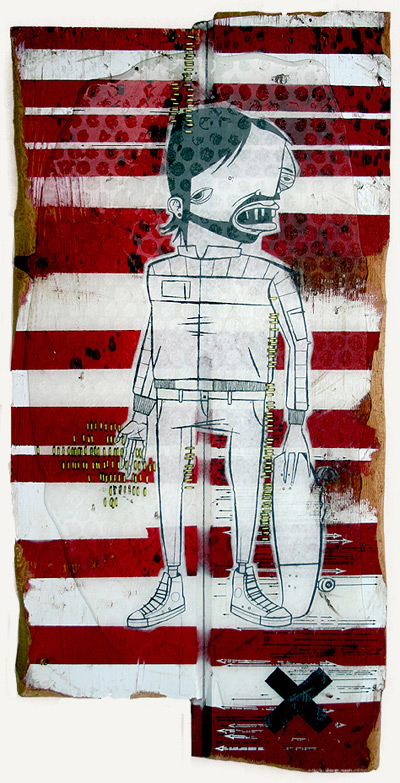
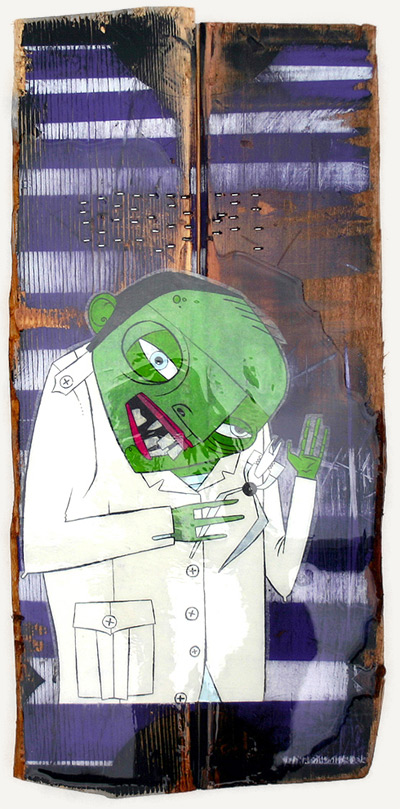
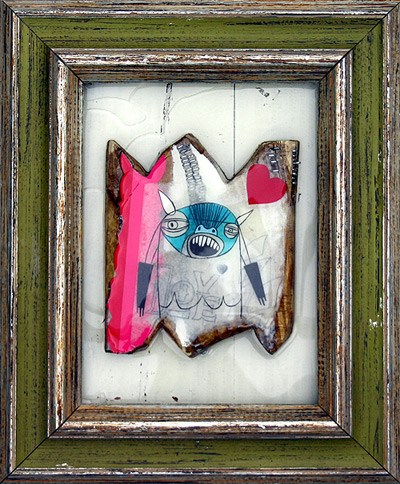
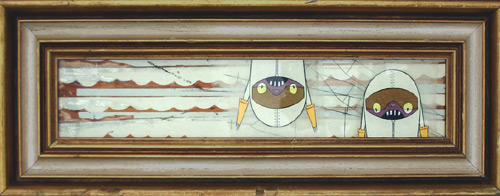
An old friend of mine by the name of Brett Farkas, an illustrator and painter, recently showed some new work and, as seems to always be the case, I missed it. He was kind enough to send me some images so I could have my own private viewing. I’ve decided to put them on display here and share them with ye shadowy millions. I’ve always admired the tight, controlled, style of his characters and in this new work he plays them against more organic shapes and textures. Most of the pieces here are pencil on tracing paper, back-painted with acrylic, house paint, or paint marker. There is some rubber stamping and linoleum block-printing in evidence and it’s all topped off with a healthy topcoat of resin and/or polyurethane. Hope you enjoy…