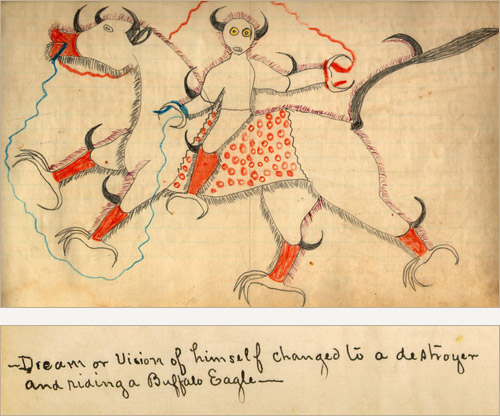
Psychopathia Sexualis, by Richard Freiherr von Krafft-Ebing M.D. is a fascinating historical document. First published in Germany in 1886 the book attempts to catalogue and illuminate every manner of “sexual perversion” bubbling just under the surface of the 19th century. On the one hand reading through its pages is a melancholy sort of affair. This was a time when masturbation was a dirt path straight to the lake of fire, a time when if your own tastes stretched beyond monogamous “missionary work” you would likely be viewed as a tainted psycopath begotten by maniacs; if you also happen to be a woman… well, head directly to the assylum, do not pass go, do not even think about sexual fullfilment. On the other hand because of this rather narrow view of human sexuality much of what is characterized as sexual deviancy in the book seems downright cuddly and sweet in our filthy 21st century world, where a shampoo commercial might present more outwardly explicit sexuality than a 19th century woman’s entire adult existence.
Below the fold you will find 8 case studies which I’ve culled from the hundreds, presented for your education, possible discomfiting recognition, and, of course, your smug amusement (yeah, like you don’t have some, uh, “problematic” shit going on in the sex centers of your noggin.) Enjoy.

Case 123
Here we have a fetish which is wholly benign, strangely poetic, and really, to be envied.
“B., thirty years of age, apparently untainted, refined and sensitive; great lover of flowers; liked to kiss them, but without any sensual motive or sensual excitement; of a rather frigid nature; before twenty-one did not practice masturbation, and subsequently only for periods of time. At twenty-one he was introduced to a young lady who wore some large roses on her bosom. Since then large roses had dominated his sexual feelings. He incessantly bought roses; kissing them would produce erection. He took roses to bed with him, although he never touched his genitals with them. His pollutions, henceforth, were accompanied by dreams of roses. He dreamt of roses that had fairy-like beauty; when he inhaled their fragrance, he ejaculated.”
Ah yes. Imagine if it were all so simple… You could work at a flower shop, with the ultimate goal of one day gaining employment at some fine botanical gardens somewhere, and at night you could return home to do a little “tending” to your own prized rose bushes.

Case 88
Here we have a story full of pathos, sweaty gymnasiums, fetishistic desire, odd naiveté, brash artistic license, chance encounters, arrests, and ultimately, as with so many human dramas, failure. And all this encapsulated in one very dry, very short, clinical paragraph.
“X., aged thirty four, teacher in the gymnasium. In childhood he suffered from convulsions. At age ten he began to masturbate, with lustful feelings, which were connected with very strange ideas. He was particularly partial to women’s eyes; but because he wished to imagine some form of coitus, and was absolutely innocent in sexual matters, he evolved the idea of making the nostrils the seat of the female sexual organs in order to avoid too great a separation from the eyes. His vivid sexual desires then revolved around this idea. He sketched drawings representing correct greek profiles of female heads, but the nostrils were so large that insertion of the penis would have been possible. One day, in an omnibus, he saw a girl in whom he thought he recognized his ideal. He followed her to her home and immediately proposed to her. Shown the door, he returned again and again, until arrested. X never had sexual intercourse.”
So tragic. Nose-craving, eye-adoring, virgin man, we feel your pain… As an afterward to this case the Richard Von Krafft-Ebing M.D. offers us this little nugget :
“Nose fetishism is seldom encountered. The following rare bit of poetry comes to me from England-
O sweet and pretty little nose, so charming unto me;
O were I but the sweetest rose, I’d give my scent to thee.
O make it full with honey sweet, that I may suck it all;
T’would be for me the greatest treat, a real festival.
How sweet and how nutritious your darling nose does seem.
It would be more delicious, than strawberries and cream.”
Uh… Yeah.

Case 98
Here we have a case which, by today’s standards, hardly seems deviant at all, more like a pilot script for a sitcom. It’s marital bliss… with a tiny catch!
“A lady told Dr. Gemy that on her wedding night and the night that followed, her husband contented himself with kissing her, and running his fingers through her wealth of tresses. He then fell asleep. On the third night, Mr. X. produced an immense wig, with abundant long hair, and begged his wife to put it on. As soon as she had done so, he richly compensated her for his neglected marital duties. In the morning he again showed extreme tenderness while he caressed the wig. When Mrs X. removed the wig, she at once lost all charm to her husband. Mrs X. recognized this as a hobby, and readily yielded to the wishes of her husband, whom she loved dearly, and whose libido depended upon the wearing of the wig. It was remarkable, however, that a particular wig had the desired effect for only a fortnight or three weeks time. It had to be made of thick, long hair, but its color was unimportant. The result of this marriage, after five years, was two children and a collection of seventy two wigs.”
Comming this fall to FOX. Wiggin’ Out! “Married life can be a hairy sittuation!” Filmed in front of a live studio audience.

Case 99
Here we have a variation on the theme of the previous case.
“X., aged twenty, inverted sexually. Only loved men with large bushy mustaches. One day he met a man who was his ideal. He invited him to his home, but was unspeakably disappointed when the man removed an artificial mustache. Only when the visitor returned the ornament to his upper lip did he exercise his charm over X. once more and restored X. to complete virility.”
Ah yes, those dreaded artificial mustaches! X. must have been quite disappointed. I mean what are the odds of a man with a mustache-fetish just happening to pick up a man with a fake mustache?! Of course, if an artificial stache was good enough to fool X’s “sexually inverted” senses, why didn’t he just carry a nice bushy one around in his pocket (b.y.o.m.)? Hell, why not buy an artificial mustache factory and get to work Tom Sellecking the world? Crazy bastards, we humans.

Case 225
Here we have a case which falls under the “theft dependent on fetishism” heading. By way of lead in Krafft-Ebing offers the following- Pathological fetishism may become the cause of crimes. As such hair despoiling, robbery or theft of women’s linen, handkerchiefs, aprons, shoes, and silks are now recognized (as crimes). It cannot be doubted that such individuals are the subject of deep mental taint…
“P., laborer, aged twenty nine. Family heavily tainted. Emotional, irritable; had masturbated since childhood. At ten years old saw a boy masturbate into a woman’s handkerchief. This gave direction to P’s sex life. He stole handkerchiefs from pretty girls and masturbated into them. His mother tried every means to break him of this habit. She admonished him, took the stolen handkerchiefs away and bought him new ones, all in vain. He was caught by the police and punished for theft. He then went to Africa and served in the army with an excellent record. On his return to France he resumed his old practices. He was only potent if a prostitute held a white handkerchief in her hand during the act. He married in 1894 and sustained his virility by grasping a handkerchief during coitus.
The fetishistic crisis always came suddenly, like a paroxysm, especially at moments of laziness. He would feel out of sorts, psychically moody, sexually excited, and impelled to masturbate. Soon the fantasy image of a handkerchief would appear and take full possession of his thoughts and feelings. If he then caught sight of a woman’s handkerchief he would choke with fear, palpitation of the heart would set in, he would tremble, and profuse perspiration would break out all over his body. Although conscious of the risk involved, he was irresistibly forced to steal the handkerchief. He was arrested on one such occasion, but the examining physician declared him irresponsible. During the time of detention he was free of his obsession. He hoped to master his weakness in the future. He estimated that he had stolen one hundred handkerchiefs. He used each handkerchief only once, then threw it away.”
He used each handkerchief only once, then threw it away? Stingy uncaring bastard! Didn’t he realize there were men even worse off than he who could only attain potency when wrapping their members in stolen women’s handkerchiefs which had already been ejaculated into by loony ex-cons who’d served with the army in Africa and whose names began with the letter P?!

Case 116
Here we have a case filed under the “pathological erotic fetishism” heading-
“L, aged thirty seven, clerk, from a tainted family. At five years old, he had his first erection when he saw his bedfellow -an aged relative- put on his nightcap. The same thing occurred later when he saw an old servant put on her nightcap. Later, simply the idea of an old ugly woman’s head covered with a nightcap, was sufficient to cause an erection. The sight of a cap, or a naked woman or man alone made no impression, but the mere touch of a nightcap induced erection, and sometimes even ejaculation. L. was not a masturbator, and had never been sexually active until his thirty second year, when he married a young girl with whom he had fallen in love. On his wedding night he remained cold until, from necessity, he brought to his aid the memory-picture of an ugly woman’s head with a nightcap. Coitus was immediately successful. Thereafter it was always necessary for him to use this method. From childhood he had been subject to attacks of depression, with suicidal tendencies, and occasional frightful hallucinations at night. When looking out a window he became dizzy and anxious. He was a perverse, peculiar, and easily embarrassed man of bad mental constitution.
In this very peculiar case, the simultaneous coincidence of the first sexual reference and an absolutely heterogeneous impression seems to have determined association.
A related case of accidental associative fetishism which is quite peculiar, is that of a married man, aged thirty, who in other respects, was physically and mentally healthy, who is said to have suddenly lost his sexual power after moving into another house, and to have regained it as soon as the furniture of the bedroom had been arranged as before.”
I must say that the thought our sexual proclivities are so radically influenced by the random occurrences of early childhood is horrific. Perhaps it’s a good thing that the internet serves up every manner of sexual fodder to the youngsters. Better to see straight away that there is a whole universe of degradation and kink and perversity to explore, and grow bored of, than getting obsessively fixated on your grandma’s bunions or a playmate’s soiled diaper or whatever. Sheesh.

Case 95
Here we have a case in which a gentleman named Z struggles mightily with a very “particular” fetish.
“Z., gentleman, family tainted. Even in early childhood he always felt great sympathy with the lame and crippled. He used to limp about the room on two brooms in lieu of crutches or, when observed, go limping about the streets: at the same time, however, no sexual significance was coupled with the idea. Gradually, the thought supervened that he would like “as a pretty lame child” to meet a pretty girl who would express sympathy for his affliction. Sympathy from men he disdained. Z. was brought up in a rich man’s house by a private tutor, and claimed that up to his twentieth year he was unaware of the differences between sexes. His feelings were confined to the idea of being pitied by a pretty girl for being lame, or extending the same sympathy to a lame girl himself. Gradually, erotic emotions associated themselves with this fantasy and at the age of twenty he succumbed to temptation and masturbated for the first time. From then on he practiced this act often. Sexual neurasthenia supervened and an irritable weakness took hold of him, to such an extent that the very sight of a girl with a halting gait induced ejaculation.
When masturbating, or in his erotic dreams, the idea of the limping girls was always the controlling element. The personality of the limping girl was a matter of indifference to Z., his interest being solely centered on the limping foot. He never had coitus with a girl thus afflicted. He never had the inclination for it and did not think he could be potent under the circumstances. His perverse fantasies revolved only around masturbating against the foot of a lame female. At times he anchored his hope on the thought that he might succeed in winning and marrying a chaste lame girl; that, because of his love for her, she would take pity on him and free him of his crime by ‘transferring his love from the sole of her foot to the root of her soul.’ He sought deliverance in this thought. His present existence was one of untold misery.”
Happy story that. Though if you change a few of the words here and there sounds like it could be any average 21st century guy-
The personality of the girl was a matter of indifference to Z., his interest being solely centered on her [fill in blank].
See what I mean?
I must say also, in regards to this case, that the sentence “transferring his love from the sole of her foot to the root of her soul,” words which had surely never been laid down in exactly that order, in any language, before this book’s publication, is worth the price of admission all by itself.
(The thumbnail was adapted from an image on Susan Hagen’s wood carvings page.)

Case 96
Here we have a variation on the theme of the previous case.
“Mr. V., aged thirty, civil servant; parents neuropathic. From the age of seven he had, for many years, a lame girl of the same age as a playmate. At the age of twelve, nervously disposed and heterosexually inclined, the boy began to masturbate spontaneously. At that time puberty set in, and undoubtedly the first sexual emotions toward the other sex coincided with the sight of a lame girl. Subsequently only limping women excited him sexually. His fetish was a pretty lady who, like the companion of his childhood, limped with the left foot. Always heterosexual, but abnormally sensual, he promptly sought relations with the opposite sex, but was absolutely impotent with women who were not lame. Virility and gratification were most strongly elicited if the prostitute limped with the left foot, but he was also successful if the lameness was on the right foot. Due to his fetishism, the opportunities for coitus seldom occurred, so he resorted to masturbation, but found it a disgusting and miserable substitute. His sexual anomaly rendered him very unhappy, and he was often close to committing suicide, but regard for his parents prevented him. This moral affliction culminated in the desire for marriage with a sympathetic lame lady. Unfortunately, because he could not love the soul of such a wife, but only her defect of lameness, he considered such a union a profanation of matrimony and an unbearable, ignoble existence. On this account he had often thought of resignation and castration.”
I can’t help but be in awe of this sentence in particular- “Virility and gratification were most strongly elicited if the prostitute limped with the left foot, but he was also successful if the lameness was on the right foot.” The analytical and scientific thoroughness of our tortured and miserable Mr. V. for being thoughtful enough to test this particular hypothesis is brilliant. “Please try limping on your right foot now Ms. Prostitute… in the interest of science of course.”
As to the case in particular- Poor Mr. V., the silly bastard. Not too bright was he? Any self respecting man of the 19th Century would have married a nice perfectly “intact” girl and then paid a carriage driver to run over her foot just before they made it to the honeymoon suite. Castration? Uh, I think not.
-
So there you have it. A tiny porthole into the steamy underpants of the 19th century. Hope you enjoyed.
Evidently in 2006 Kino released a film which dramatizes many of the cases in Psychopathia Sexualis, though judging by the trailers they focussed on much of the darker material.
Note: This post was one in a series of reworkings of old posts which date from before the redesign of The Nonist. The text has been combined from 6 prior posts and reworked. The images are also updated. I will be periodically adding these reworkings into the flow of new content in an effort to eventually remove all the old pages from circulation.
hide full text