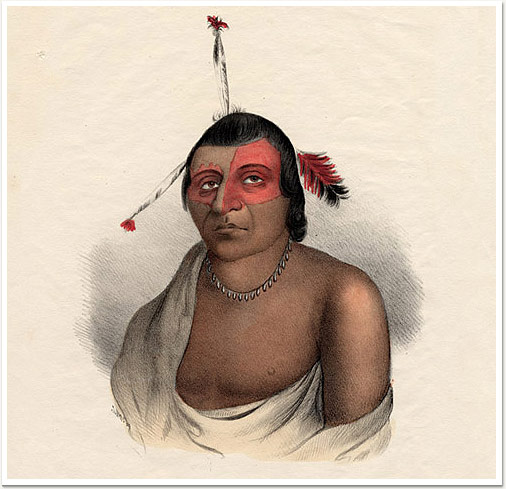
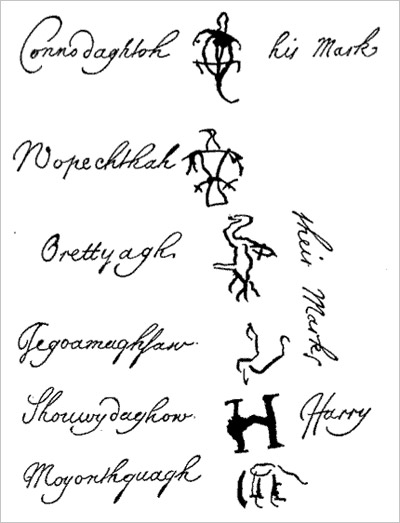
They were a pestilence, coming upon us in so many ways- with guns, knives drawn behind empty handshakes, bringing sickness and fire. No matter how many we killed, no matter how firmly we stood, they just kept coming. It was we who saw our numbers dwindling, our villages emptied or turned to ash. The death and desecration and misery was beyond what our gods had prepared us for. There were no ancestral stories to tell in the night which were more brutal than what we’d seen in the day, and so there was no wisdom to draw on… no comfort. In the end, staring at their piece of paper, the one they said would make it all stop, I took the pen and did the only thing left for me to do- I drew a tiny little elk’s head.
-
It dawned on me only recently that in the vaults and safes and state of the art library humidors which house the priceless historical paper trail of the American ascent, there are legal documents, many still binding, which, beside the paragraphs of legalese, the caveats, the statutes, the declarations, and the protocol, feature, of all things, small enigmatic drawings of woodland creatures.
Beside heavy wax seals you’ll find the beaver, the wolf, the turtle, and the deer, in a loose free-hand application of ink. The eagle, which eventually became a symbol of the American State, and seems ever present in the form of impossibly intricate etchings, might conceivably have made its first appearance in the annals of American documents as an Indian Chief’s totemic signature.
The use of totems as autographs comes quite as near to real writing as an unlettered savage ever has approached.” -William Alber Mason, 1920 A History of the Art of Writing.
The Penetanguishene Treaty, signed on May 22, 1798, purchased from the Chippewa tribe all the land, water, islands and land under water at Penetanguishene harbour, thus supplying British forces a military and naval post on Lake Huron to secure the defence of Upper Canada.
The totem signatures of the “Kings and Sachems of the Ancient Nation of the Susquehanna and Savannah Indians” affixed to a memorial to the “Great King of England and his Sachems” In praise of William Penn, for his great kindness to them and because “he has paid us for our Land, which no Governer ever did before him.”
Treaty of Fort Greenville, 1795. Between the United States of America and the Tribes of Indians, called the Wyandots, Delawares, Shawanoes, Ottawas, Chipewas, Putawatimes, Miamis, Eel-river, Weeas, Kickapoos, Piankashaws, and Kaskaskias.
From the treaty known as the Great Peace of Montreal, signed on August 4, 1701, Imposing neutrality on the Western Amerindian and the Five Nations tribes, and thus ensuring New France control of the fur trade in the Great Lakes area and the freedom to expand its presence on the continent over the next fifty years.
Facsimile of the signatures of Uncas, the Mohegan Sachem, and his squaw.
Quote: “Not much is understood about the exact function of totem symbols, or indeed what totems meant to the individuals who made their mark on documents. The following quote from Benjamin Slight (1844), offers a fairly typical explanation of what Europeans of the time believed these symbols to mean: When their signature is required to any document of any kind, in connexion with their names, they affix what is called their tootams, having the same juxtaposition as the seal of an English transaction. The tootam is a rude sketch of some fish, fowl or animal, which is designative of the tribe to which the individual belongs, or expressive of the name, he as an individual, bears.
Totem symbols may well have reflected band or family affiliation, and may also have suggested territorial or community ancestry, but they may have also referred to personal names or descriptive characteristics of the individual who adopted the symbol. Generally, these symbols remain a mystery, and perhaps rightly so, given the sometimes quite private and personal importance they had for the individual.” -Neal Ferris, Preface to Deeds/Nations by Greg Curnoe.
A Queen Anne’s War treaty signed at Portsmouth, New Hampshire, 13 July 1713.
From the Great Peace of Montreal.
“Treaty 13” negotiated on September 23, 1787 at the Carrying Place on the Bay of Quinte, Canada.
Iroquois totems: the tortoise, the deer (with signature of King Hendrick), the eagle, the wolf, and the beaver represent each of the Five Nations. A delegate from each Nation at the Grand Council wore the symbol bodily as a distinguishing mark and used it as signature.
From the Treaty of Fort Greenville.
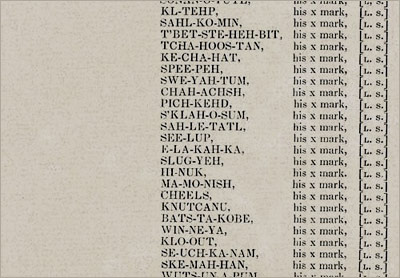
Quote: “A totem could be used to represent an individual or a group. Original documents signed by Native Americans using their totem are extremely rare. Most researchers who look at printed versions of documents signed by Native Americans, such as peace treaties, are familiar with the phrase “made his mark,” followed by an “X.” The impression left by these printed documents are that Native Americans were devoid of a written means of expression and that even tribal leaders were reduced to signing critical documents such as treaties with a crude mark. Actually the Native American’s totem, or signature, was often a fine drawing that reflected a characteristic of the individual’s name or a central event in their life. Because printers had difficulty inexpensively reproducing these art-like totems, the practice arose of simply stating that the signer had “made his mark” and placing an “X” in the appropriate location on the printed document.” -Clarke Historical Library at CMU.

From the Great Peace of Montreal.
A receipt from Six Nations of Indians for one thousand pound currency or ten thousand dollars, for lands. With the totems or “heraldic signs” of the natives.
This treaty between the British government and the Virginia Indians is still invoked today. Certain fishing and hunting rights were accorded the Pamunky and Mattaponi Indians among other tribes in Virginia.
Deed in Trust from Three of the Five Nations of Indians to the King, 1726.
(Unknown)
Of course animal totems were by no means only used as signatures-
And they painted on grave-posts,
On the graves yet unforgotten,
Each his own ancestral Totem,
Each the symbol of his household;
Figures of the Bear and Reindeer,
Of the Turtle, Crane and Beaver,
Each inverted as a token
That the owner was departed,
That the Cheif who bore the symbol
Lay beneath in dust and ashes.
-Longfellow, Song of Hiawatha.
Were it not for the grim circumstances of their creation the very thought of our weighty and hallowed American historical documents being peppered here and there with naive drawings of indigenous animals would make me smile, surprising and counterintuitive as it feels. In context, however, the little creatures take on a mournful aspect which force you instead to visualize anxious and uncertain hands hovering just above dubious pieces of paper. Naive as they may appear, these animal drawings may actually have more import and consequence for the hands that created them than any ever made.
The materials for this post were adapted from the following:
A History of the Art of Writing
Collectionscanada.ca
Deeds/Nations
Earlytreaties.unl.edu
Clarke Historical Library
American Historical and Literary Antiquities
College of William and Mary, Swem Library
The Canadian Encyclopedia
The Empire State: A Compendious History of the Commonwealth of New York.
The image which began this post was adapted from Clarke Library’s page The Native American Treaty Signers in the Great Lakes Region.
Hope you found this of interest.
hide full text