Ol’ Ben Franklin began his professional life ⊕ as a printer. Beginning in the year 1732, under what would become his most famous of many pseudonyms, Richard Saunders, he began publishing Poor Richard’s Almanack after the traditions of almanac making which had developed in England during the late 17th and early 18th centuries (but whose origins stretch much further back). In the main it contained weather forecasts and astronomical information and was hugely successful. It is Franklin’s best known publication, remembered today primarily for the assorted nuggets of wit and wisdom which were peppered throughout its pages. “Early to bed and early to rise, makes a man healthy wealthy and wise” for instance is an old chestnut from Poor Richard. But there are many, many more which are less well remembered. I’ve taken the liberty of reprinting a smattering of them below.
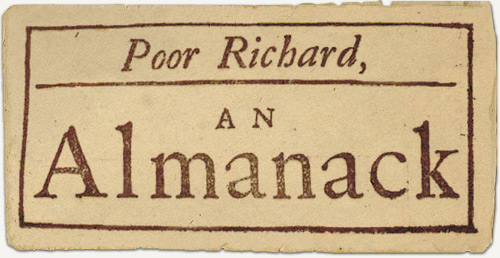
and a smattering of wisdom drawn there from


Trickle-down affections
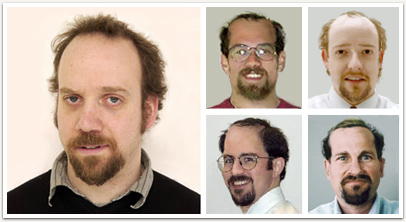
Or: do celebrity archetypes inform our snap-judgments?
No matter how hard we humans play at ideas like open-mindedness, reservation of judgement, and rationality we can’t help ourselves but to make instantaneous snap-judgments about things. That’s no damnation, it’s just the way our brains work. We see something new and our industrious little minds seek connections and corollaries. If our minds find acceptably concrete evidence lacking, they simply move down a tier, from direct experience to indirect, and make whatever connections seem most likely. Our minds have no qualms about simply guesstimate and making the closest match they can manage. It’s how we categorize the world around us and make sense of reality.

Il Bestario Barocco: The Feather Book
Came across an interesting oddity yesterday, The Feather Book. Made in 1618 by Dionisio Minaggio, Chief Gardener of the State of Milan, it is a book depicting 112 birds and 44 human figures, each composed entirely of natural, undyed birds’ feathers. It is separated into 4 sections themed: birds, hunters, tradesmen, musicians and Commedia del’Arte figures. This book contains some of the earliest efforts to depict behavior rather than simply showing birds sitting in profile, and the feathers used are among the oldest preserved samples in existence. Neat. The images themselves strike me as having what we might today call an “outsider art” kind of feeling, whether due to the difficulty inherent in the materials, the meticulous obsessiveness certainly required to complete them, or the apparent lunacy of some of the subjects, I’m not sure. They’re pretty amazing. See below for a sampling.


Men, Monsters, and Maidens
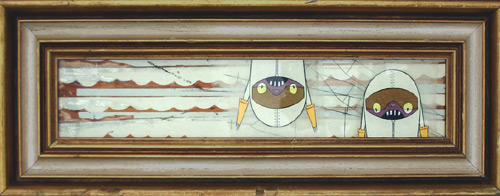
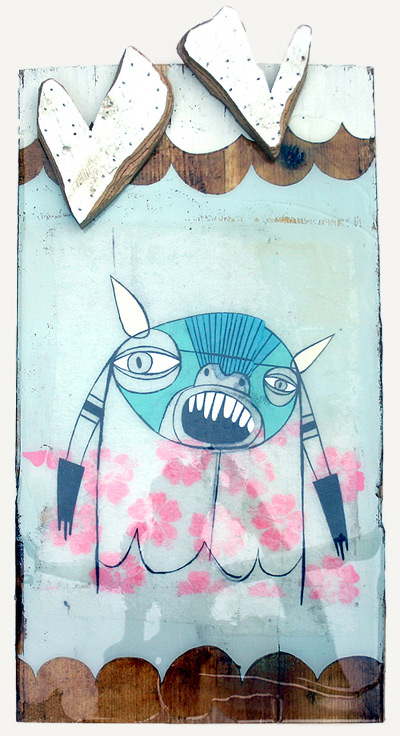
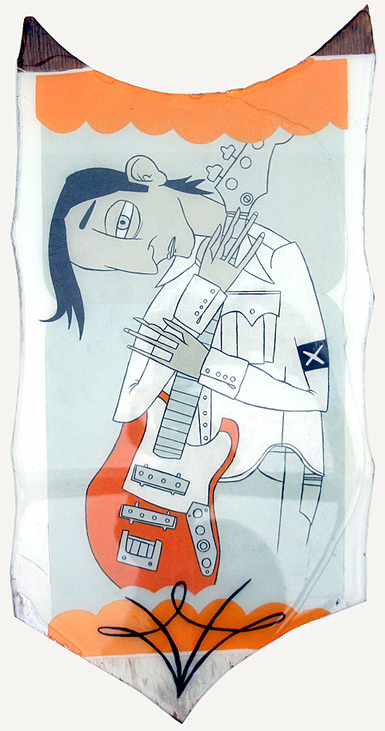
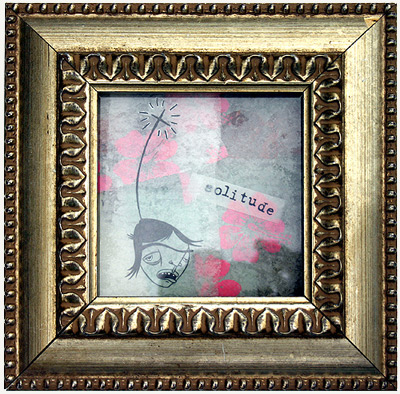
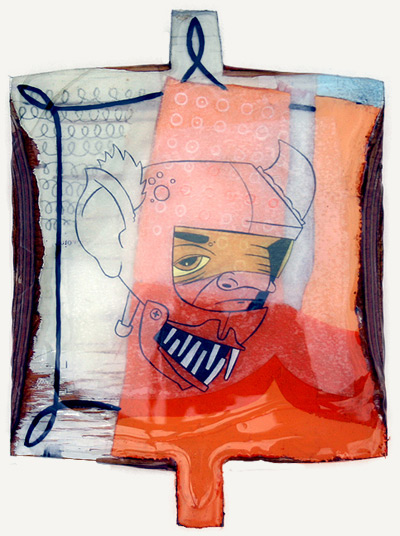
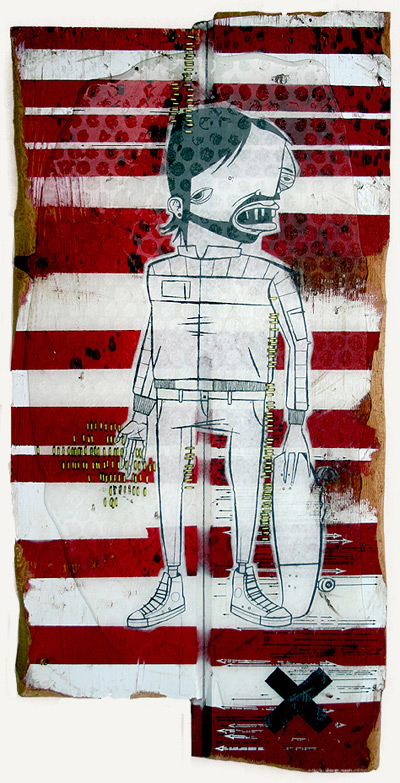
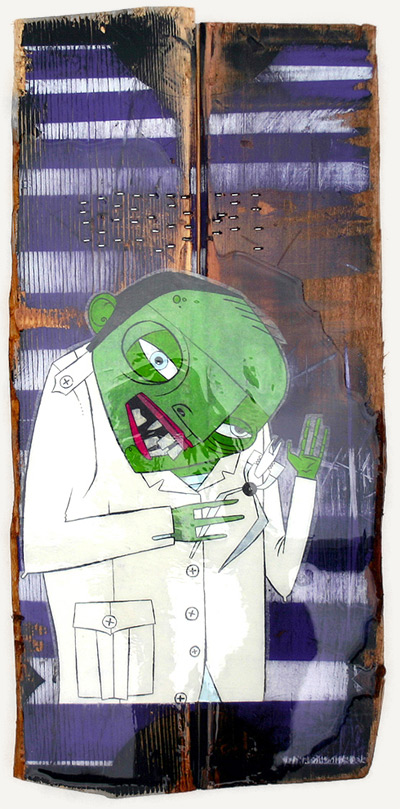
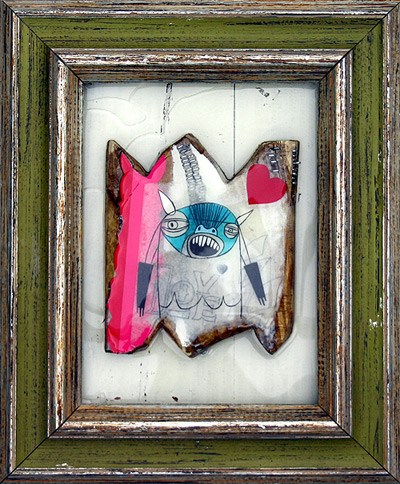
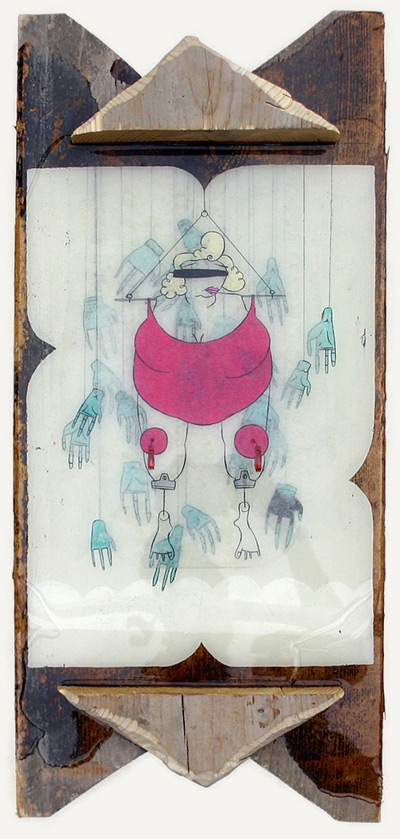
Recent work by Brett Farkas.
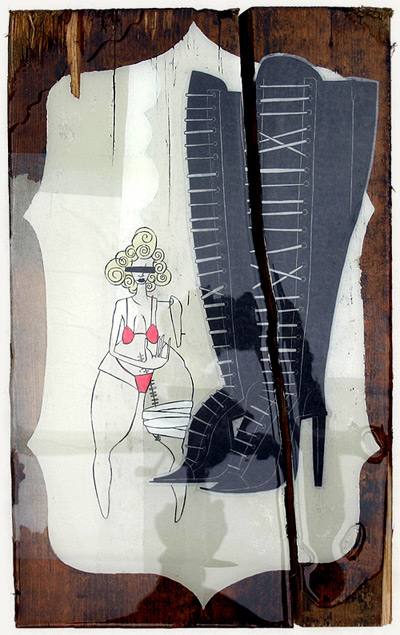
An old friend of mine by the name of Brett Farkas, an illustrator and painter, recently showed some new work and, as seems to always be the case, I missed it. He was kind enough to send me some images so I could have my own private viewing. I’ve decided to put them on display here and share them with ye shadowy millions. I’ve always admired the tight, controlled, style of his characters and in this new work he plays them against more organic shapes and textures. Most of the pieces here are pencil on tracing paper, back-painted with acrylic, house paint, or paint marker. There is some rubber stamping and linoleum block-printing in evidence and it’s all topped off with a healthy topcoat of resin and/or polyurethane. Hope you enjoy…

Some ramblings about American culture.
What would you call something which, having become poisoned and yet dominant, seems to impede, in its way, the further forward development of human culture at large, the hard won notions of the enlightenment, the happiness of individuals everywhere, and possibly the advancement of the species as a whole? I call it American culture.