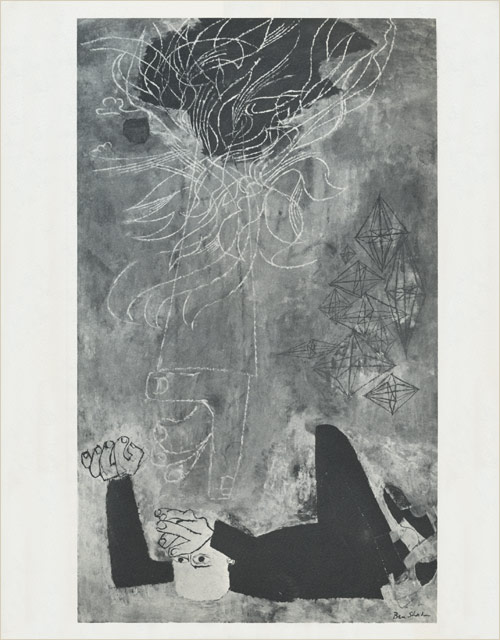
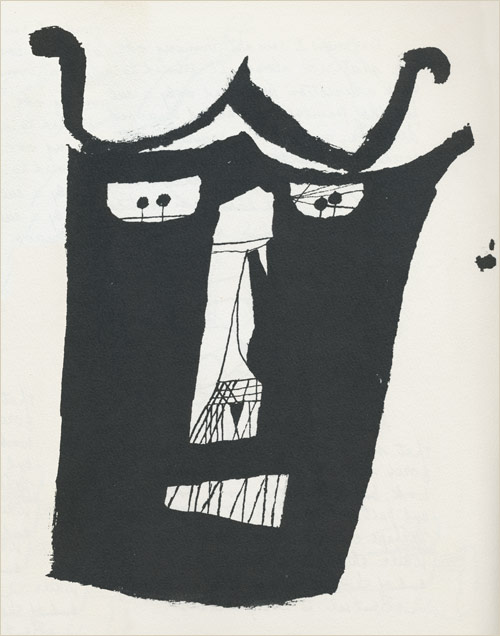
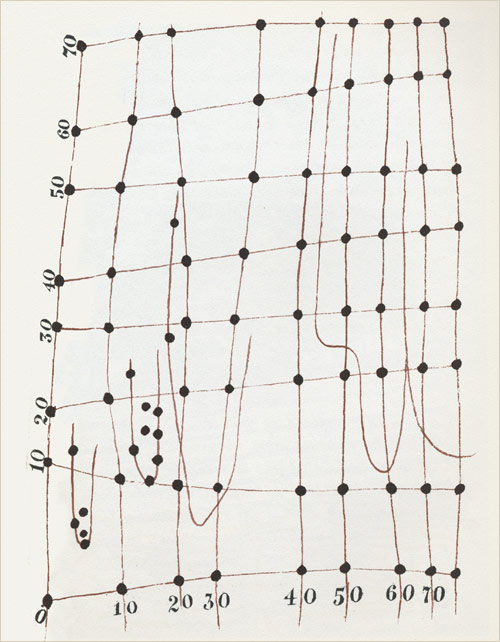
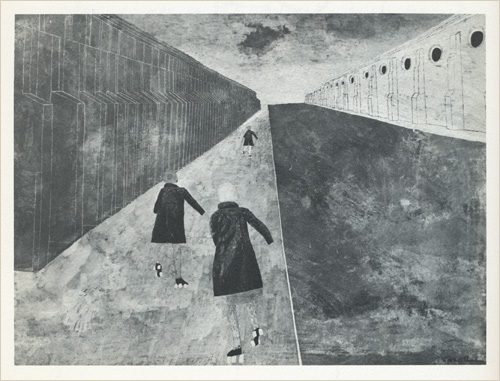
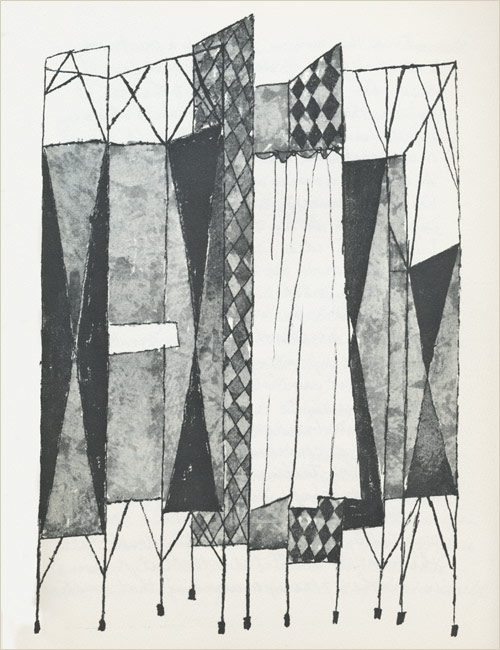
In any case I recently picked up a truly beautiful book put out in 1966 called The Biography of a Painting. The text is originally from one of six C.E. Norton lectures Shahn gave at Harvard (the most famous being The Shape of Content, which is still in print). In this particular volume Shahn attempts to trace the internal and external forces which shaped his painting titled, Allegory. It might, on the surface, seem an odd thing to devote an entire book to exploring the inspiration for a single painting. Non-artists would no doubt assume that the ideas and circumstances of a painting’s creation are right there on the tip of an artists tongue, ready to be accessed, and that exploration aimed at rooting these out is a self-involved exercise at best. The truth is not so black and white, and in the case of Allegory there were extenuating circumstances which sparked the search.
As it happens a critic named Henry McBride, who was writing for the New York Sun, misconstrued the imagery of Allegory as being symbolic and sympathetic to Red Moscow and ended his column by saying for this painting alone Shahn should be deported. As Shahn put’s it in the Biography of a Painting:
Mr McBride’s Review was not the first astonishing piece of analysis of my work that I have read, nor was it the last. Perhaps coming as it did from a critic whom I had looked upon as a friend, it was one of the most disconcerting. In any case it caused me to undertake a review of my painting Allegory, to try to assess just for my own enlightenment what really was in the painting, what sort of things go to make up a painting. Of the immediate sources I was fully aware, but I wondered to what extent I could trace the deeper origins, and the less conscious motivations.
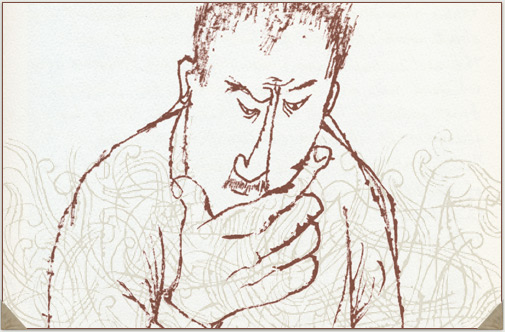
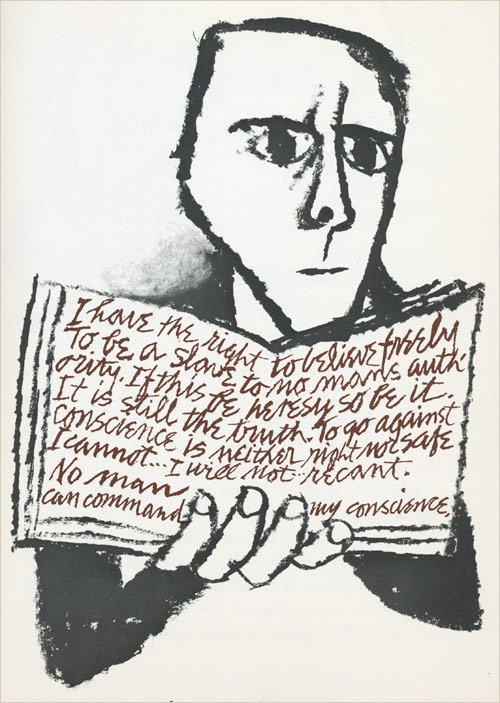
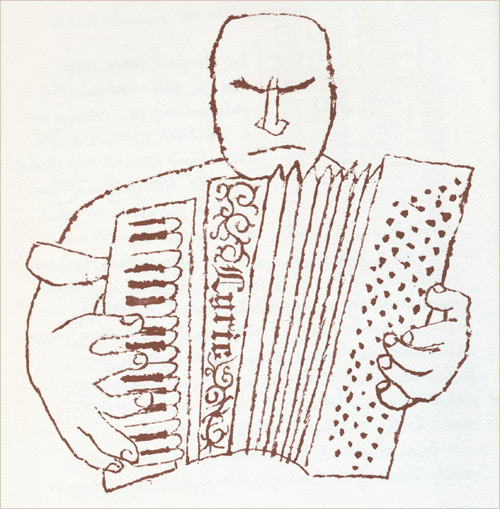
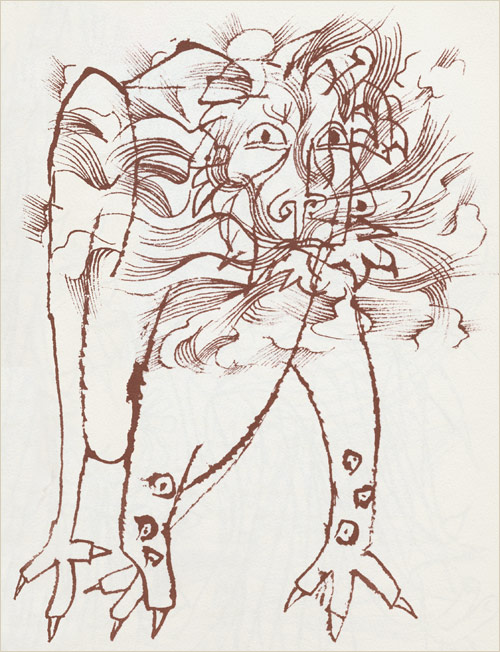
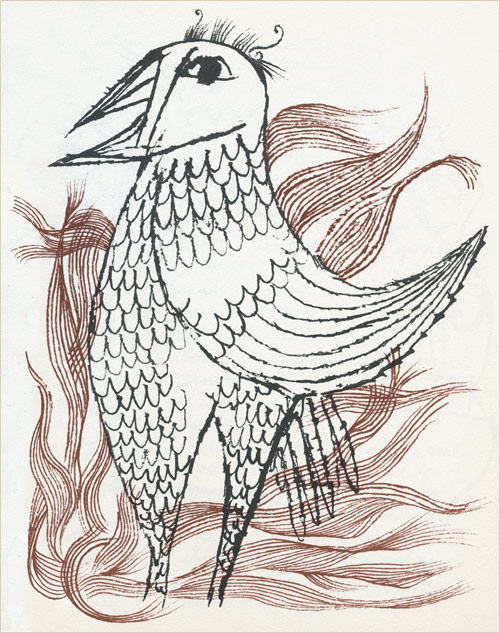
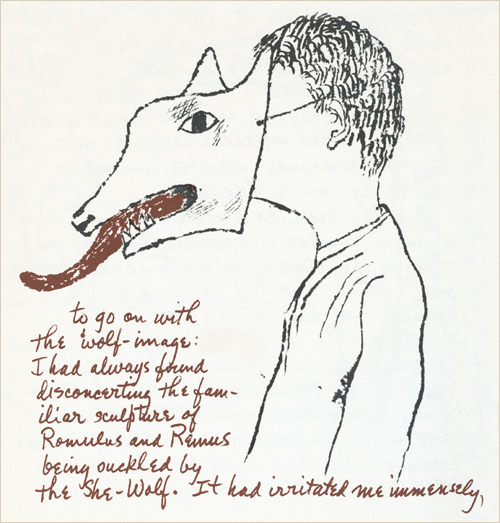
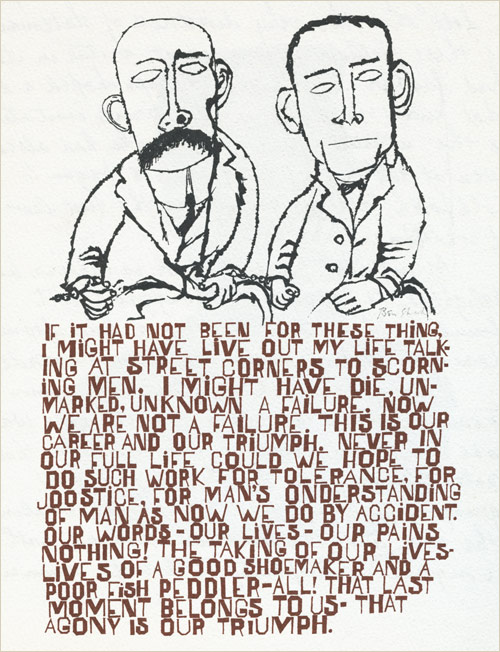
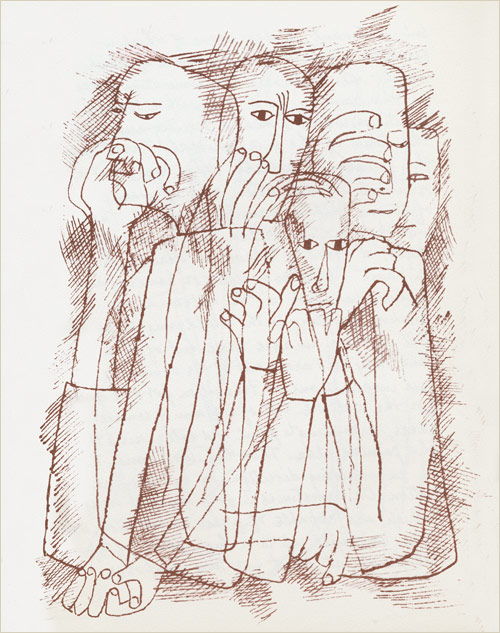
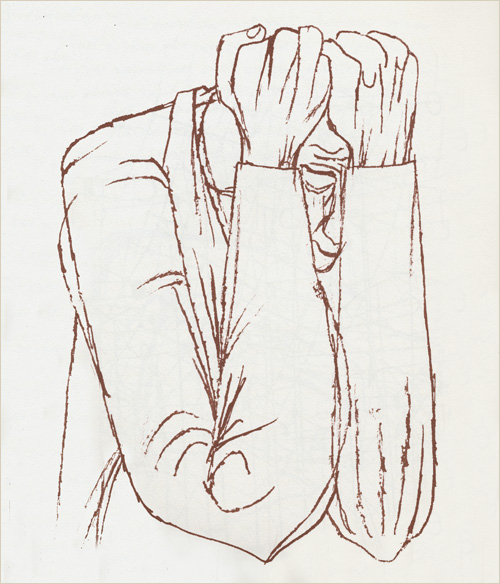
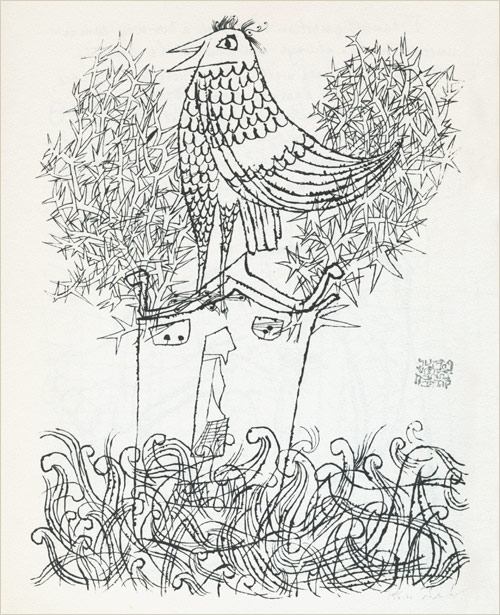
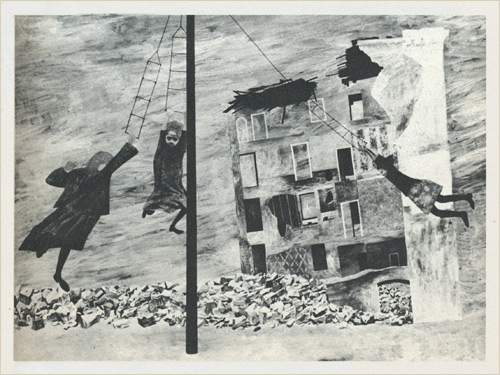
What follows is a fascinating, far reaching, and often touching examination (all printed in a handwritten style, whether authentic or simply a device I’m not sure) which as it so happens is copiously illustrated with Shahn’s own print-work as well as some reproductions of his paintings.
The truth is, with a few exceptions, that before picking up this book I was not very familiar with Shahn’s work (nor his artistic philosophies) but I truly enjoyed it, his print-work especially, and under the assumption that there are others of you unfamiliar I’d like to share a cross section of pieces I particularly liked.
An artist at work upon a painting must be two people, not one. He must function and act as two people all the time and in several ways. On the one hand, the artist is the imaginer and the producer. But he is also the critic, and here is a critic of such inexorable standards as to have made McBride seem liberal even in his most illiberal moment.
So the inner critic has stopped the painting before it has even begun. Then, when the artist strips his idea down to emotional images alone and begins, slowly, falteringly, moving toward some realization, that critic is constantly objecting, constantly chiding, holding the hand back to the image alone, so that the painting remains only that, so that it does not split into two things, one the image, and another, the meaning.
It became uncomfortably apparent to me that whatever one thinks as well as whatever one paints must be constantly reexamined, torn apart, if that seems to be indicated, and reassembled in the light of new attitudes or new discovery. If one has set for himself the position that his painting shall not misconstrue his personal mode of thinking, then he must be rather unusually alert to just what he does think.
Well there you have it. Hope You enjoyed.
For more on Shahn try the following:
Interview with Ben Shahn from the Smithsonian’s oral histories.
Ben Shahn. Passion for justice presented by PBS.
Ben Shahn at Harvard.
Common Man, Mythic Vision: The Paintings of Ben Shahn.
Ben Shahn: Picture Maker.
Ben Shahn’s art and His Mission From George Kresky Gallery.
On Ben Shahn’s Roosevelt Mural.
Andy Warhol’s Red Beard - influence of Ben Shahn and Shirley Temple on Warhol.
hide full text