the black panthers coloring book
 in the late 1960s, the black panthers started a free breakfast for children program, serving thousands of black and poor kids across the country. concerned that the program would spread anti-white propaganda, the fbi decided to spread their own anti-white propaganda as a pre-emptive strike, in the form of a coloring book. the fbi took a book rejected by the panthers, added even more offensive illustrations, and mass mailed it to white supporters of the panthers in an effort to stifle legitimate dissent by association. cointelpro at its oddest if not its absolute worst.
the cultures and history of the americas
 interesting exhibition of rare books, maps, prints, and artifacts focusing on the early Americas from the time of the indigenous people of Mexico, Central America, and the Caribbean through the period of European contact, exploration, and settlement. it explores several themes, including the pre-Columbian cultures of Central America and the Caribbean as revealed in sculpture, architecture, and language; encounters between Europeans and the indigenous peoples; the growth of European Florida; and piracy and trade in the American Atlantic. be sure to thumb through the buccaneers of america book.
the dove’s egg
what follows is an indian fairy tale called the dove’s egg just one of the many tales from around the world available at worlds of wonder which was found among the many links in the daily pick’s meaty post superblog: fairy tales which i’d never have come across had it not been for bibi pointing it out. read on to see how the dove got her egg back.
————————————————————————————-
A dove laid an egg in the hollow of a big tree in front of the blacksmith’s house. When she flew away from her nest in search of food, the blacksmith’s wife stole the egg. The dove came back to her nest and found the egg missing.
The dove knew at once that the blacksmith’s wife must have taken it. So she went to the woman and pleaded, “Give me back my egg, please.”
The blacksmith’s wife pretended that she knew nothing about it and said, “What egg are you talking about? I didn’t see any egg.” The dove was heartbroken and flew about looking for help. On the way she met a pig, who asked, “Why are you crying, little bird?”
She said, “O pig, can you help me? Will you dig up the yams of the blacksmith’s wife who stole my egg?”
“No, not I,” grunted the pig, walking away.
She then met a hunter, who asked, “Why are you in tears, little bird?”
The bird said, “Will you shoot an arrow at the pig who wouldn’t dig up the yams of the blacksmith’s wife who stole my egg?”
“Why should I? Leave me out of this,” said the hunter, walking away.
The dove wept some more and flew on till she met a rat, who also asked why she was in tears. The dove said, “Will you gnaw and cut the bowstring of the hunter who wouldn’t shoot the pig who wouldn’t dig up the yams of the blacksmith’s wife who stole my egg?”
The rat too said, “Not I,” and went his own way.
Next she met a cat, who asked, “What’s the matter, little bird?”
“Will you catch the rat who wouldn’t cut the bowstring of the hunter who wouldn’t shoot the pig who wouldn’t dig up the yams of the blacksmith’s wife who stole my egg?”
The cat would rather mind her own business.
The poor dove was beside herself with anger and grief. Her wails attracted the attention of a passing dog, who asked her what was bothering her. She said, “Will you bite the cat who wouldn’t catch the rat who wouldn’t cut the bowstring of the hunter who wouldn’t shoot the pig who wouldn’t dig up the yams of the blacksmith’s wife who stole my egg?”
“No, not I,” said the dog and ran away.
The dove’s wails grew louder and louder.
An old man with a long white beard came that way and asked the crying bird what the matter was. She said, “Grandfather, will you beat the dog who wouldn’t bite the cat who wouldn’t catch the rat who wouldn’t cut the bowstring of the hunter who wouldn’t shoot the pig who wouldn’t dig up the yams of the blacksmith’s wife who stole my egg?”
The old man didn’t want to do anything of the sort and shook his head and went his way.
The dove next went to the fire for help and asked it to burn the white beard of the old man, but the fire wouldn’t do it. Next the dove went to the water and asked it to put out the fire which wouldn’t burn the beard of the old man who refused to beat the dog who wouldn’t bite the cat who wouldn’t catch the rat who wouldn’t cut the bowstring of the hunter who wouldn’t shoot the pig who wouldn’t dig up the yams of the blacksmith’s wife who stole the egg. Water too was unwilling to help.
Not long afterwards, the dove met an elephant and asked if he would stir up the water which wouldn’t put out the fire which refused to burn the beard of the old man who wouldn’t . . .
The elephant said, “No, not I.”
Then the dove looked about and found a black ant, who also asked her what was troubling her.
“O ant! I know you can help me. Will you go into the elephant’s trunk and bite him for not stirring up the water which wouldn’t put out the fire which wouldn’t burn the beard of the old man who wouldn’t beat the dog who wouldn’t bite the cat who wouldn’t catch the rat who wouldn’t cut the bowstring of the hunter who wouldn’t shoot the pig who wouldn’t dig up the yams of the blacksmith’s wife who stole my egg?”
“Why not? Here I go,” said the ant and crawled inside the elephant’s trunk and bit it in the softest place, very hard. This made the elephant dash into the pool of water and stir it up. The water splashed and began to put out the fire, which went mad and burned the white beard of the old man, who beat the dog, who ran after the cat and bit her. The cat caught the rat, who gnawed the bowstring of the hunter’s bow. The hunter tied on a new one and shot an arrow at the pig, who went and dug up all the yams of the blacksmith’s wife.
The blacksmith’s wife knew at once what she had to do and carefully put the dove’s egg back in the nest in the hollow of the big tree.
That’s how the dove got her egg back.
————————————————————————————-
so the moral? ants rool, doves are needy little whiners, and blacksmith’s wives are serious bitches.
Read Less...
furthur adventures- 1st earth battalion, clown company
 as i mentioned in comments to jaime’s post, i tried to post an overlong comment and lost it. see, with many sites, if you run too long you can go back and trim. the nonist’s software wipes the cache if you go back. poof! so what was i running on about? an old coot’s tales of the counterculture, of course! see, i never heard of the topic of jaime’s post, but i only moved to boston in 1979 and there was a lot of kraziness to keep track of. i ended up living in a house on broadway in cambridge (about a block from where dubya lived five years before! oh, for a time machine and a flame thrower!) in this house (which looks no different today) lived a fluctuating tribe of twelve to twenty lefty rad fems, granola eaters, college kids, hell, seems like we had one of everything…
i suppose i saw enough stuff there in two-and-a-half years (fall 1979 to spring 1982) to write a book; but apropos of jaime’s post on the odd nexus of new-age lunacy and warrior berserkergang, i can recall my own ever-so-brief traverse of that very nexus. it all revolves around a nuclear power plant, and ends with me getting captured by the national guard.
seabrook, new hampshire: forty miles north of boston. on a salt marsh, close to the ocean, along new hampshire’s very small coast, stands the seabrook nuclear power plant. if it melted down, the plume would reach boston, and that’s a bad thing. in central square, cambridge, halfway between harvard and mit, the antinuke group called clamshell alliance had its headquarters. i worked briefly as a door-to-door canvasser for another group using the same space, and when i got a ‘real’ job i hung on as a volunteer, just for the company, for i didn’t have any other friends there. i hung around and retyped their mailing list an so forth. these contacts led me, indirectly, to move out of the beacon chambers $50 a week flophouse (home to old pensioners, young gays, and me) and into an empty space in allston, and then to broadway. at this time clamshell alliance had organized one or two occupations of the seabrook site, which lasted a weekend or so and drew about 3000 protesters. that’s pitiful compared to the 1/4 million who swarmed nuke sites in europe and established long-term settlements; but by today’s catatonic standards it was a pretty darn impressive. the alliance did a major protest in warm weather each year for a while. i went to two, in 1980 and ‘81; they blur together a bit in my mind, but as i recall, my tale involves the second. to the best of my recollection, all that i write here is accurate.
protests under the clamshell umbrella were organized as a loose confederation of affinity groups. an affinity group consists of about six to twelve friends with a shared interest or a project they wish to carry out. on the appointed date the protesters would converge on seabrook and set themselves up in a wooded camping area a mile or so from the plant, and then go over and do whatever it was they came to do. nominally, my house’s affinity group was called kyshtym after a russian nuclear accident. there was an affinity group that handed out gazillions of sprout-and-peanut-butter sandwiches. there were affinity groups that wanted to pull down the fence with grappling hooks or sneak into the plant grounds. there were drummers and there were clowns (i’m getting to that). there was an affinity group called the red clams; communists, i guess. they were infamous. “watch out for the red clams,” people would say. “They’re crazy!” crazy people thought the red clams were crazy. i didn’t know them; in the campground at the first protest i attended (if i recall correctly) a small group of guys went marching by in single file, dressed in white jumpsuits and red construction helmets, chanting that chant from the wizard of oz: “oh wee oh, we oh oh! oh wee oh, we oh oh!” “Who the fuck was that?” i asked somebody. “Oh, those were the red clams.” i love the red clams. like i said, i was nominally with the kyshtym lot, but i was a drifter, and moved between three groups at the second protest. i started with the monks.
brother marmoru kato was a buddhist monk from japan, and what a cool guy. whatever became of him? i googled him and got nothing. here’s what brother kato was doing in those days: he marched for peace. not once a year; not half a mile. all the time. he would walk twenty miles in a day, in saffron robes and his shaved head, beating a flat drum with a handle, the size and shape of a frying pan, with a drumstick, chanting “na mu myo ho ren ge kyo” which i was told didn’t translate well into english; however, “I respect and revere all life in the universe” is close enough. a monk of kato’s order says this phrase constantly. mealtime. na mu myo ho ren ge kyo. meeting a friend (brother kato knew people everywhere, it seemed). hands together, bow, smile, na mu myo ho ren ge kyo. shooing off a spider instead of crushing it. na mu myo ho ren ge kyo.
other monks would pass through town and march with him, and anyone else was welcome to do so. kato’s regular walk, which he did at least a couple times a week as i recall, began in concord at the bridge where the revolutionary war began, and followed through woods and down roads the same path general gage’s regulars took on that sanguinary april 19 so long ago, past the still-standing stone walls from which massachusetts men shot at the regulars and the home sites of the farmers the regulars killed, all the way back to cambridge. even in massachusetts the locals tended to think kato was some kind of freaky cultist, but back in japan monks in saffron are as common and mainstream as father mulcahy, and marching for peace (and against nuclear power) is as natural as breathing when you’re from the only nation that ever got atom bombs dropped on it (yet?) i did this walk a few times with him and others (the most dedicated non-monk was a young lady named clare); once, with a terrible sunburn, in the other direction, ending at walden pond, also in concord. i was lucky enough to get a spare drum sometimes, which really adds to the trance of the walking; you can’t just run out to the music store for these drums. after a couple hours you really get into it. since i was a bit of a regular on these marches, i opted to walk the forty miles to seabrook with the monks.
that’s a two-day walk, so the plan was to go halfway (to lynn) then take the commuter train back to cambridge, take the train to lynn in the morning and walk the rest of the way to seabrook, arriving at roughly the same time as everybody else. then i might hook up with kyshtym folks, go with the flow. i arranged for my duffel bag to ride up in somebody’s van (with way too much unnecessary crap in it: i’ve learned since then to pack lighter). i seem to recall i was temping at kelly then, which made for very little cash, and all the time off i wanted. it was acceptable, since you could live very, very cheaply then; nevertheless i only had three or four bucks on me. atm’s were still in the future, and i may not have had anything in the bank anyway; basically, i had the price of the train ticket, and a buck or two besides; only enough for cheap eats. i think there were three monks and maybe four or five others, and the weather was warm and sunny. it was a beautiful day to walk twenty miles.
morning became noon, and we kept going. the lunch hour passed. as the afternoon wore on i got less spiritual-minded and more hungry. i couldn’t afford a massive meal, i had to keep my cash. we just kept going and going. grrrr… but i kept my mouth shut, because i knew that things always worked out okay if kato was in the mix. around let’s say 4 p.m., as we got to the outskirts of lynn, a car pulled up next to us. a japanese guy at the wheel chatted happily with brother kato, in japanese, which i can’t understand at all. he drove off and we kept walking. oh, the hunger. someone said, that guy told us about a japanese restaurant. we’re going there, i guess. agony! what did i know about japanese food? that it cost more than three bucks, that’s what i knew. grrrrrrr. finally we arrived, and i had to whisper that i only had train fare. no problem, we’re all eating for free. we all sat around one of those tables with the grill in the middle and ate a mountain of fried noodles. heaven! then it was off to the commuter rail and back to cambridge.
the second day we did the rest of the distance, and arrived toward evening. i can’t recall if we went to the gate that evening, or the next morning; nor can i recall if i spent one night at the camp or two (if i had my life over, i’d keep a diary) but i think it was one night. i spent some time with the monks at the gate, and things were a bit tense; nearby protesters had ropes on the link fence, trying to pull it down (it held up reasonably well, and if they were serious i suppose they would have used cable and a pickup truck). the forbearance of the police was remarkable when compared with the way they would react now. if 3,000 people did today what we did then, we’d all get arrested, gassed, tasered, stress-positioned, you name it. in 1980 you really had to try to get arrested. following kato’s lead we sat as close as possible, chanting na mu myo ho ren ge kyo, being unfailingly polite yet not moving an inch farther away than we had to. i guess i did this with him for a couple of hours, then hung out with the kyshtym crowd at the campsite about a mile from the plant.
the next day, the main event, i and most others would spend the day protesting, then go home. the weather was still gorgeous. there was a barnum clown about my age named eddie, and his little group was going to ‘lighten up the vibes’ at the gate by doing this clown thing. that sounded as good as anything else to me (i wasn’t the confrontational type) so he made me up as Emmett Kelly (the sad-faced bum). for me, back then, not much of a stretch. you have to be in a certain exhibitionistic mood, however, to clown around, and i was too shy to seriously represent, the way a clown gotta do. while the other half-dozen clowns engaged in their shenanigans i wandered around a lot. in the afternoon i ended up back at the camp with eddie. we both had to be back in boston for the next day, and there we were in a tent packing our crap when someone stuck their head in and said “did you hear? the national guard are surrounding the camp!”
oh. shit.
neither eddie nor i planned on going to jail, and we decided it might be possible to sneak out through the woods if we hurried. we packed hastily and shouldered our bags; i think eddie still had all his face paint on, and i did for sure. we walked about half a mile from the camp, discussing which way to go, and found a hole in the ground about six feet on a side, about three feet deep, and with a piece of sheet metal lying nearby. sorta like a foxhole. and we heard voices not far away, so we slunk down into it, hoping not to be noticed. didn’t work. a minute or two later, a couple of young dudes in green, with guns, ordered us out of the hole. that’s right, i was captured by national guardsmen dressed as a clown. i wish i had photographic evidence of this; it would be one of my most prized possessions. take a moment to savor the fine absurdity. vladimir and estragon’s luck runs out!
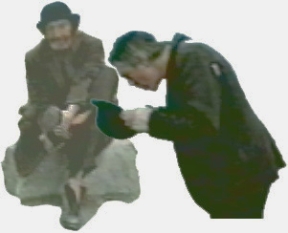
The rest, i suppose i’m happy to say, is anticlimax. the guardsmen walked us back to the camp and returned to the woods. they were only there to prevent infiltrators from reaching the plant via the woods, a feat of strategery which eddie and i were about to accomplish by mistake and out of complete stupidity. ho ho ! before long, eddie got a ride back to boston, and i rode back with someone else, and i never saw eddie the p.t. barnum clown again.
update: my google-fu must have kicked it up a notch: brother kato and sister clare are still around! i should look them up…sr. clare on pbs
Read Less...
the attic is empty
a grief without a pang, void, dark, and drear,
A stifled, drowsy, unimpassioned grief,
Which finds no natural outlet, no relief.
- coleridge. consider that won’t you?
as i flail about attempting to cobble together
a post without a link, without a spark, without an idea,
a stifled, drowsy, unimpassioned post,
which finds no sufficient cause, no point.
hopefully you have not noticed that for the last month or so i have been brain-dead, seeped and sapped, the melon has long been balled as it were. perhaps you have? well i suppose an explanation is in order if so. at some point, mid-sentence no doubt, it dawned on me that i had nothing rattling around in ol’ noggin to write about. quite a surprise let me tell you. it was as if i’d been having a garage sale of gently worn ideas for two years (everything must go!) and then one day the inventory finally ran out (where’d everything go?) i’ve tried to conceal that fact from you, the wonderful folks rummaging through the piles in my digital driveway, but, well, there it is. i seem to be out of stock. the attic is empty.
how do they “harrumph” in foreign lands i wonder?
sure, sure, i’ve been posting links, noodling about on ye olde photoshoppe, which is all well and good, but damn it bugs me to not be able to write any proper posts! i’d sure like to. i’d like to write any damned thing; to be at play in the keys of the board! and yet, for all the want- nothing. odd the way this happens to the mind. for me personally it is cyclical. always has been no matter what the medium. i take the sponge view. (wait one darned minute! i believe this post may have just earned its keep with that bizarre sentence. “i take the sponge view.” i like it.) a sponge is a temporary vessel, the midpoint between spilled milk and the drain, or spilled whisky and the throat. it must be squeezed empty before it can be filled again. so creatively there are times when i gush forth and times when i must soak up.
to misquote and flagrantly offer no credit where due:
the spirit is willing, but the brain is spongy, and bruised.
you know, there is the possibility that my diagnosis is wrong, and that i am not entering into a soaking up phase at all. what if it’s something more awful and permanent than that? it’s possible my brain has simply stopped functioning. it’s possible i have in fact forgotten how to think. it is possible a small sexily clad succubus entered my bed chamber one evening and heartlessly removed the “clever” center of my brain and traipsed off into the night to use it for her own fiendish purposes. it is possible my brain is then a “phantom limb.” it is possible that one yankee game i watched last week was in fact a porthole in time, constructed by my enemies, the viewing of which sent my mind back to the age of 15 when i actually followed baseball, and alloted mental cpu cycles and storage to its myriad statistics! unlikely sure, but possible. then again perhaps it’s not my spongy brain’s fault? perhaps it is rather a failing on the worlds part. perhaps the world is just perceptively less interesting than it was two months ago? perhaps the world has gotten dumberer? or perhaps the world is just being lazy! “you damn lazy uninspiring world, get your shit together!” (angry fist shaking here.)
in any case before the cruel hateful “ha ha your brain doesn’t work! you can’t write” and the “hey i want my 25 cents back for this crumby lava lamp” letters start pouring in i just want to say the following-
1) why it gotta be like dat?
2) in the near future you can expect the meta-blogging, news story forwarding, book scanning, and photoshopery to continue unabated, but don’t expect much else. not from me at least. there is always the chance one of our non-brain-dead members will contribute some letters organized into brilliant, funny, interesting sentences and paragraphs, but don’t hold your breath. “you damn lazy nonists, get your shit together!” (mock-angry fist shaking here.)
all the best from your spongy friend-
j
Read Less...
the mirror of the world, etc
 the first illustrated book to be printed in England was a popular encyclopaedia called mirror of the world. it was published by one william caxton in 1481, who introduced the art of printing to england. favorite quote: encyclopaedic texts were very popular throughout the Middle Ages. During this period it was commonly believed that it was possible to create one volume digests of all knowledge. and perhaps it was. it’s presented courtesy of the university of glascow’s amazing book of the month section, which i’ve been shamelessly keeping to myself for a while now. its archives, which dates back to 1999, contain some really gorgeous volumes. check it.
in praise of shadows
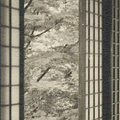 was reading a bit of jun’ichiro tanizaki’s 1933 volume in praise of shadows today. it’s a romantic essay lamenting the disappearance of traditional japanese design ideals. specifically the modern use of bright lights, and other western technologies, which he recognized as replacing the warmth, depth, richness, and mystery achieved through the traditional use of shadows and darkness. i must confess that i have always found japanese interiors alluring. i’ve fantasized many times about the experience of living in such a place. i wanted very much to post about the traditional japanese house using tanizaki’s slim book as a jumping off point but find i can not. i just do not know enough about the subject. searching out information proved to be overwhelming. for instance today is the first time i’ve ever heard the term wabi sabi. as such i think it best that for the time being i simply confine myself to related matters which are less expansive.
so, i give you, tanizaki on traditional japanese toilets-
every time i am shown to an old, dimly lit, and, i would add, impeccably clean toilet in a nara or kyoto temple, i am impressed with the singular virtues of japanese architecture. the parlor may have it’s charms, but the japanese toilet truly is a place of spiritual repose. it always stands apart from the main building, at the end of a corridor, in a grove fragrant with leaves and moss. no words can describe that sensation as one sits in dim light, basking in the faint glow reflected from the shoji, lost in meditation or gazing out at the garden. the novelist natsume soseki counted his morning trips to the toilet a great pleasure, “a physiological delight” he called it. and surely there could be no better place to savor this pleasure than a japanese toilet where, surrounded by tranquil walls and finely grained wood, one looks out upon the blue skies and green leaves.
as i have said there are certain prerequisites: a degree of dimness, absolute cleanliness, and quiet so complete one can hear the hum of a mosquito, i love to listen from such a toilet to the sound of softly falling rain, especially if it is a toilet kanto region, with it’s long, narrow windows at floor level; there one can listen with such a sense of intimacy to the raindrops falling from the eaves and the trees, seeping into the earth as they wash over the base of a stone lantern and freshen the moss about the stepping stones. and the toilet is the perfect place to listen to the chirping of insects or the song of birds, to view the moon, or to enjoy those poignant moments that mark the change of seasons. here, i suspect, is where haiku poets over the ages have come by a great many of their ideas.
anyone with a taste for traditional architecture must agree that the japanese toilet is perfection. yet whatever its virtues in a place like a temple, in an ordinary household it is no easy task to keep clean, no matter how fastidious one mat be or how diligently one may scrub. and so it turns out the be more hygienic and efficient to install modern sanitary facilities - tile and flush toilet. there is no denying it’s cleanliness, every nook and corner is pure white. yet what need is there to remind us so forcefully of the issue of our own bodies. a beautiful woman, no matter how lovely her skin, would consider it indecent were she to show her bare buttocks or feet in the presence of others; and how very crude and tasteless to expose the toilet to such excessive illumination. the cleanliness of what can be seen only calls up the more clearly thoughts of what cannot be seen. in such places the distinction between the clean and unclean is best left obscure, shrouded in a dusky haze.
...
good christ. i really have to apologize. having typed that i now realize it is quite possibly the most boring banal bit of text i could have chosen. even i’m fucking bored. if any of you actually read it, well, sorry. does not do the book justice. there are many sections which, though perhaps not lending themselves as easily to a blog post, would almost certainly have been more thought provoking and entertaining. why did i not choose one of them? fuck if i know. i did, however, type all that crap about japanese toilets, so we’re stuck with it.
anyhow, my book on wabi sabi will arrive eventually, at which point perhaps i’ll be able to make an informed post about something which is actually of interest. should have titled this post, in defilement of shadows.
i don’t know folks. ever have one of those days?
Read Less...
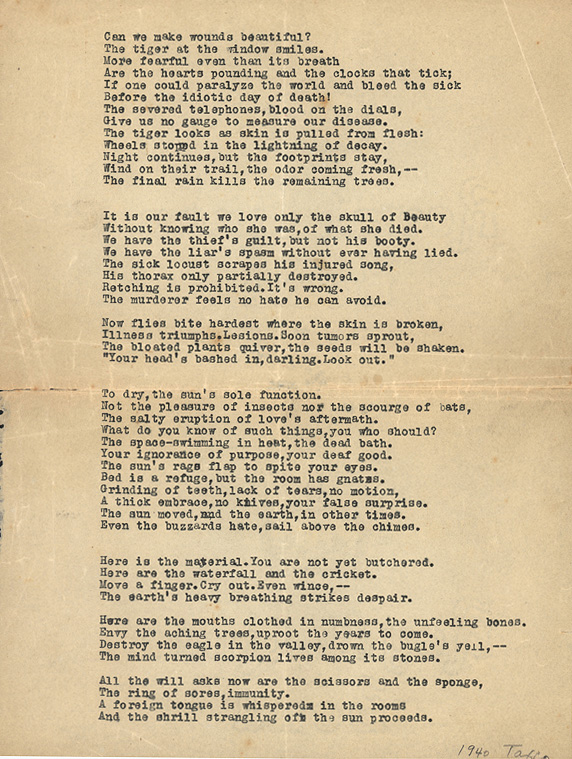
can we make wounds beautiful?
paul bowles is best known for his fiction and to a slightly lesser degree for his music. early in his creative career, however, he also wrote poetry. Gertrude Stein told him he was “not a real poet,” and he agreed. be that as it may i was perusing the university of deleware’s special collections feature on bowles (which you may wish to check out yourself) when i came upon a poem i liked. it was written in 1940 when he was in mexico and later appeared in the 1968 black sparrow press collection scenes. click and enjoy.
warrior monks & the first earth battalion
 though this might be old-hat to some (tom b, you old counter cultural coot i’m looking at you!) the first earth battalion is new to me. it’s the product of a unique convergence of eras and ideas not likely to be arrived at again any time soon. the tail end of the u.s. military investigations into altered states, the increased esteem of psy-ops, the army’s hollywood connection, and both the environmental and new age movements which had been simmering in the cloudy minds of a generation of super-stoned, barefooted, longhairs. fed on this unholy placenta, a resulting birth was the First Earth Battalion Operations Manual
“the whaah?” well it’s a 1979 military document, by retired Lieutenant Colonel Jim Channon, which essentially laid out an idyllic vision of a future U.S. military, peopled by an elite class of tree-hugging, spiritually enlightened warrior monks, who would usher in an earthly paradise through love and (among other kooky methods) telekenisis.
really you have to read through it a bit to get the full weight of the bat-shit craziness of it all. i can’t really scratch the surface here. the fully hippie-come-star trek illustrated pdf can be downloaded here or the text version can be viewed here.
the vision that it lays out is comical to say the least. to my mind think the whole thing reads like a manual for a dungeons and dragons style role playing game (1st earth battalion: march of the telekinetic spirit lambs. a mmorpg, coming soon. it’s my idea! keep your grubby hands off it. ) take for instance this list of character classes which might have been torn directly from a d&d spin-off:
people
All warrior monks, but an interdependence of New Age skills as well.
Spirit wizard
Meditation leader
Martial arts wizard
Nutritionist herbalist
Vexillographer (flags and banners)
Cinematographer
Old tapes
Holographer
Printer
Minstrels
Video technoid
Satellite technoid
Laser technoid
General systems theorist
Physicist
Futurist
Builder
Conservationist
Indian tracker
thymelod the meek casts advanced herbalist spell, sneeze of confusion, for +12 allergy damage.
what might said earth warriors look like? take a look at this piece of artwork commissioned for a proposed movie version of the 1st earth battalion story-

yeah. anyhoo kooky though the whole thing may be it gets more interesting, and less amusing, when you take jon ronson’s very interesting sounding book the men who stared at goats into account.
blurb: In 1979 a secret unit was established by the most gifted minds within the US Army. Defying all known accepted military practice - and indeed, the laws of physics - they believed that a soldier could adopt the cloak of invisibility, pass cleanly through walls and, perhaps most chillingly, kill goats just by staring at them. Entrusted with defending America from all known adversaries, they were the First Earth Battalion. And they really weren’t joking. What’s more, they’re back and fighting the War on Terror. ‘The men who stare at goats’ reveals extraordinary - and very nutty - national secrets at the core of George W Bush’s War on Terror.
evidently some of the looniness from the first earth battalion seeped into the psy-ops groundwater of the pentagon, not as a utopian vision for peace, of course, but in the form of novel ways to torture people. the best documented tactic seems to be “torture by repetitive music” which you can read a little about on wfmu’s beware the blog in a march 2005 post titled: tunes for torture, as well as a little related info over at vice.
as for the fate of the creator of it all jim channon, well one need only check out this vid of him giving a keynote and all will become clear. (that’s him in thumbnail.)
Read Less...
before hipsters discovered primitivism
 just picked up a really fascinating book called russian criminal tattoo encyclopedia. from the jacket: the drawings in this book are part of a collection of more than 3000 tattoos accumulated over a lifetime by prison attendant danzig baldev. tattoos were his gateway into a secret world in which he acted as ethnogropher, recording the rituals of a closed society. it’s a nice book. below you will find some examples of the russian prison tattos found within. they are mostly nsfw and beyond that some folks may find them offensive, but they are prison tattoos afterall.

this tattoo is called “the hot black shaft” or “the greedy whore.”
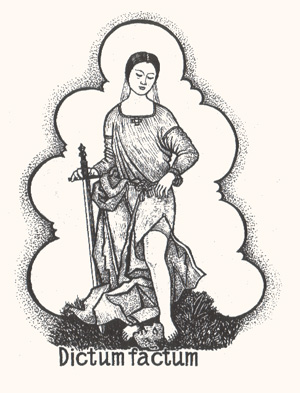
tattoo from a seaman sentanced for failing to pay alimony. the depiction of “the beheading of john the baptist” represents himself and his wife, who took him to court and had him imprisoned.

finely drawn anti-soviet tattoo from a military construction worker convicted of theft.

a hooligan horoscope tattoo. text: we are twins and our spirit is young!

a tattoo on a man who had lost at cards in a corrective labour colony. according to the rules of the game, the loser had to comply with the winners wishes. he was also obliged to pay for the tattoo himself.
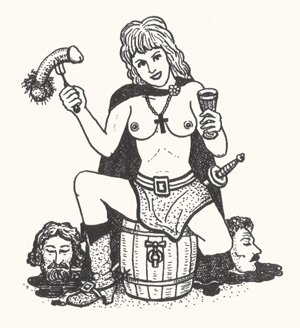
a female hooligan convict tattoo known as “the prick-eater”

tattoo from a man whose parents were exiled. text: the agressive, eternally hungry, drunk russian swine asks the west to help…
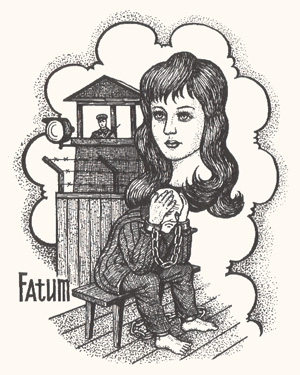
a tattoo based on a photograph. text: fate.

a hooliagn’s tattoo worn by a man who was convicted for hooliganism. text: now, bitch, tell me how you were unfaithful to your husband.
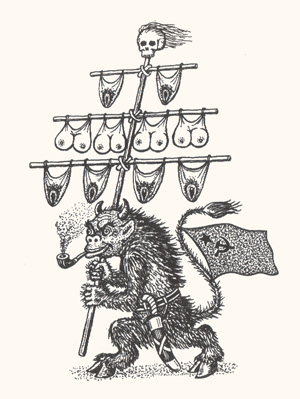
intricate tattoo from a convict imprisoned “becuase of a woman.”
the book has hundreds of high quality drawings as well and many photographs and a couple detailed essays. wild stuff. much of it is sexual, lots of satan fucking for instance, but there are ugly ideas of all sorts expressed through the russian vernacular of work camp ink. if your interest is peaked, or you are some kind of sick puppy, you can pick up the book here.
Read Less...
a burnt child dreads the fire
 or so goes the old proverb. ever heard it? how about- i talk of chalk and you of cheese. or hungry dogs will eat dirty pudding. me neither. but these and as well as some old chestnuts are explained in nathan bailey’s 1721 Dictionary of Proverbs scanned and presented in all it’s 18th century goodness over at (one of the more promising ventures i’ve come across in a long while) fromoldbooks.org. if proverbs are not to your taste then swing over and see what else you can find. thus far it houses over 680 public domain images scanned from old books, most with multiple high-resolution versions. a nice resource which will hopefully expand.
sunday stream
yes I know it’s not Sunday. it Just sounds better, alliteration and all. anyhow- I’ve been meaning to start a regular weekly stream of consciousness type post in which everyone is invited (encouraged) to pick up the thread and roll with it for the rest of the week. Casual, off the hip, low pressure, whatever comes to mind. give everyone a chance to check in and unload as it were. I’ll begin
Saw Broken Flowers yesterday. Bill murray in full on hang-dog slow-mo. Bill needs to change it up. Enough mopey non-acting already. How about some over the top, gary oldman type, villain role for him or something? Seriously. capsule movie review. somewhat amusing, somewhat snoozing. the “lolita” scene was probably the most inspired part. short though it was.
question: isn’t sitting in a movie theater a confirmation of your worst fear about the rest of humanity? Namely that they are semi-retarded. or if not retarded at very least utterly unlike you in outlook? take for example a preview. say a preview for some formulaic, re-heated, sub-par, piece of donkey dung comedy which is totally lacking in effective humor of any kind. isn’t it slightly dumbfounding when right on cue huge swaths of the audience titter and chortle? ho ho! ha ha! and your sitting there thinking, “what the fuck? that was not funny. in fact it was insultingly unfunny!” or even worse, a commercial. a fucking commercial!! a fandango or coke commercial. a run-of-the-mill dollop of marketing bullshit with only the smallest effort exerted to entertain flickers across the screen, and, incredibly, laughter tears loudly through the audience. ?! am i the retarded one? am i so emotionally stunted that i can’t see the humor? or has eddy murphy, circa 1985, time travelled titor-like to this theater to do his act down in the front row and i’m wrongly making the assumption that the audience just erupted in peels of laughter over a couple of paper bags with marshmallows glued to their heads?
“wanna fanta-don’t you wanna? wanna-fanta?” good wine-swilling christ!
on television sneaky murderers are always caught forensically. “well we found traces of such and such a chemical. the murderer must have known biff worked in a french fry factory and injected him with…” why don’t murderers just induce an air embolism? pump lots of air right into those veins. kaboom. painful too for those revenge killings. always wondered about that.
question: why is it assumed sharks, alligators, snakes, and dinosaurs are the only members of the animal kingdom worthy of having television shows made about them? i’m so fucking bored with all these “extreme!!!!” animals! fucking hell. tell me about badgers and meerkats and silver backed gorillas. tell me about manatees and foxes and otters. tell me about toads. tell me about baby panthers. pretty please.
was speaking a friend on the elevator the other day, talking about raising his soon to be born child, and i started thinking about the things we do which we can’t remember being taught. things we do every day maybe. showering for instance. do you ever think, “hey, i might be doing this all wrong. i might be doing this backwards or totally different from every other human on the planet? i don’t remember learning how to do this. does everyone stand on their head to wash their crack?” you were taught how to tie your shoes and chances are you still tie them that way to this day (bunny ears anyone?) but i’m pretty sure no one taught you how to masturbate or how to screw. why do you do the things you do? why do you shower that way, in that order? why do you wipe your ass that way? are you even doing it right?
question: if prostitution is the oldest profession, and countless men and women have walked that path, experiencing life and humanity from a viewpoint few others get to see, shouldn’t a great philosopher have come from within the ranks of the whores by now?
Read Less...
utriusque cosmi and the last alchemist
 before the theory of the big bang, before the heliocentric model, indeed before science proper, all manner of theory as to the origins of the cosmos jostled for position. as late as the 17th century religious sects, alchemists, and mystics still held enough sway to throw their own theoretical hats into the ring and receive due consideration. religious sects and mystics are still at it i suppose (intelligent design anyone?) but the alchemists are long gone. what follows is the story of creation as put forth in the book utriusque cosmi historia published in 1617, written by one dr. robert fludd.

when the secret of secrets wished to reveal himself, he began to produce a point of light. before that point of light broke through and became apparent, the infinite was entirely hidden and radiated no light.
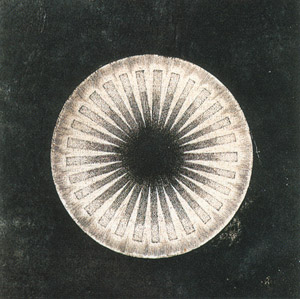
light, the inexhaustible source of all things, appears in the darkness and with it the watery spirits begin to divide into near and far.

in the centre are the dark waters, far from light, forming the source of matter; at the edge are the upper waters, from which the divine fiery heaven will unfold. the bright cloud in between is called the earth spirit.
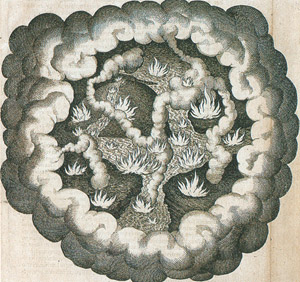
the chaos of the elements from the lower waters is a confused and undigested mass in which four elements fight against each other.

the ideal final state of material is acheived when the elements are arranged according to the degrees of their density: (from outside in) earth, water, air, fire. in the centre appears the sun, gold.

the firts day of creation. let there be light, said god; and forthwith light sprung from the deep; and from her native east to journey through the aery gloom began.
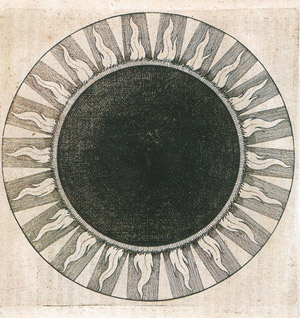
the uncreated light of the spirit reflected in the sphere of the fiery fermament as in a mirror, and the reflections in their turn, are the first manifestations of created light.
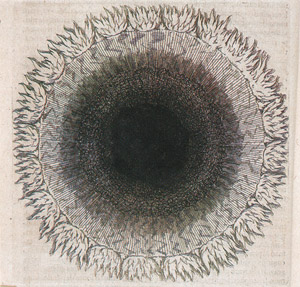
the earth belongs to the lowest level of the elements, the sediment of creation.
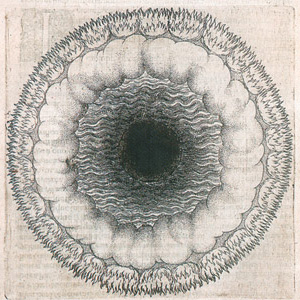
according to the proportions, the grossest element couples with the most subtle when the elements of air and water are produced.
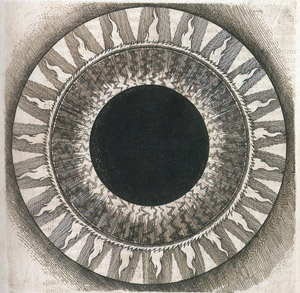
the second day: the ethereal sphere with the fixed stars and planets divides the upper waters from the lower. in this sphere the upper heavenly quality (form) is in balance with the lower heavenly quality (material).
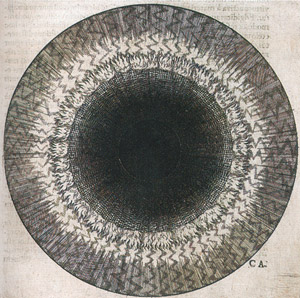
the third day: fire, the meterial fire of paracelsus or “dark fire,” arises as the first and most subtle element.
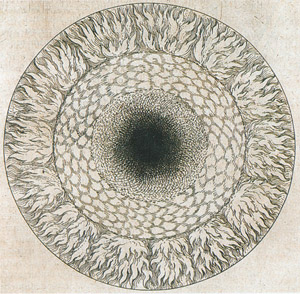
the sequence by which the elements are ordered in an ascending degree of purity- earth, water, air, fire- isrepeated in the structure of the entire cosmos.
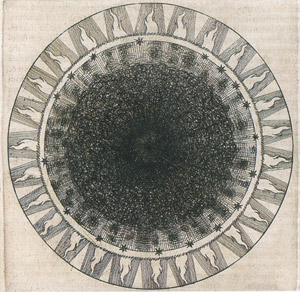
the stars on the outer edge of the ethereal sphere anly became visible with the creation of the sun, for they store its light and after a space of time emit it again like phosphorous.
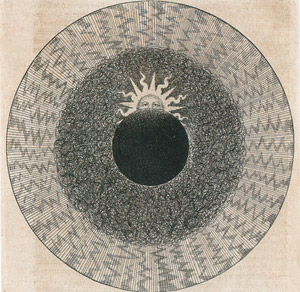
the perturbations attendant on creation had caused some of the celestial light to be trapped in the cold mass of the central earth. obeying the law of gravity, this celestial substance began to rise toward its rightful place in th eheavens, and it was thus that our sun formed.
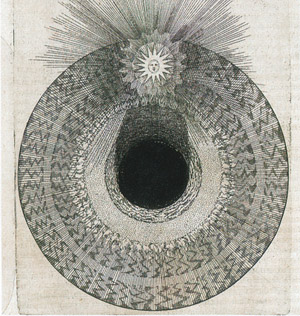
in the firmamnet the sun is the visible representative of the divine fire and of love. its corresponding part in the human body is the heart, which emits its vital rays in a circle from the centre, and thus animates each individual limb.
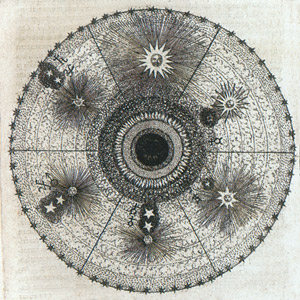
when the sinking, hot rays of the sun encounter rising, watery steam, they condense and give rise to planets.
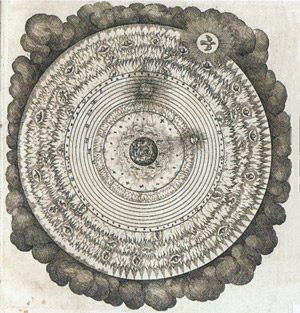
the spirit of god hovers as a dove perfect above creation, which is already menaced by the fall.
———————————————————————-
some notes on the book and its author:
Utriusque cosmi historia - ‘An account of the Macrocosm and the Microcosm’. is a vast tome, issued in five parts during the period 1617-1621, which attempts an encyclopaedic outline and synthesis of the western esoteric ideas on the relationship between the Macrocosm and the Microcosm, the Cosmos and Man. in it author dr. robert fludd attacked aristotle and other ancients (being pagans and thus without possible merit), and attempted to replace them with an understanding of nature based on christian principles, using as his guide the mosaic books of the Bible. He interpreted the Creation account in Genesis as a divine alchemical process, and looked for truth in the Hermetic and Neoplatonic works of late antiquity and the Renaissance, which he interpreted as mirroring Christian truths.
fludd was a prominent english Rosicrucian and Paracelsian physicist, a Kentish Anglican alchemist, an astrologer, prolific author, mystical philosopher, an alleged Grand Master of the Prieure de Sion, and designer of perpetual motion machines. he’s thought by some (thomas de quincey for one) to be “the father of Freemasonry” and… oh yes he was a practicing physician. yikes! quite a resume. if your immediate reaction is to break the glass and sound the kook alarm you wouldn’t be alone.
some pertinent info:
He Latinized his name from Robert Fludd into Robertus a Fluctibus (hahahaha), and began the promulgation of many strange doctrines. He avowed his belief in the philosopher’s stone, the water of life, and the universal alkahest; and maintained that there were but two principles of all things,—which were, condensation, the boreal or northern virtue; and rarefaction, the southern or austral virtue. A number of demons, he said, ruled over the human frame, whom he arranged in their places in a rhomboid. Every disease had its peculiar demon who produced it, which demon could only be combated by the aid of the demon whose place was directly opposite to his in the rhomboidal figure. Of his medical notions we shall have further occasion to speak in another part of this book, when we consider him in his character as one of the first founders of the magnetic delusion, and its offshoot, animal magnetism, which has created so much sensation in our own day.
on the other hand even kooks are not technically barred from waiting at the train platform of truth and were then, as now, forces to be reckoned with.
more pertinent info:
Fludd’s claims about physical reality run an amazing gamut from crazy to insightful. Lightning, for example, was simply not to be understood in physical terms. It was the naked will of God. That’s why it struck the people who didn’t run and hide when they saw it.
But he also believed the sun—not the earth—was at the center of the universe. He said that our blood carries the lifegiving parts of air through our body in a circular motion. That was very close to the modern theory of blood circulation. he is also thought by some to be the original inventor or the barometer.
in fact it’s well known that he was considered important enough to warrant violent refutations from Keppler. and not only keppler. Every 17th-century scientist we know about today took time out to attack Fludd’s ideas. so his most important contribution to science might be the way in which provoked reaction. he served as a lightning rod which finally called the “new science” of the day to strike down on alchemy. it is said that when he died in 1637, alchemy died with him.
for more alchemical and mystical kookery check out memoirs of extraordinary popular delusions (or read the newspaper).
Read Less...
guessing, wondering, and seeing things
 guessing. in the beginning equality bore balance. in the end supremacy begot chaos. in the beginning there was awe. in the end there was confusion. in the beginning: a necessity for trial and interpretation. in the end: the error of conclusions. if humanity’s origin is considered the beginning and the present day, the bleeding edge of time, the end, then each new day is the end. in the beginning there were objects and shadows and unknown forces. in the end there were gods and monsters and miracles.
wondering. before it’s mutation into more elaborate and complex forms of self aggrandizing balderdash there was animism. as part of the natural world rather than perceived masters of it we looked outward and saw a continuum of our lessors, our equals, and our betters. we saw mountains, and snorting bulls, and quivering bunny nostrils. each with a power, a force, a “soul” of it’s own.
quote: In some animistic worldviews found in hunter-gatherer cultures, the human being is often regarded as on a roughly equal footing with animals, plants, and natural forces. Therefore, it is morally imperative to treat these agents with respect. In this worldview, humans are considered a denizen, or part, of nature, rather than superior to or separate from it. In such societies, ritual is considered essential for survival as it wins the favor of the spirits of one’s source of food, shelter, and fertility and wards off malevolent spirits.
respect was called for but a respect born of necessity. there was not only the power within to think about but the considerable danger from without. shamanism, shintoism, and pantheism all share this aspect to varying degrees. animism, however, was not properly a religion, as such, for religion implies some form of emotion. Animism is in the first instance an explanation of phenomena rather than an attitude of mind toward the cause of them, a philosophy rather than a religion. is it possible that our very first interpretations of the natural world, philosophically, were in fact the wisest and most healthy?
though in the particulars the anthropomorphic tendencies of animism might seem naive, is it worse than the religions which supplanted it? the religions grounded in the ultimate anthropomorphism of attributing the whole of the natural world’s creation to anthropomorphic designers and it’s purpose to a testing ground for humanity? what could be more arrogant and prideful? what could be less intuitive? and isn’t science, in it’s way, returning us, philosophically, to a more holistic view of the planet and the universe? in as much have all the religions which have dominated our minds in between been destructive missteps? have the centuries of progress actually in the long run made it harder for us the understand the natural world? how can we now take an objective view when the world is made over in our own image?
seeing things. science may yet excuse us our folly. evidently we can’t help ourselves. the factors which have likely lead us down the paths we now walk are by and large involuntary. they are inborn and instinctive. their results unavoidable it seems.
pareidolia, apophenia, anthropomorphism, anthropopathism, (better known as pathetic fallacy), anthropic bias, reification.
some causes, some effects, but a potent hodgepodge of forces for the human mind to reckon with. interestingly even as our understanding of the natural world has deepened our susceptibility to pareidolia and apophenia in particular has remained, either as evolutionary hold overs or as integral parts of consciousness. but where as now we do less peering into shadows for the movement of predators its effects manifest as religious icons in burnt toast, faces on the surface of mars, and the like. we just cant help it, we are pattern recognition machines. albeit self-centered ones.
an interesting theory holds that it is precisely these mechanisms which lead to theology in the first place, that in effect religion is anthropomorphism writ large.
people find a wide range of humanlike beings plausible: Gods, spirits, abominable snowmen, HAL the computer, Chiquita Banana. We find messages in random events such as earthquakes, weather, and traffic accidents. We say a fire “rages,” a storm “wreaks vengeance,” and waters “lie still.” our tendency to find human characteristics in the nonhuman world stems from a deep-seated perceptual strategy: in the face of pervasive (if mostly unconscious) uncertainty about what we see, we bet on the most meaningful interpretation we can. If we are in the woods and see a dark shape that might be a bear or a boulder, for example, it is good policy to think it is a bear. If we are mistaken, we lose little, and if we are right, we gain much. in scanning the world we always look for what most concerns us—livings things, and especially, human ones. Even animals watch for human attributes, as when birds avoid scarecrows. In short, we all follow the principle—better safe than sorry. -paraphrasing of ideas put forth in the book faces in the clouds.
seems a sensible idea. it might explain why, as we became more and more successful, we went from attributing personified powers to the natural world- to attributing the whole of the natural world’s creation and purpose to personified powers. combine the tendency to resolve visual confusion into familiar quantities with the desire to resolve confusion of purpose and -thwap! a steaming hot pile of mythologies.
now as we become more adept at creation ourselves we seek to imbue our mechanical progeny (robotics, a.i., and computers) with human attributes as well. we managed long ago to dispel the notion that the earth was at the center of the cosmos but the notion that humanity is in fact the center of all creation continues to chug along. but how could it be otherwise?
in the beginning: a frightening world which humans sought to understand in terms of supernatural powers and gods.
in the end: gods modeled after humans and a world molded to humanity’s desires- frightening.
Read Less...
Ignoramus
It’s Latin for “we do not know why.” By the 17th century the term referred almost exclusively to “ignorant, arrogant attorneys,” thanks in large part to a 1615 play in which the main character was a stupid lawyer named Ignoramus. If you like to lord over people, spouses for instance, with a wealth of irrelevant knowledge, this and other useless but fun facts can be found here.
space art: lamenting copernica
 space and painting, two great tastes that, well, don’t tend to taste so great together. seems like most space related painting you come across is pretty crumby, not necissarily in terms of skill, but in general effect. either it’s heavily sentimentalized “realism” depicting astronauts mid space float or it’s heavily romanticized galactic landscapes depicting the shpere of one imagined celestial body piercing the horizon line of another imagined celestial body. in fact, to my mind, what turns out to be the most interesting space related painting is the pulpy cover art illustrating the imagined space of our science fiction. must it be this way?
there is a lot to be said about space art in general, but i will not say any of it here, i’ll just list a few thoughts at random:
-is it difficult to get across any higher emotional content in space art because so very few of us have actually seen space, or space vehicles, or the inner sanctums of nasa up close?
-what about the imagination factor? wouldn’t a place everyone knows exists, a place which surrounds our tiny island on all sides, but which so few have seen be the perfect (on-coming pun warning) launch pad for paintings?
-the images from hubble, other telescopes, the rovers, and various spacecraft, which are most often seen in artificial color, are in their way art. do we need space paintings? can they tickle our “holy crap!” bone any better than photographs which for all their accuracy are still of places and phenomena we can’t begin to fathom?
not sure really. what i do know is that i’ve long imagined a whole series of space related paintings which i’d like to undertake and if i ever manage to free myself from this website i plan to paint them gosh darn it!
anyhow…
as many of you no doubt know nasa has an art program. quote: From the inception of NASA’s Art Program in 1962, NASA has invited more than 250 American artists (Robert Rauschenberg, Norman Rockwell, Andy Warhol, etc in the visual arts, as well as other forms)) to witness firsthand the U.S. space missions and to interpret space flight through their art. In a creative melding of art and science, the artists, responding to space exploration on emotional and spiritual levels, have documented the work of engineers, astronauts and scientists. now that’s exactly the kind of thing i’m talking about. that’s the kind of thing that gets me excited!
for a while a portion of this art program’s output was out there to be viewed, traveling around the country on artrain (an art-museum-on-rails consisting of five silver-painted cars) but that exhibition is long ended. i believe the smithsonian has the space art collection in their holdings, though i don’t remember seeing any of them when i was at the decrepit space center last. luckily some folks over at rhizome saw fit to help nasa out and create an online catalogue of the program’s output. now, i say luckily, and i want to mean it, but really i don’t.
the project is called copernica. quote: The NASA Art Program has commissioned original artworks chronicling the wonders, risks and triumphs of space exploration. In Copernica, we invite you to explore a new universe created from a sampling of this art collection. Zoom in to a star to discover an artwork, or build your own constellation and watch the swirling forms take shape. if you prefer to bypass all the zooming and swirling you can head straight for the alphabetical list of artists.
now there is no question there are some interesting artworks to be seen here. if you are a space lover and an art lover there are goodies to be had. the problem, and the reason i didn’t mean it when i said we were “lucky” rhizome created copernica is this- miserably miniscule 2 inch images!!!!!
jesus-holy-fucking-christ-in-space-and-on-earth!! how many times must i make this same complaint? tiny little images are simply not acceptable! if you, out there, as a web developer or curator, want to put up artwork on the internet, if you want to write about it (n.y. times i’m looking at you!) if you want to celebrate visual art of any stripe, you simply
must include decent sized images for us to look at. can that fact be any more obvious?!
in the case of copernica there is essentially no other point. there is very little text. copernica is ostensibly there to let you enjoy these space related images. but how? how in jupiter’s name are we supposed to enjoy them? half of them are not even shown right side up but sideways to fit the form factor… now come on. wtf? the swirling points of data light, the zooming, the redistribution on click is real nifty, yeah, whoopee! but i tell you what, it’s fucking pointless when the payoff is a 2 inch thumbnail. is it bandwidth concerns? well i’ll tell you what, if you scrapped this fucking thing and offered me a bare bones list of plates that i could actually see i’d be far happier.
so as it stands, though copernica is a nice idea which seems to offer, upon first glance, a vacation from the usual ghetto of space art, it is in fact just a tease. you’ll have to mine it for artist names and painting titles then do your own google-fu if you want to see anything exciting.
if any of you out there have links to worthwhile space related paintings, offered up in a manner not requiring an electron microscope to view, please fire away in comments.
Read Less...
a book of scoundrels
on the art of theft and the golden age of gentlemen thieves: there are other manifestations of greatness than to relieve suffering or to wreck an empire. in the supreme adaptation of means to an end there is a constant nobility, for neither ambition nor virtue is the essential of a perfect action. how shall you contemplate with indifference the career of an artist whom genius or good guidance has compelled to exercise his peculiar skill, to indulge his finer aptitudes? a masterly theft rises in its claim to respect high above the reprobation of the moralist. the scoundrel, when once justice is quit of him, has a right to be appraised by his actions, not by their effect; and he dies secure in the knowledge that he is commonly more distinguished, if he be less loved, than his virtuous contemporaries. While murder is wellnigh as old as life, property and the pocket invented theft, late-born among the arts. It was not until avarice had devised many a cunning trick for the protection of wealth, until civilization had multiplied the forms of portable property, that thieving became a liberal and an elegant profession. (via mofi)
page 2 of 3 pages < 1 2 3 >