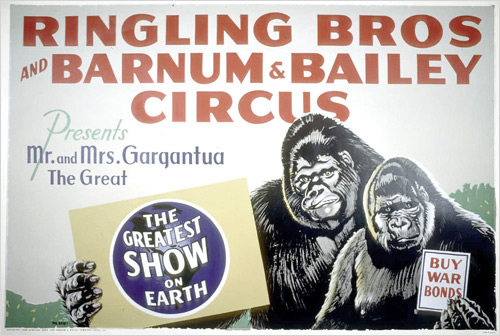
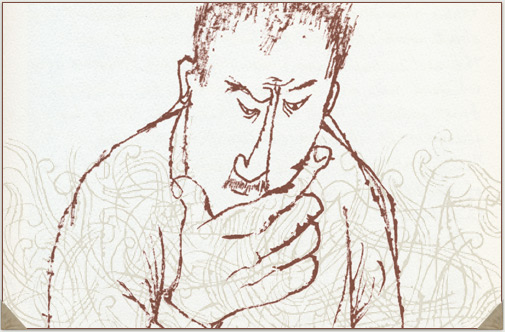
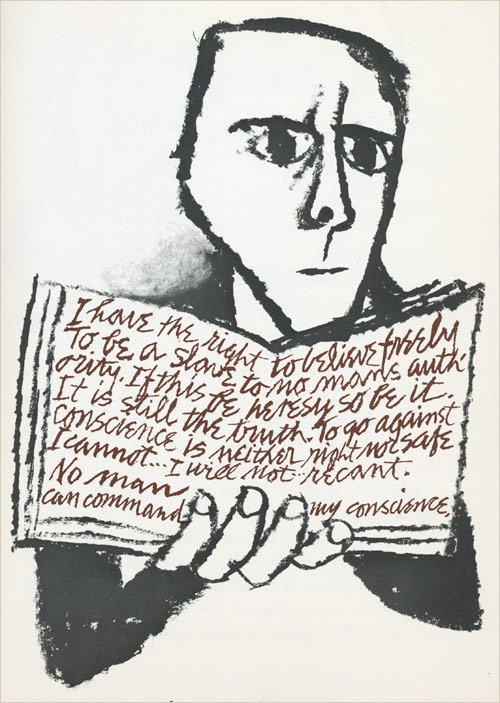
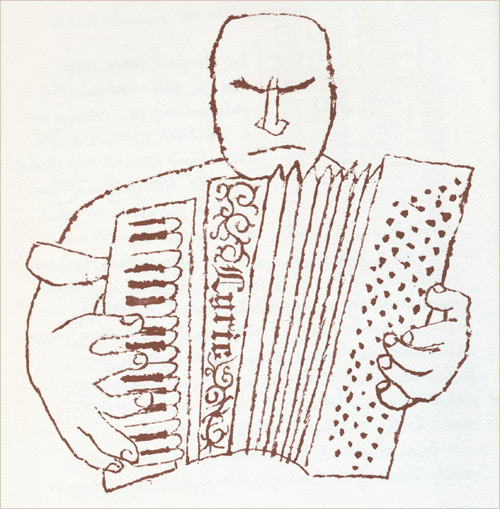
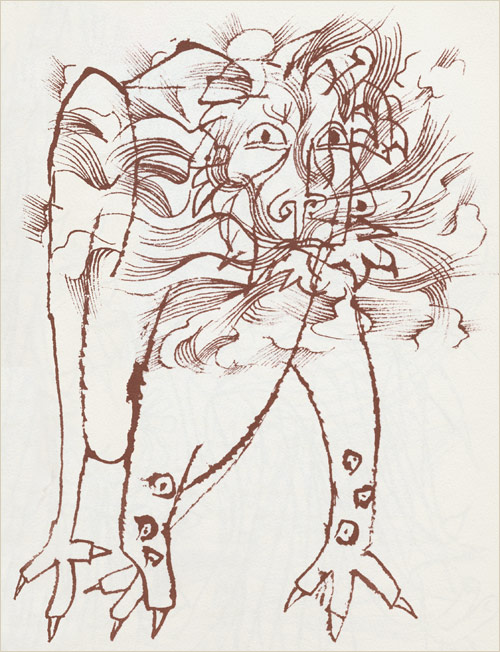
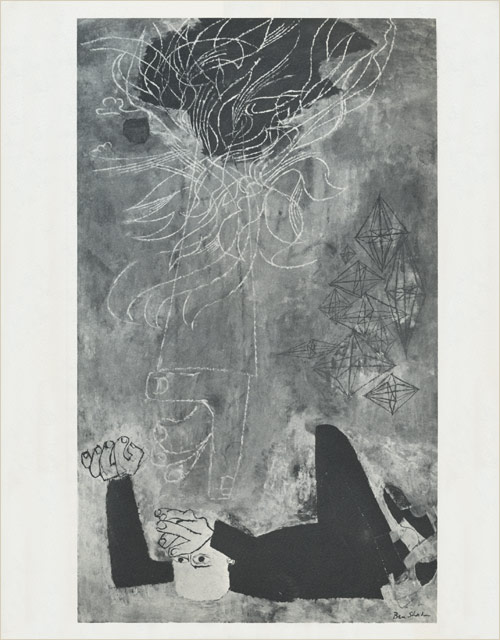
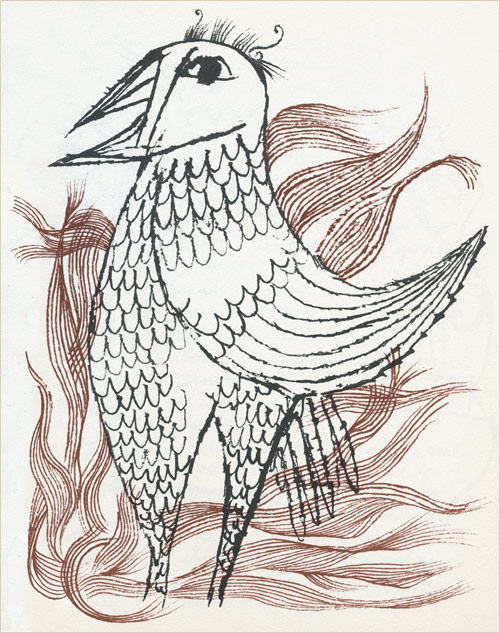
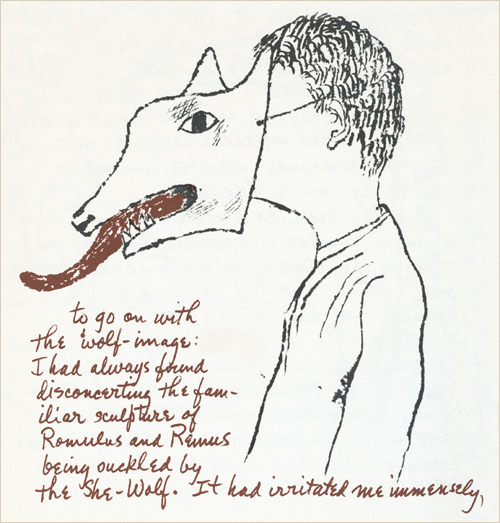
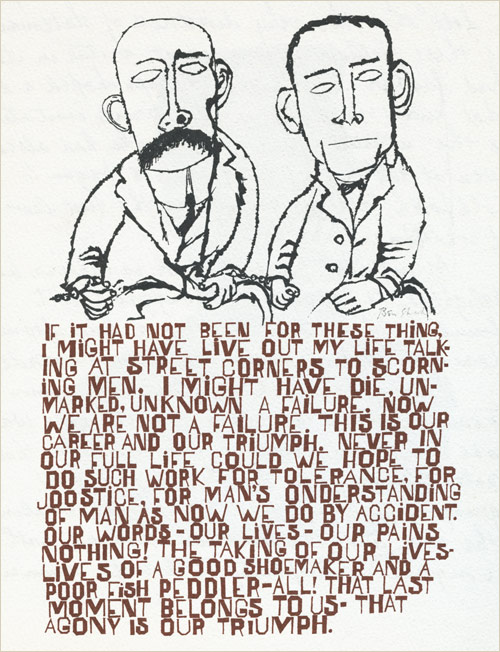
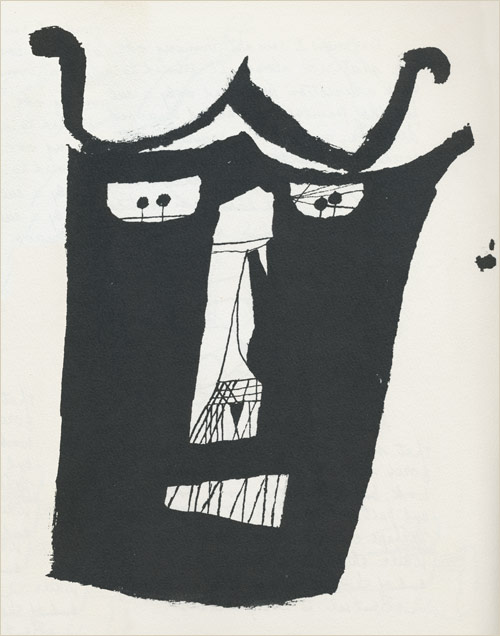
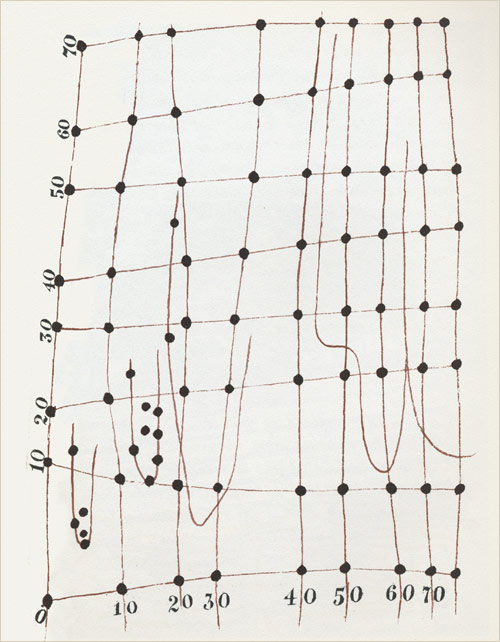
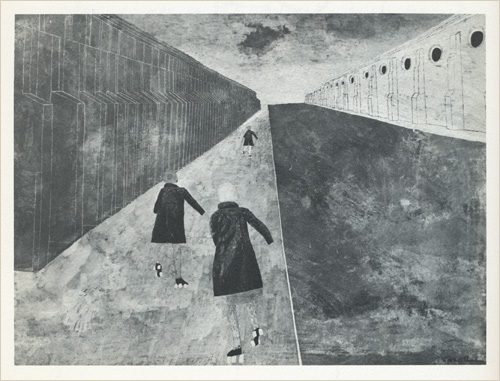
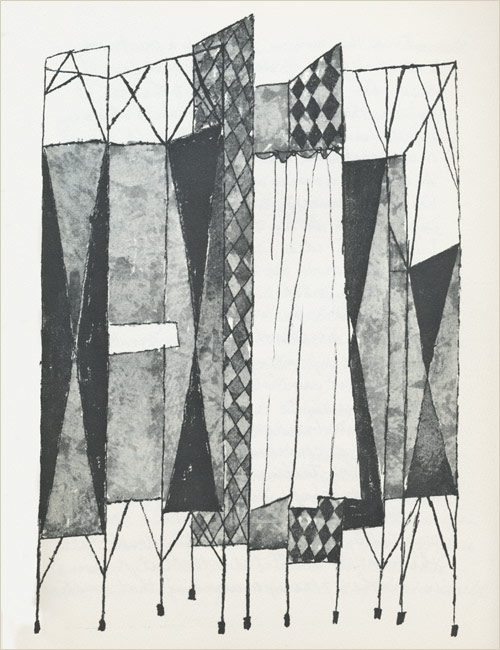
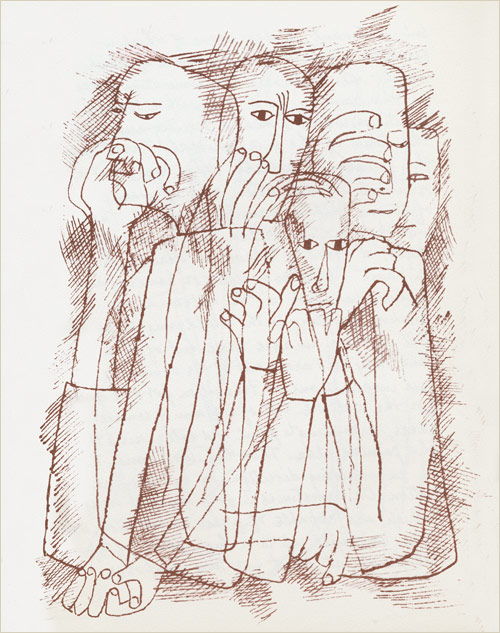
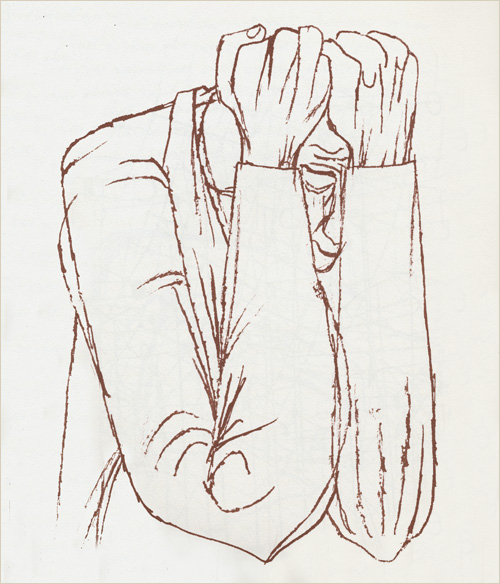
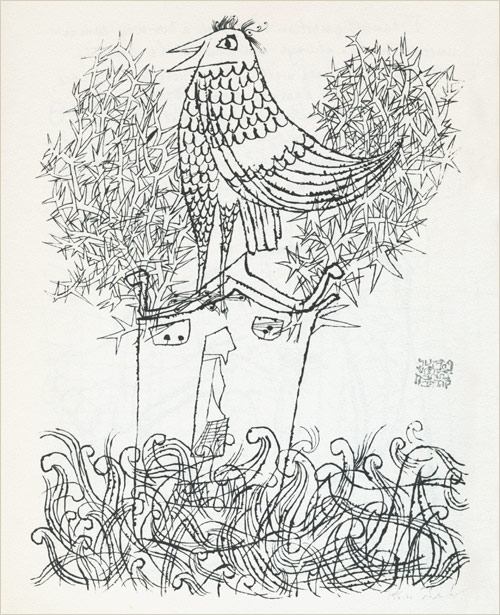
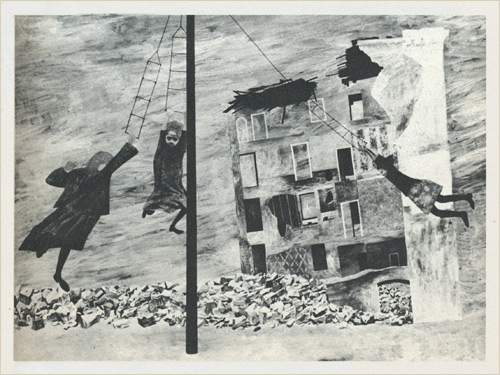
Ben Shahn is best known, perhaps, as one of the FSA photographers (along with Walker Evans and Dorothea Lange) who travelled the American south in the 1930’s documenting the adverse effects of the Great Depression, the Dust Bowl, and increasing farm mechanization. (He also served as an assistant to Diego Rivera while Rivera executed the infamous Rockefeller Center mural.) Shahn, however, had come to photography as a means of doing studies for his paintings, and after World War II he put down the camera almost completely. He began, and ended, as a printmaker and painter. He was once considered one of the preeminent “realist” painters but by the time Abstract Expressionism came into vogue he’d been written off by the gatekeepers of High Art. In 1947 Clement Greenberg, the high priest himself, said, “Shahn’s art is not important and is essentially beside the point as far as ambitious present-day painting is concerned.” Art history has, in large, stuck to this view, which is a shame. Anyone quoted as saying, “I believe that if it were left to artists to choose their own labels, most would choose none” is alright in my book, for obvious reasons.
The biography of a painting
Or, the passion of Ben Shahn.



Hugh Ferriss: Delineator of Gotham
Or rendering “The Vertical Sublime”
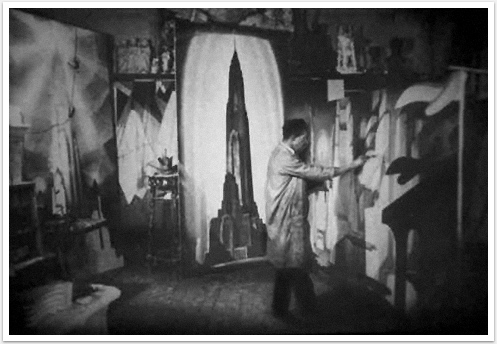
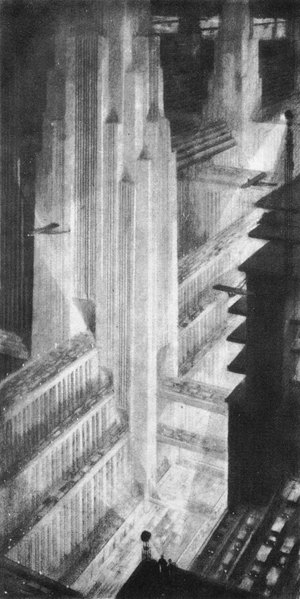
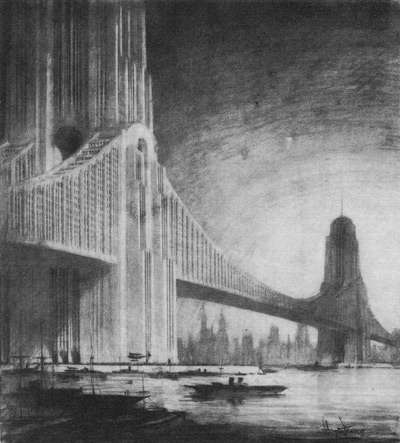
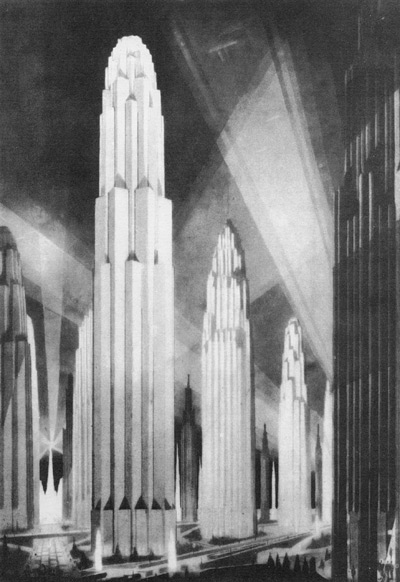
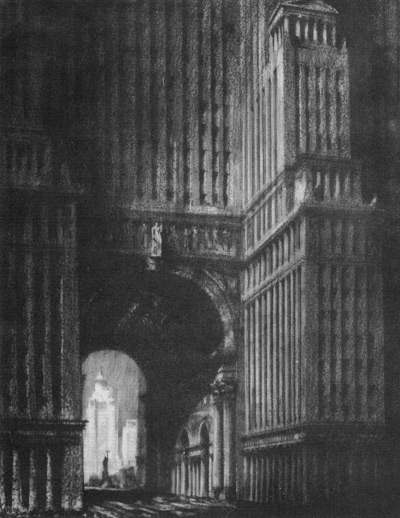
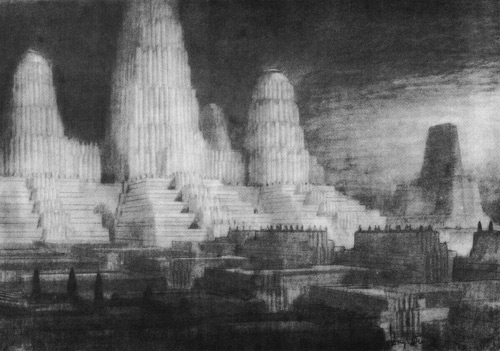
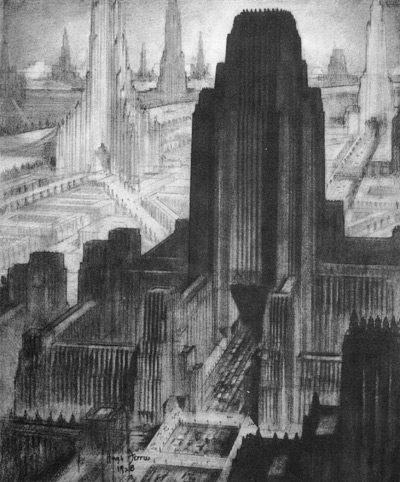
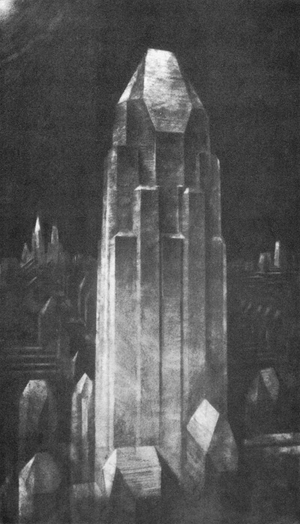
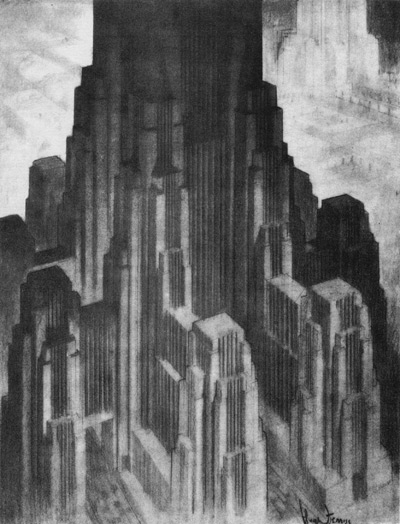
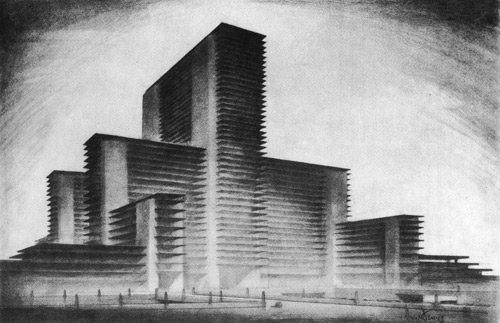
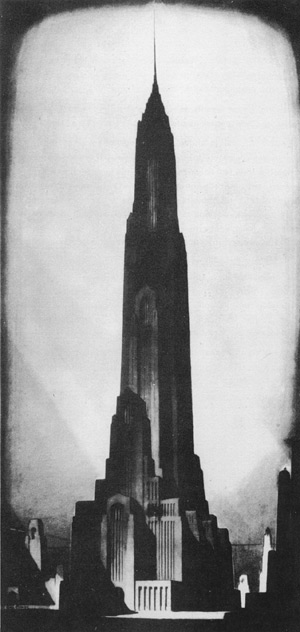
Picked up a reprinting of a 1929 book by Hugh Ferriss titled The Metropolis of Tomorrow. Ferriss was the preeminent architectural draftsman of his time who through his moody chiaroscuro renderings of skyscrapers virtually inventing the image of Gotham visitors came to the city to see and residents identified with so fondly. As Michael Mallow puts it: “By the mid-twenties, renderings by Ferriss had become almost de rigeur for successful competition projects; countless skyscrapers waited their turn to be bathed in the dark monumentality emanating from his drafting table. In these works a blasé department store appears as a giant lording over its block. Stodgy hotels cease to be stodgy hotels and become looming silhouettes emerging from the urban haze like shipwrecks. Ferriss went to grand new lengths in suppressing detail for mood, and clients loved it.”







Tom Sachs is exactly the kind of artist I’d expect to shrug my shoulders at, and perhaps mumble a “ho-hum” to anyone who brought him up. His work has in large part embraced the irony so common in contemporary art, much of it incorporating brand logos (the Chanel Guillotine or the Prada Deathcamp for example) and winking reproductions of the banal. the Sperone Westwater site says: “Tom Sachs takes his inspiration from the collective American imagination, borrowing his subjects from among the status symbols of mass culture: weapons, fast food, hip hop, surfing, and skateboarding, and he mixes them with the symbols of American wealth that sees in luxury, conformism, and designer labels a reinforcement of their elite social status.” Exactly the kind of thing which I’d expect to bore my pants off.
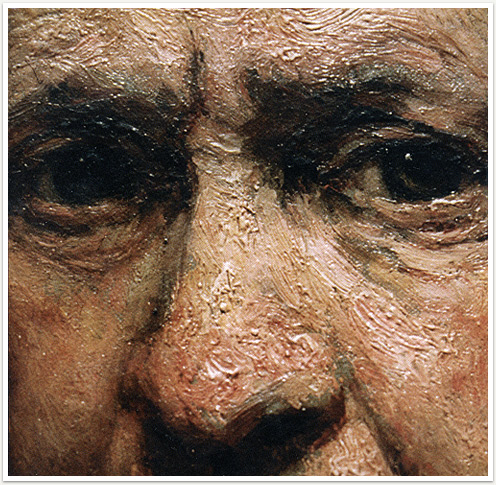
Rembrandt the Quadracentenarian
Today marks the 400th birthday of my homie Rembrandt Harmenszoon van Rijn. In celebration I offer a couple of paragraphs from a favorite book of mine, What Painting Is by James Elkins, which happens to touch on the physicality of Rembrandt’s canvas surfaces. See below.

Solomon D. Butcher and the Nebraska pioneers.
Or: homing-in on the homesteaders.
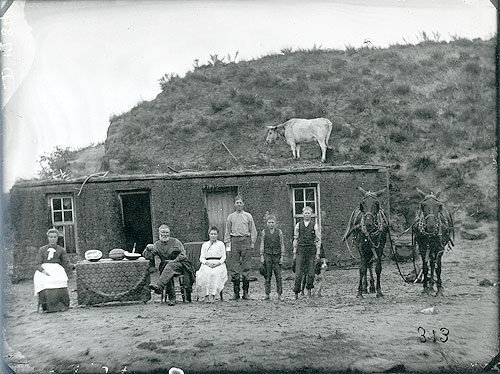
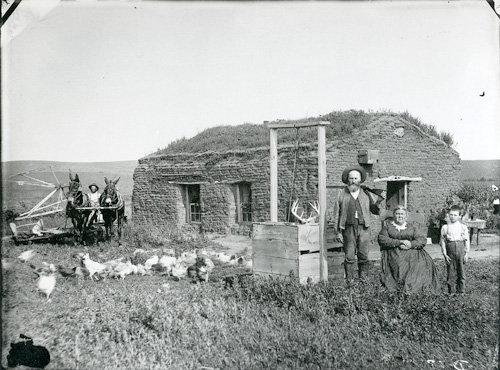
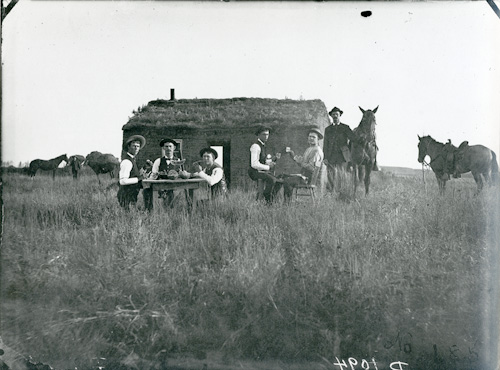
The mud was high, the sod-roofs were damp, the watermelon was sweet, and in the lens of newfangled camera’s men never smiled. It was Nebraska in the late 1800’s and at “only one-ninth of principle due annually, beginning two years after purchase” it was destination soon crowded with homesteaders. One of them was Solomon D. Butcher who arrived in Nebraska in 1880 to farm. After five years of struggle he realized that he was not tough enough to meet the demands of the homesteader’s life but having in those five years developed a genuine love of the life, and realizing that the period of settlement would soon be over, he set out instead to create a photographic history of what it was to be a pioneer. Between 1886 and 1912 Butcher generated a collection of more than 3,000 photographs. Like most men “he died believing himself a total failure.” His work, however, for its breadth and specificity, has proven to be one of the most important chronicles of homesteading ever exposed to the light.






Trickle-down affections
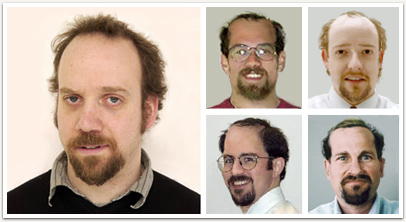
Or: do celebrity archetypes inform our snap-judgments?
No matter how hard we humans play at ideas like open-mindedness, reservation of judgement, and rationality we can’t help ourselves but to make instantaneous snap-judgments about things. That’s no damnation, it’s just the way our brains work. We see something new and our industrious little minds seek connections and corollaries. If our minds find acceptably concrete evidence lacking, they simply move down a tier, from direct experience to indirect, and make whatever connections seem most likely. Our minds have no qualms about simply guesstimate and making the closest match they can manage. It’s how we categorize the world around us and make sense of reality.

Some ramblings about American culture.
What would you call something which, having become poisoned and yet dominant, seems to impede, in its way, the further forward development of human culture at large, the hard won notions of the enlightenment, the happiness of individuals everywhere, and possibly the advancement of the species as a whole? I call it American culture.
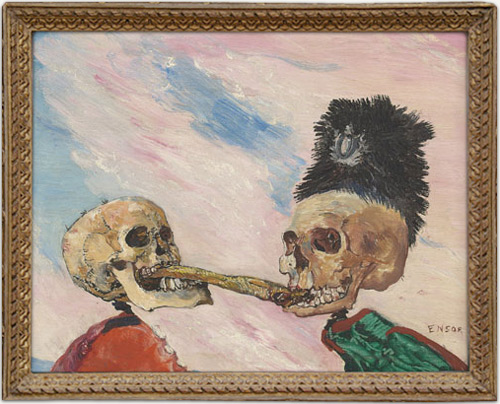
Squelettes se disputant un hareng-saur by James Ensor
Translated as “Skeletons Fighting for a Smoked Herring.” The herring was Ensors personal symbol for his own art, appearing in many paintings. It is sarcastic word-play. In French “Hareng-saur” sounds like “Art Ensor.” Here, the two skeletons represent two critics who, fighting over Ensor’s art, want to literally tear it apart, each wanting to be the one who does him in. His first major exhibition, in Paris in 1898, was a failure you see, with the critics calling him “mad, foolish and nasty.” More here.

Instructing the young, reforming the old, correcting the town, and castigating the age.
In October 0f 2001 a small-format newspaper appeared at book and magazine stores across at least 4 of the 5 boroughs of New York. Copies showed up in coffee houses. Copies were seen on benches. The occasional copy was perhaps taken aloft by a discerning wind. Amid the lunatic crush of printed bombast and color-glossed offal, literate residents of the great city might certainly be excused for having missed its arrival and subsequent departure completely. But if you did it’s a shame, because for its year-long run Three Weeks was without doubt the best written publication the city had to offer.
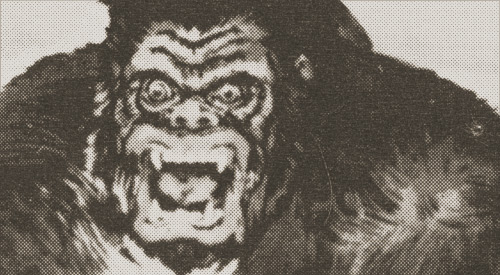
Gargantua the Great
Or: Buddy, the gorilla who was scared of lightning.
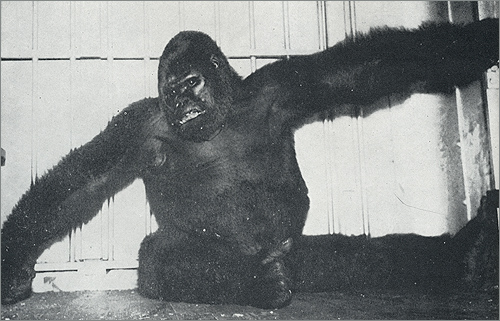
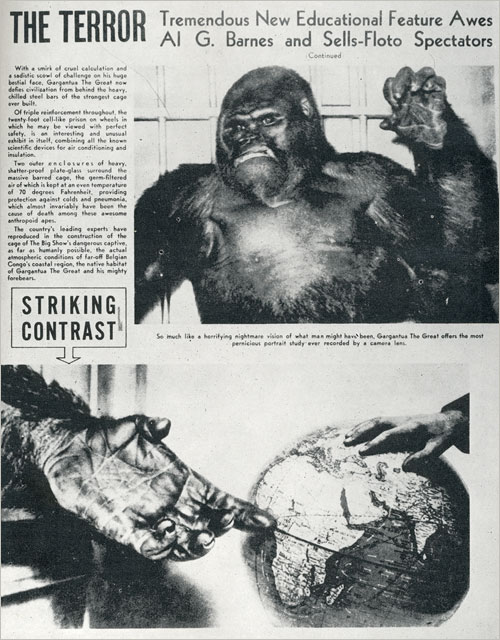
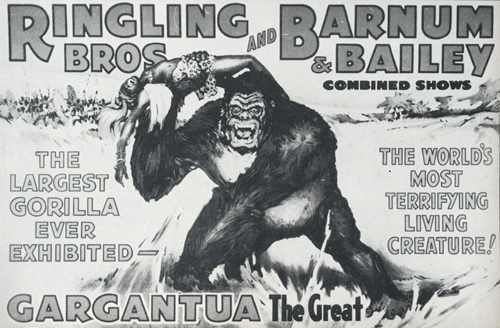
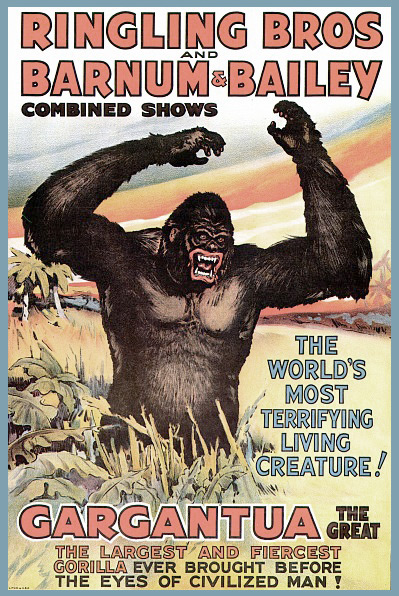
I came across a few photos of a lowland gorilla in a book about the history of the circus which piqued my interest. I’m a big fan of the primate you see (some being dearer to my heart than others) and I went searching the web to find out more. The Ringling Brothers Barnum & Bailey Circus billed him as “Gargantua The Great, the world’s most terrifying creature” but as it turns out a previous owner had dubbed him Buddy, short for Buddha, and he had a very sad past. Not only that but he was scared of lighting. What follows are a few brief notes on Buddy’s story and some related images.