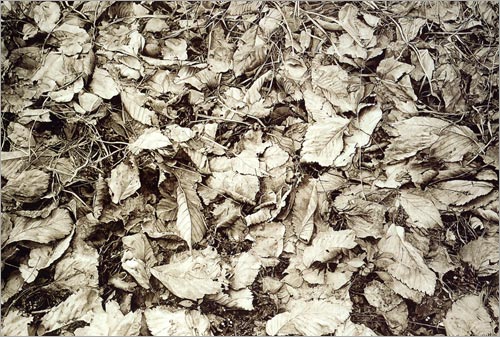
Quick thought: colors, a seemingly fundamental aspect of the Earth, elemental, saturating every micron of the planet in a magnificently complex array (existing even before there were eyes to behold them) evolved over vast expanses of geologic time, from a more visually uniform substratum, in the same way multicellular life evolved out of simpler forms. Way back in the mysterious Hadean eon, the Earth would have appeared essentially colorless, or more specifically grey. Browns, yellows, oranges, and reds are all results of the oxidization of iron. At this time the iron which had not sunk toward the core was mostly dissolved in water and the atmosphere was not yet oxygen rich. The sky did not yet appear blue and so neither did the proto-oceans. Purples and greens were the result of cyanobacteria converting sunlight to sugars. A process which didn’t begin until a couple billion years later. At this point, chromatically, the Earth would have looked a whole lot like our moon looks today.

Earth Noir


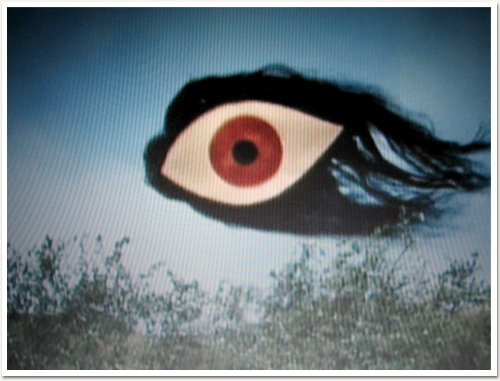
Truth of words, larkless, here the possibility of greatness ever a page existing. Crazy pulchritude with incomprehension. Each vision a riddle with silent smilings! The mystery is additive to all, however, with production of private head tales, tongueless! like Pinker in Chomsky’s night pillow. No memory, even as childish, these wonders. Smurfs? The Terrific Space Coaster? Kangaroo Commander? Bah! The sadness does hover at missing the most great entertainments young eyes might glance on screens, it’s certain. Old eyes now and glancing at screens. Different but approaching what was. Together our tongueless eyes! We, all of us, glance at screens!


Conversations on the Plurality of Worlds
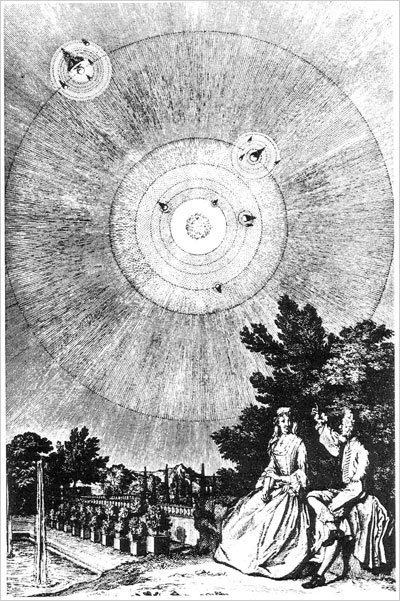
His name was Bernard Le Bovier De Fontenelle and his book, Entretiens sur la Pluralité des Mondes, (Conversations on the Plurality of Worlds) is a fascinating, though I suspect largely forgotten, bit of science history. Published in 1686, the book is remarkable, not so much for its literary merits as for the ultimate function its publication served. Conversations on the Plurality of Worlds holds the admirable distinction of being one of the first books of “popularized science” ever published, which is to say, a book of scientific ideas aimed directly at “the average reader” rather than natural philosophers. It became quite fashionable and in as much might be considered the Brief History of Time or Cosmos of it’s day.




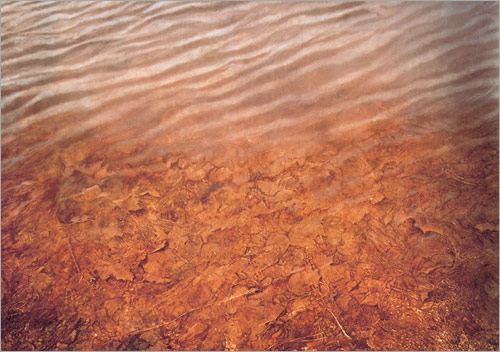
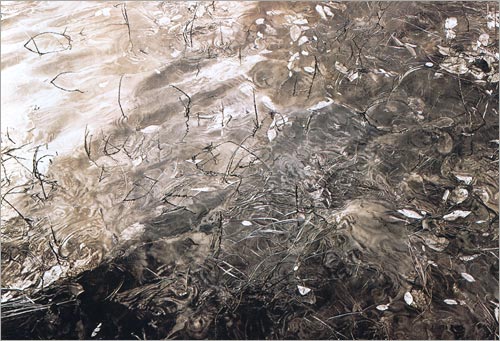
Mary Neumuth Mito, Murky Water 60 x 88.
Transmutation of the Mundane
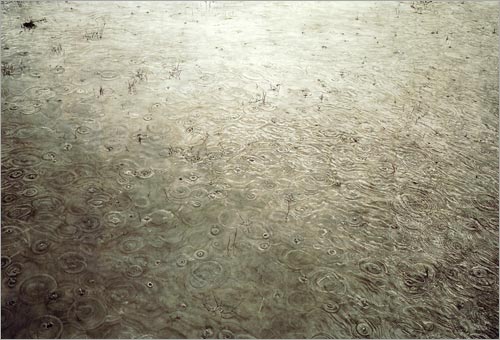
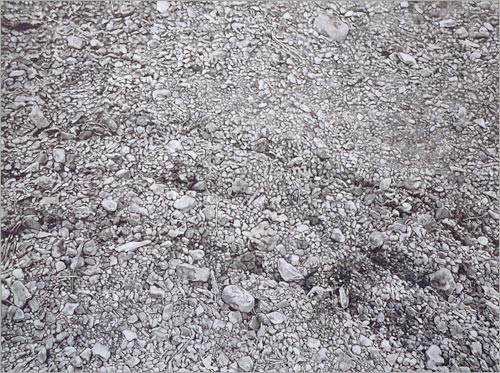
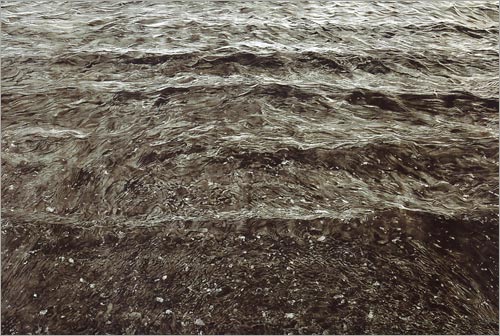
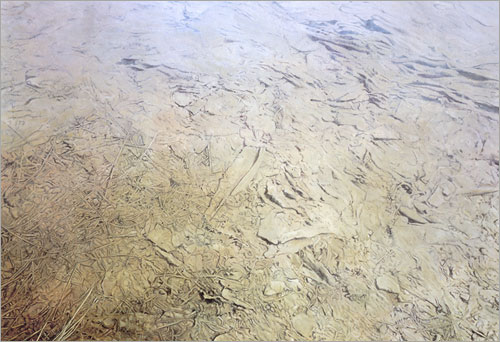
When I came upon the images which I’m about to share with you, I was a bit slack-jawed, standing there in the book store. They were of dead leaves, pond-bottoms, sticks in snow, the edges of lakes, and other such humble subjects. Those of you who are at all familiar with my photographs will know that these are just the subjects I’m drawn to myself. Turning through the pages of the book, a catalog from an exhibit, I was agape because these photos were so very in line with my own; Creepily so. After taking a moment to read some of the accompanying text I was handily slapped around and had any egoistic notions of similarity dispelled- they were not photographs. They were paintings.

The Jimsonweed Junkies
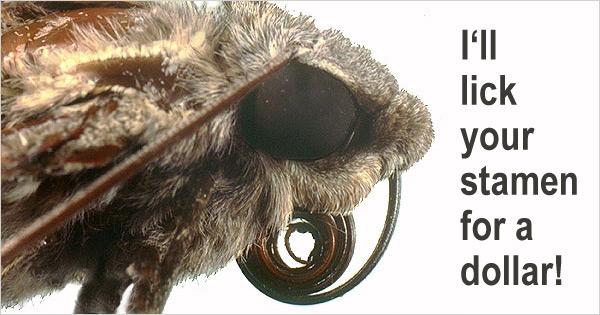
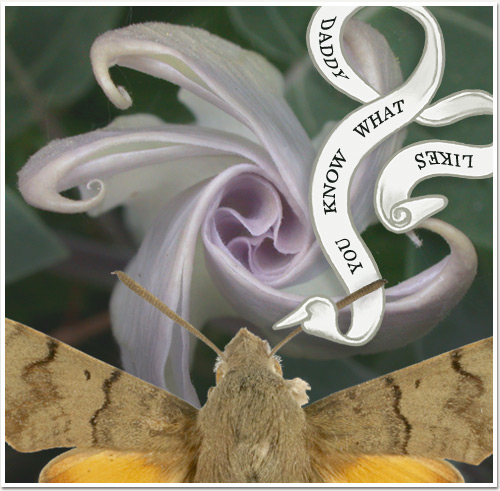
Across the Americas, during the twilight hours of the summer, a poisonous perennial weed unfurls its ingeniously folded conical wildflower and offers itself to all comers. Every bit of the weed is toxic, and its nectar is held deep within it’s corolla tube, so there are few takers. One family of moth, however, happens to have just the tools for the job; Its proboscis is long (longer in most cases that the rest of its entire body) and its proclivities… well… let’s just say this moth likes to get high baby.



Her name is The Humanities
There has been a lively discussion going on over at Varieties of Unreligious Experience touched off by Conrad’s post Humanism and the virtue of anxiety. My mind, degenerate and poorly oiled as it is, could not help but take a particularly delightful exchange to its ultimate conclusion (pictured above through the miracle of photoshop). Rather than catastrophically lower the level of discourse there, I thought I’d post my addition where it could do no such harm- here.

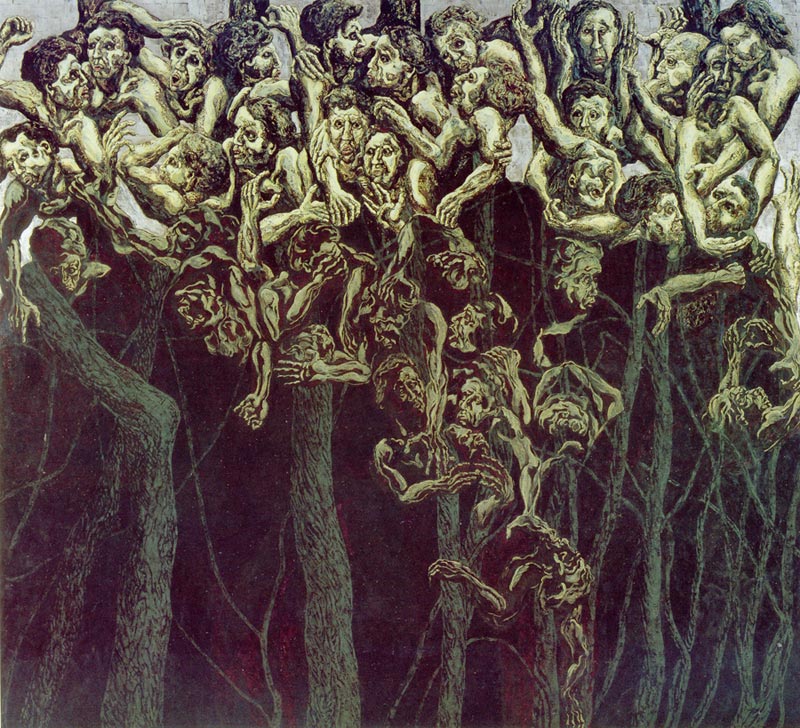
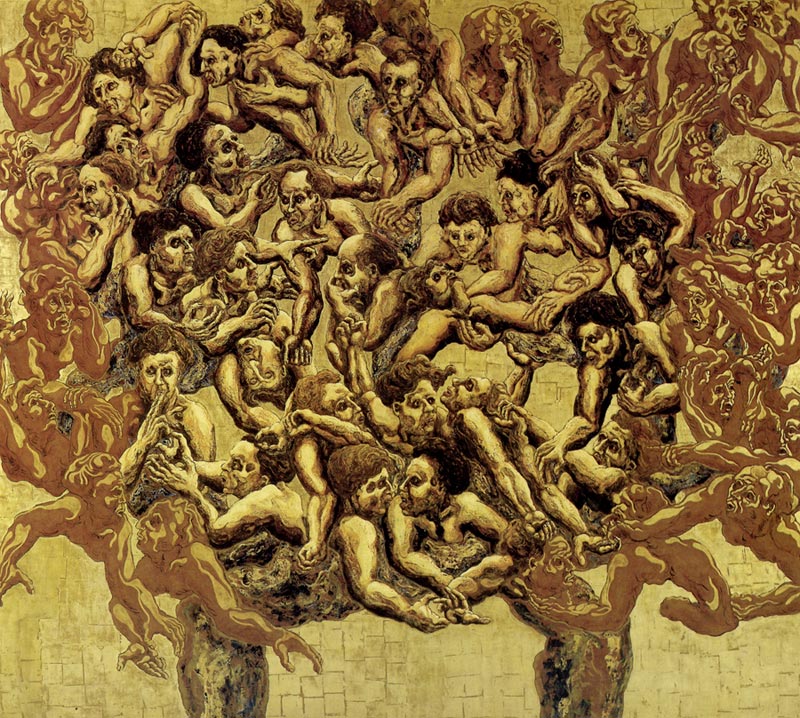
The Hundred-Handed Giants, Hecatoncheires to the Greeks, and later Centimani to the Romans, were the first beings born through procreation. Their father was Uranus, the Sky and their mother Gaia, the Earth. They were three in number, named Briareus, Cottus, and Gyges, and each was a gargantuan having fifty heads and a hundred arms. They were of vast proportions, stronger and more fierce than anything before them. In a manner befitting the species whose world they governed these first procreative births lead directly to marital conflict, conspiratorial plotting, attempted patricide, successful castration, all out war, and ultimately the downfall of the Titans and the rise of Zeus. “Out with the old and in with the new.” The more blood and guts and rumbling thunder the better, ay?


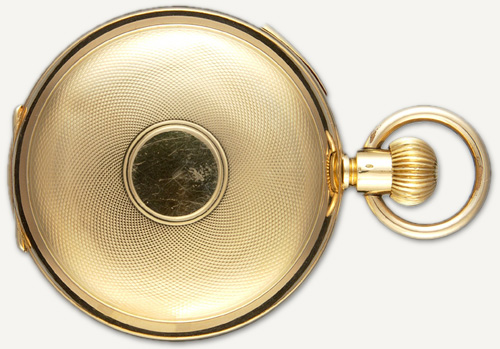
Description: A late 19th Century quarter repeating Swiss lever in a gold full hunter case. Gilt three quarter plate keyless movement with going barrel, four armed cam above the plate to actuate the automaton. Plain cock with polished steel regulator, compensation balance with blue steel overcoil hairspring. Club foot lever escapement. Slide quarter repeating on two gongs. Engine turned 18 carat gold full hunter case, slide in the band, etcetera.
Wow. Pretty fancy! And what is all that high presision Swiss mechanical dodaddery in the service of? What does it all lead to?


Scorched rock floating through empty space beholden to cold dispassionate forces for near eternity.
Observations of the star “V 391 Pegasi b” have revealed that a planet circling close to its star, like say, Earth, is not necessarily doomed to being swallowed whole when its star expands and goes “red-giant” in old age.
Quote: “Stars such as our own expand into red giants in their old age, engulfing nearby planets.⊕ Now a planet has been sighted circling close to V 391 Pegasi, a star that has gone through the red-giant phase to become what is known as a hot B-type subdwarf. The planet, it seems, survived this process.”
Boom Computing
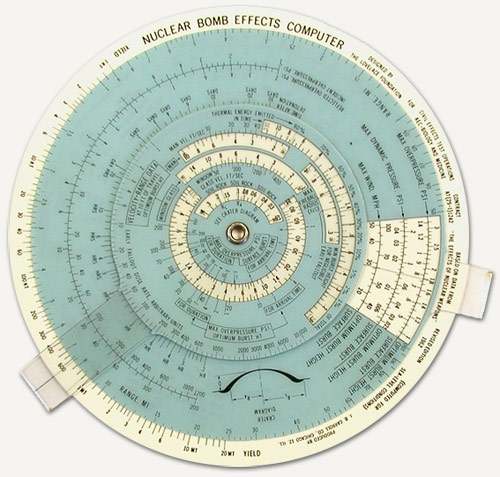
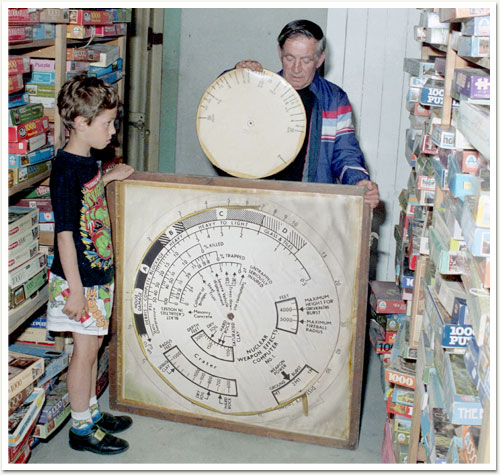
He kept his homemade, oversized, “nuclear weapon effects computer” in a room packed floor to ceiling with puzzles.⊕ To me, smugly distanced from the fearful zeitgeist of the atomic age (and its pragmatic preparations) this choice seems perfectly fitting. I can think of none better in fact. Circular slide rules manufactured to calculate the various effects and time lengths of a post nuclear landscape were once fairly common items. If you handed me one today and expected an important calculation in return you might as well hand me a icosahedron-shaped rubik’s and expect in return a nice slice of strawberry pie.