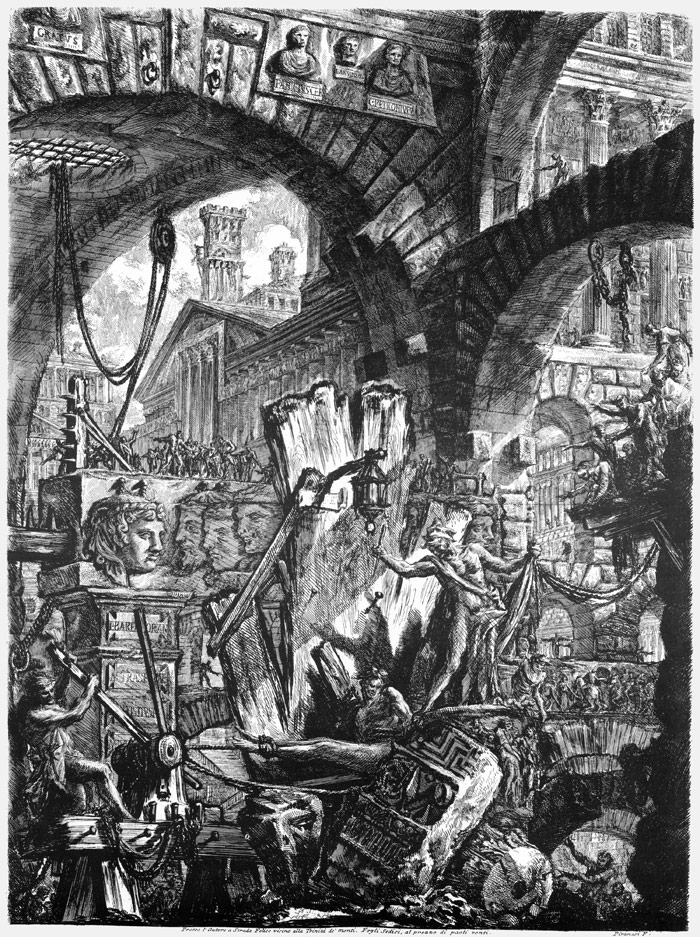
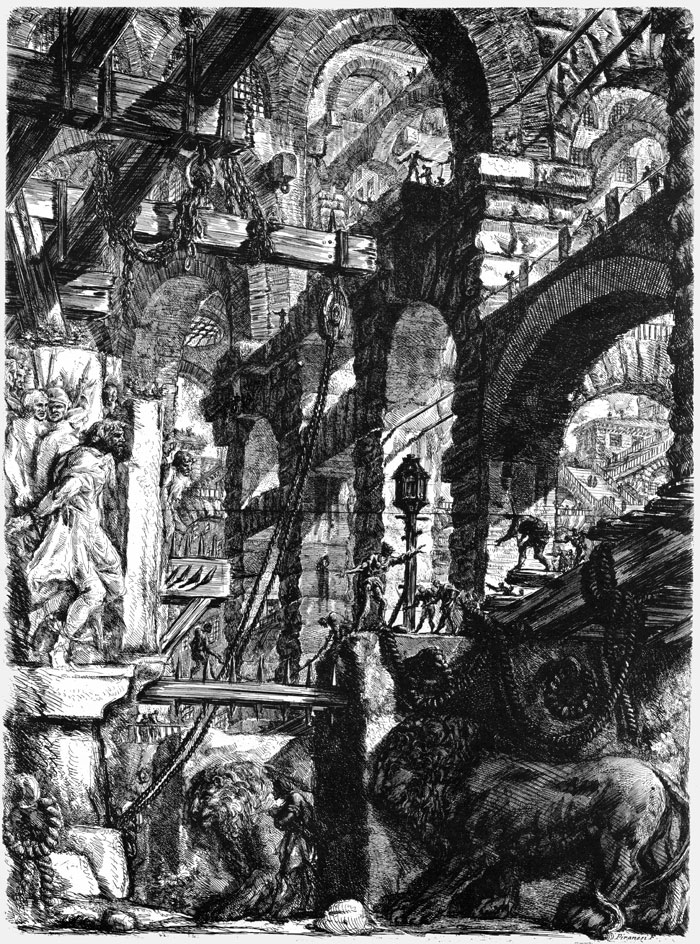
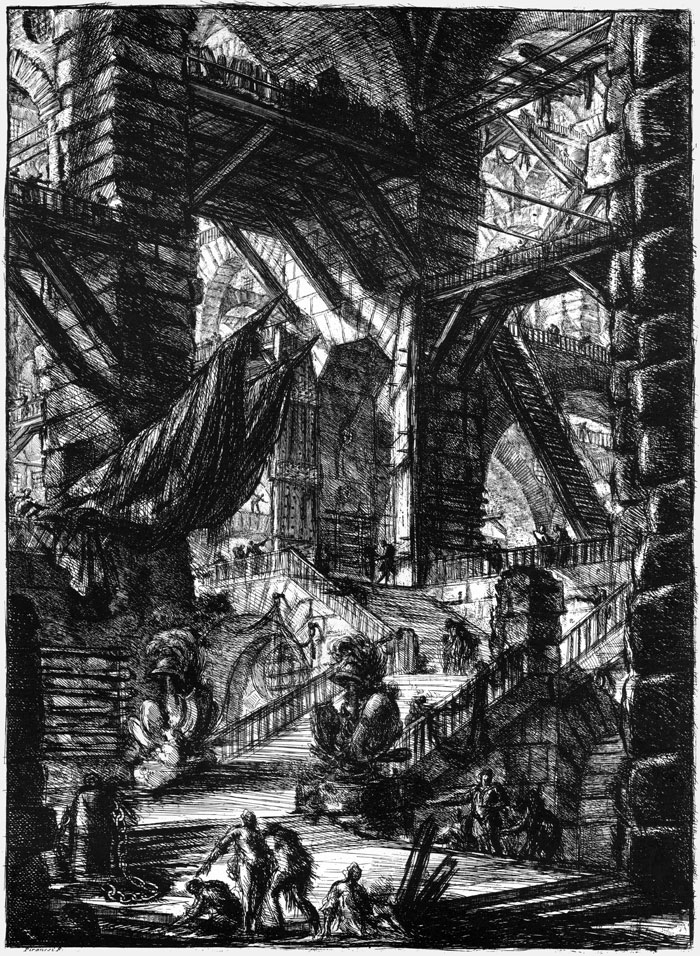
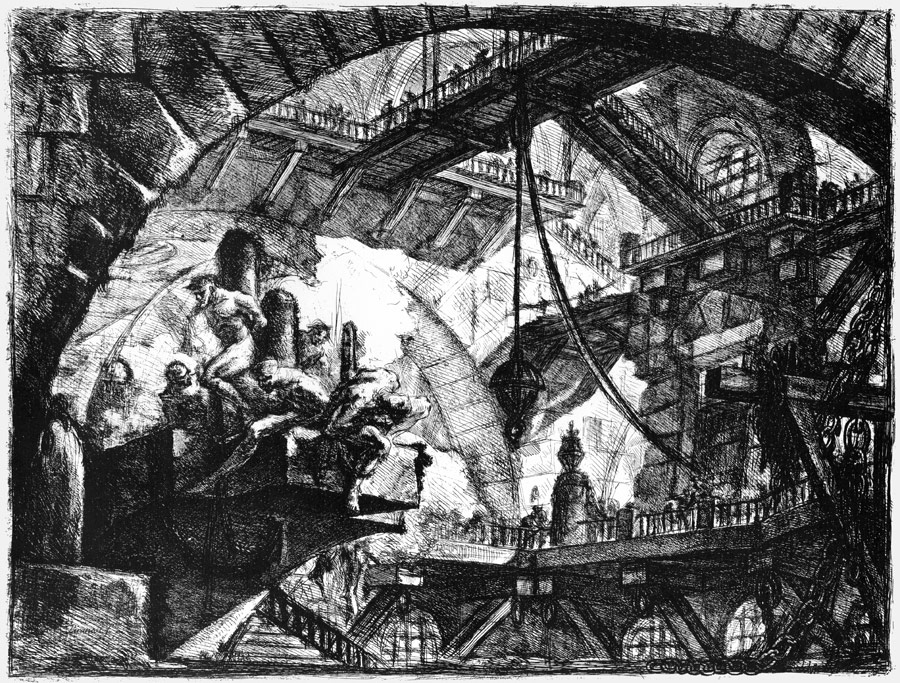
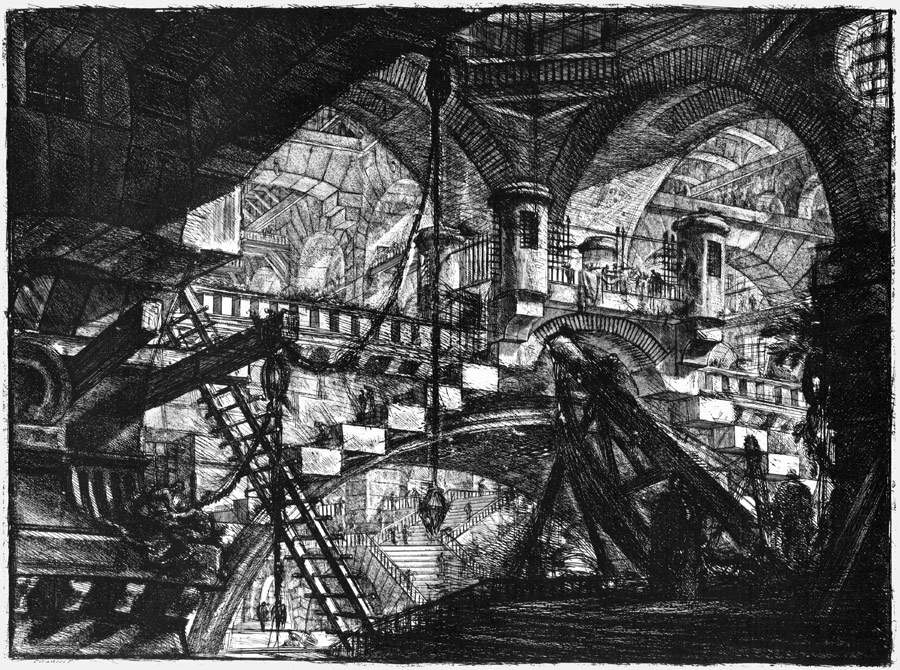
Picked up an oversized folio put out in 1973 reproducing a series of etching by Giovani Battista Piranesi. They depict a series of giant imaginary prisons. They are at once loose, layered, and complex, exhibiting a style not at all common in mid 18th century etching. Beyond this a quick read through the essay which begins the book shows Piranesi himself to be a somewhat tragic figure, not in any grand way, but rather in that he was unknown in his lifetime and to go a step further unfulfilled as well. You see even though these etchings of his are unmistakably beautiful Piranesi himself actually wanted to be an architect, a wish which, aside from a couple small commissions in the mid 1760’s completely eluded him. It didn’t help that the imaginary spaces he created were completely unbuildable, nor did it help that the lengthy original title of this series (which was etched in the frontispiece) was both grammatically incorrect and misspelled. Ah well, the guy might have died an unfulfilled wannabe architect but his etchings are quite something.

The Prisons, by Giovani Battista Piranesi








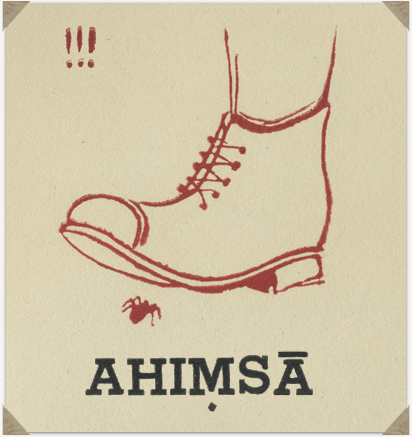
Ahimsa is a religious concept which advocates non-violence and a respect for all life. Ahinsa is Sanskrit for avoidance of himsa, or injury. It is interpreted most often as meaning peace and reverence toward all sentient beings. Ahimsa is an important doctrine of Hinduism, Jainism, and Buddhism (pdf). I think if it has made any inroads into the modern westerner’s mind they have likely been through its connection to yoga. I will not comment on the concept itself here, becuase in truth I am by no means sure of my own opinion toward the “do not swat a fly” brand of radical pacism, but rather will offer up a few images from an interesting book I picked up a long while ago called Chinese Poems and Pictures on Ahimsa by Raghu Vira, published in 1954. As for the sentiment they express, well, decide for yourself the value.


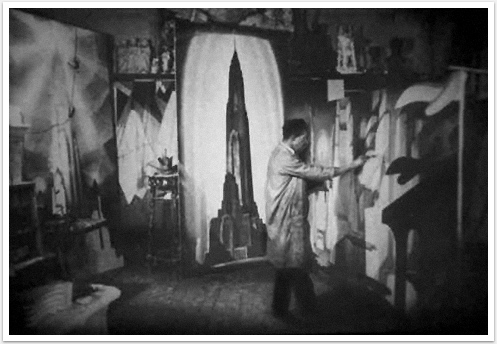
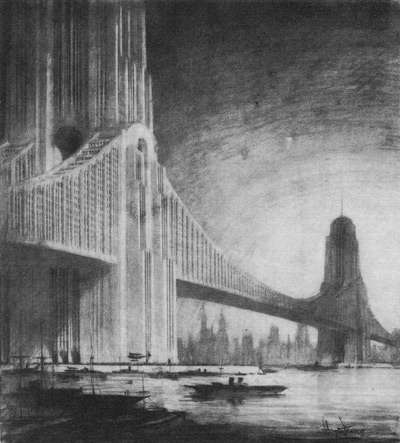
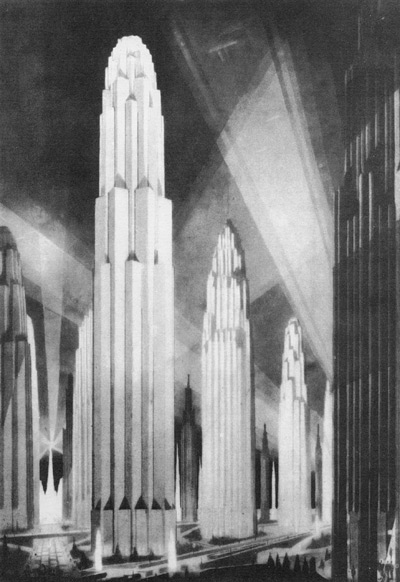
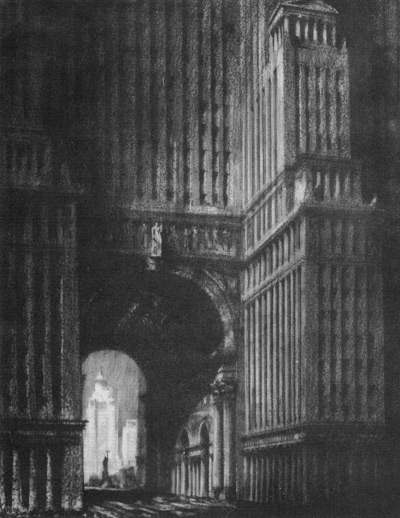
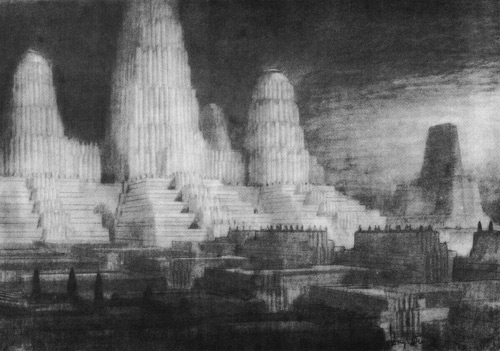
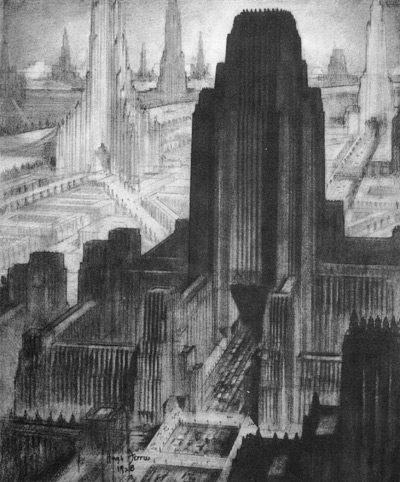
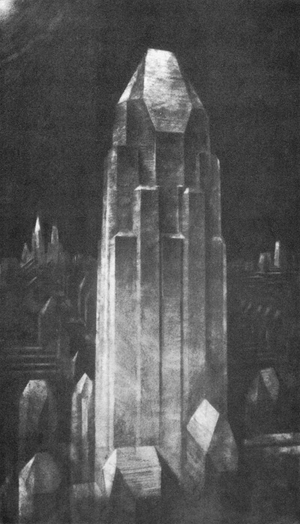
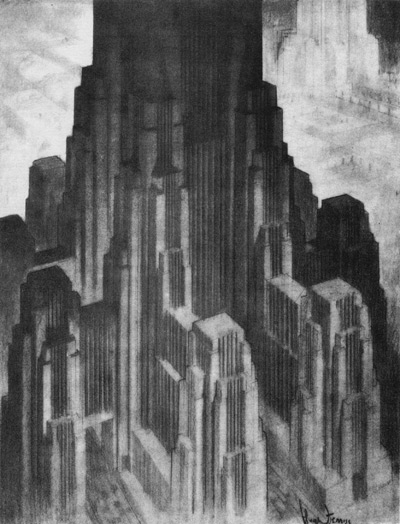
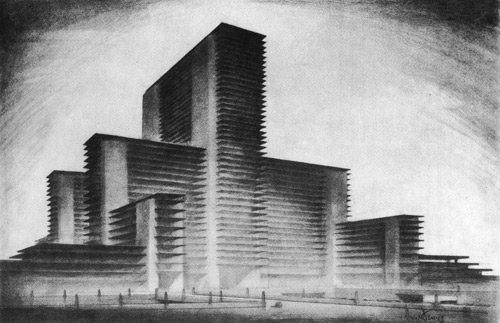
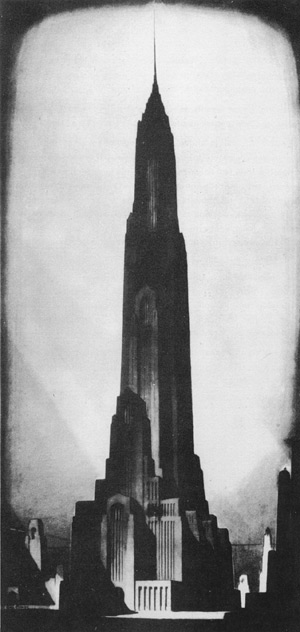
Hugh Ferriss: Delineator of Gotham
Or rendering “The Vertical Sublime”
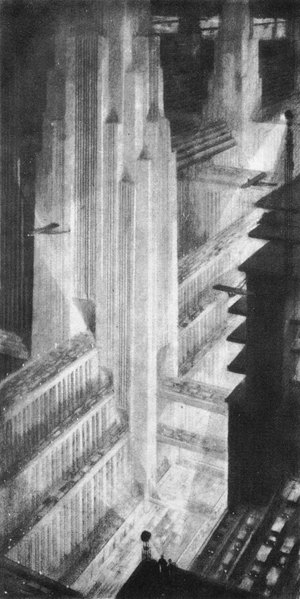
Picked up a reprinting of a 1929 book by Hugh Ferriss titled The Metropolis of Tomorrow. Ferriss was the preeminent architectural draftsman of his time who through his moody chiaroscuro renderings of skyscrapers virtually inventing the image of Gotham visitors came to the city to see and residents identified with so fondly. As Michael Mallow puts it: “By the mid-twenties, renderings by Ferriss had become almost de rigeur for successful competition projects; countless skyscrapers waited their turn to be bathed in the dark monumentality emanating from his drafting table. In these works a blasé department store appears as a giant lording over its block. Stodgy hotels cease to be stodgy hotels and become looming silhouettes emerging from the urban haze like shipwrecks. Ferriss went to grand new lengths in suppressing detail for mood, and clients loved it.”







Extrapolation: The Old Musician
The old musician sat amongst the beggars. Many passersby on the afternoon streets would certainly make no distinction, and call his playing for coin begging as well. For him this was respite though. Sunday among the despised. He would play among these people for a time and forget about coin. Much like the saying “you can’t bullshit a bullshitter” there isn’t much use in “begging a beggar.” Among them he could play whatever pleased him, the childhood favorites of his homeland, the dirges, the sad songs, things the people on the street wouldn’t pay a soda-cracker to hear.

Tom Sachs is exactly the kind of artist I’d expect to shrug my shoulders at, and perhaps mumble a “ho-hum” to anyone who brought him up. His work has in large part embraced the irony so common in contemporary art, much of it incorporating brand logos (the Chanel Guillotine or the Prada Deathcamp for example) and winking reproductions of the banal. the Sperone Westwater site says: “Tom Sachs takes his inspiration from the collective American imagination, borrowing his subjects from among the status symbols of mass culture: weapons, fast food, hip hop, surfing, and skateboarding, and he mixes them with the symbols of American wealth that sees in luxury, conformism, and designer labels a reinforcement of their elite social status.” Exactly the kind of thing which I’d expect to bore my pants off.